


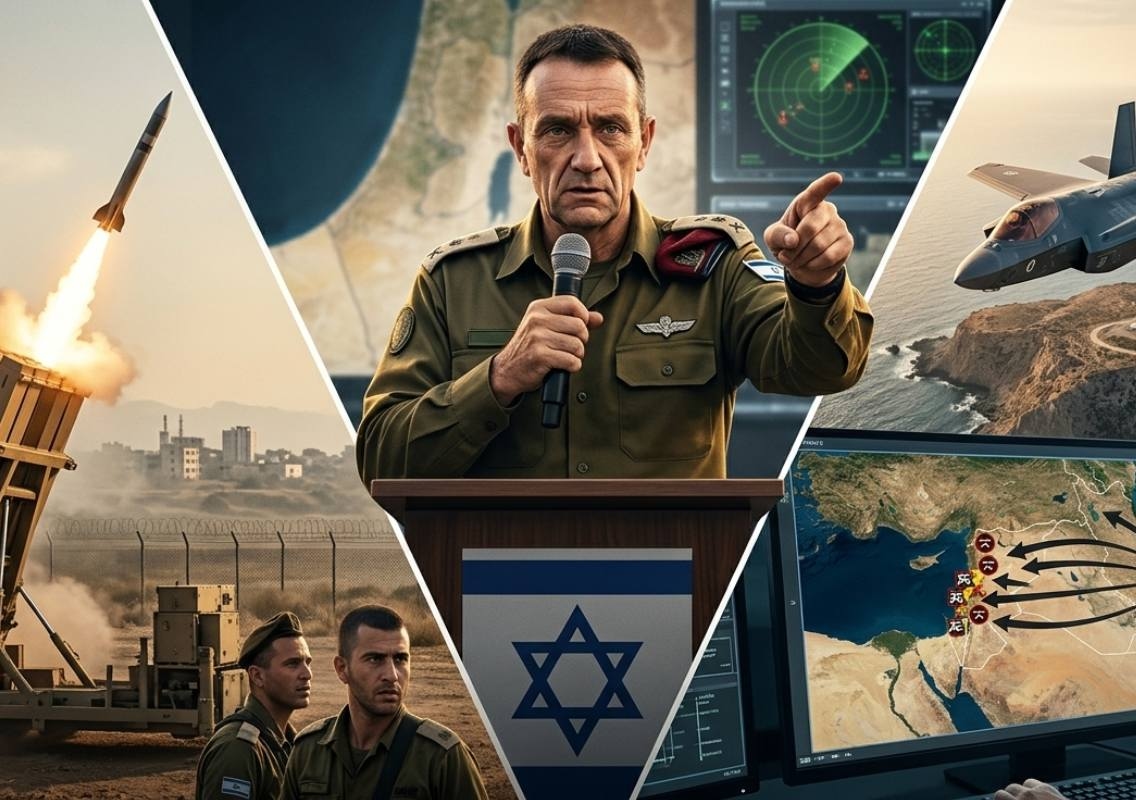


Israel: Israel has warned Iran against renewing its nuclear programme and threatened Hezbollah with severe military action if the Lebanon-based group joins Tehran in an attack. Defence Minister Israel Katz said on Sunday that Israel’s mission against Iran was not complete, signalling that the country would maintain its hardline security position despite political uncertainty at home.
Katz’s remarks came a day after President Isaac Herzog tasked opposition leader Gadi Eisenkot with trying to form a new government following an election deadlock. The political development has raised questions about the future of Benjamin Netanyahu’s leadership and the country’s military strategy.
Speaking about Iran, Katz accused Tehran of attempting to revive its efforts to acquire nuclear weapons. He also warned that any renewed threat to Israel would invite a strong response.
“Concerning Iran, the mission is still not complete. Iran is trying to renew its efforts to obtain nuclear weapons, alongside other grave efforts that place the State of Israel in real danger,” Katz said, according to AFP.
Iran has consistently denied seeking to develop nuclear weapons. The latest warning comes amid a prolonged confrontation between the two countries, which have been involved in major military escalations over the past year.
Katz issues warning to Iran and Hezbollah
Katz’s statement made clear that Israel continues to regard Iran’s nuclear ambitions and regional influence as major security concerns. He warned that Israel would not allow threats against its security to go unanswered.
The Defence Minister also directed a strong warning at Hezbollah, the Iran-backed militant group operating from Lebanon. He said the group would face “extremely severe blows” if it joined Iran in an attack on Israel.
The warning reflects Israel’s concern that a confrontation with Tehran could expand into a wider regional conflict involving armed groups aligned with Iran.
Hezbollah had previously opened fire on Israel in solidarity with Tehran, prompting Israeli military action in Lebanon. The group has been a key part of Iran’s regional network of allies and has fought several rounds of conflict with Israel.
Katz’s remarks suggest that Israel intends to maintain pressure on both Iran and groups it considers threats, even as its domestic political situation remains unsettled.
Political uncertainty after Herzog tasks Eisenkot
The warning against Iran came at a sensitive moment in Israeli politics. President Isaac Herzog tasked Gadi Eisenkot, a leading rival of caretaker Prime Minister Benjamin Netanyahu, with attempting to form a new government after an inconclusive election.
The deadlock has left neither political figure with a clear path to power. Eisenkot’s assignment could mark a significant shift in Israel’s political leadership, although the process of forming a government remains uncertain.
Eisenkot has also raised concerns about the possibility of another military confrontation with Iran. He has warned the Israeli military that Netanyahu does not have a mandate to launch another war and that the armed forces should not be drawn into military action to serve the Prime Minister’s political needs.
Despite their political differences, Eisenkot has largely supported Netanyahu’s military decisions. However, his comments indicate that he wants military action to be guided by national security considerations rather than domestic political calculations.
The political transition could therefore have implications for how Israel approaches its regional security challenges, particularly its policy towards Iran.
Reports of a planned operation against Iran
Katz’s comments also followed reports that Netanyahu and Israel’s intelligence agency, Mossad, had attempted to launch an operation against Iran shortly before the country’s October 27 election.
According to a report by Israel’s Channel 12 last week, the proposed operation was planned for the eve of the election. The report said the United States learnt about the plan and intervened to prevent it.
The reported attempt has added to questions about the possibility of another Israeli military campaign against Tehran. Netanyahu has repeatedly issued warnings about potential fresh action against Iran in recent weeks.
However, the reported operation and the circumstances surrounding the alleged US intervention remain separate from Katz’s public statement. His latest remarks did not announce a new military operation but reinforced Israel’s position that it considers Iran’s activities a continuing threat.
Iran has faced two major Israeli-US bombing campaigns since last year, further intensifying tensions between the regional adversaries. Tehran has continued to reject Israeli accusations that it is pursuing nuclear weapons.
Israel rules out withdrawal from Gaza, Lebanon and Syria
Katz also said Israel would not withdraw its forces from security zones under its control in Gaza, Lebanon and Syria.
“We will not withdraw from the security zones in Gaza, Lebanon and Syria, and if the terrorist organisation Hezbollah chooses to join Iran in an attack on Israel, it will suffer extremely severe blows,” he said.
The statement signals that Israel intends to retain its military presence in the areas it considers strategically important, despite international and regional concerns over its operations.
In Gaza, Israeli military action has continued following Hamas’s unprecedented October 7, 2023, attack on Israel. The attack triggered a major conflict, with Israel launching an extensive military campaign in the Palestinian territory.
The conflict subsequently widened, drawing Lebanon into the confrontation. Hezbollah, which is backed by Iran, opened fire on Israel in support of Tehran, leading to Israeli military operations against the group in Lebanon.
In Syria, Israel moved beyond a former ceasefire line and occupied parts of Syrian territory following the fall of longtime President Bashar al-Assad in 2024.
Katz’s remarks indicate that the Israeli government does not currently intend to give up its positions in these areas. The continued presence of Israeli forces could remain a source of tension with neighbouring countries and armed groups in the region.
Katz calls for unity amid political divisions
Addressing a ceremony honouring Israeli soldiers killed during a 1956 attack on Egypt, Katz urged political leaders to put aside their differences when national security was at stake.
“We may argue, and we may disagree, but when the security of the state is at stake, we must know how to rise above our disputes,” he said.
His appeal for unity came as Netanyahu faces uncertainty over his political future and Eisenkot prepares to attempt government formation.
The remarks also highlight the divisions within Israel over the country’s military strategy. While Katz has reiterated a hardline position towards Iran and Hezbollah, Eisenkot has cautioned against launching another war without a clear national mandate.
Regional tensions remain high
Israel’s latest warning comes at a time when the possibility of another confrontation with Iran remains a major concern for the region. Tehran’s nuclear programme, Hezbollah’s military role and Israel’s continued operations in Gaza, Lebanon and Syria are all contributing to an unsettled security environment.
The political transition in Israel could influence future decisions on military action, but Katz’s statement indicates that the country’s current security leadership intends to maintain pressure on Iran and its allies.
The extent to which the United States would support another military campaign against Tehran also remains an important question. For now, Israel has reiterated that it considers its mission against Iran unfinished and that Hezbollah would face severe consequences if it joined any attack.