







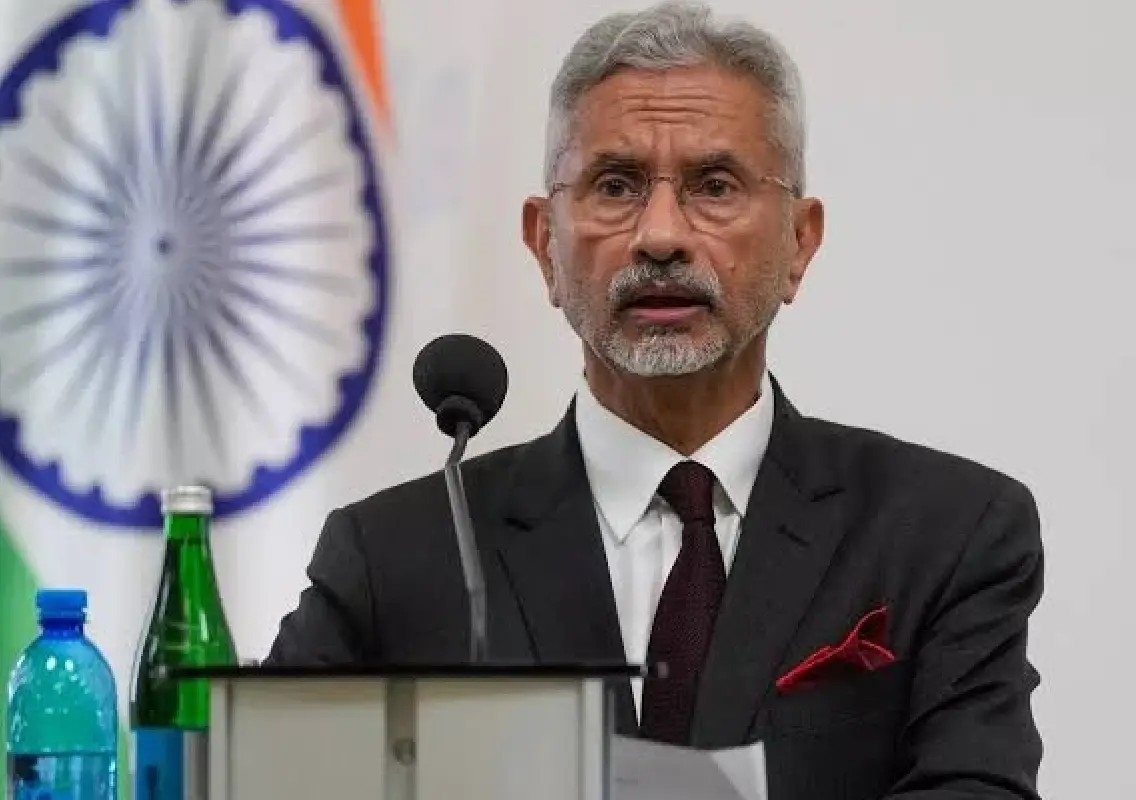


Kyiv : External Affairs Minister S Jaishankar has defended India’s continued purchase of Russian oil, arguing that stopping the trade would not bring an end to the Russia-Ukraine war and stressing that the conflict can only be resolved through dialogue, diplomacy and negotiations.
Jaishankar made the remarks during his visit to Kyiv, where questions over India’s energy relationship with Russia have once again come under international scrutiny. His comments come amid continued Western pressure on countries maintaining economic ties with Moscow and renewed diplomatic efforts to end the war.
The minister rejected the suggestion that India could significantly influence the course of the conflict simply by stopping purchases of Russian oil, minerals or other commodities.
‘War will not be solved by buying or not buying oil’
Jaishankar said the Russia-Ukraine conflict would not be resolved based on whether countries buy Russian oil or refrain from doing so.
According to his argument, the fundamental issue is a political and military conflict that requires the countries involved to engage in direct negotiations. Economic pressure on individual buyers, he suggested, would not by itself provide a pathway to peace.
The remarks reflect New Delhi’s longstanding position that the conflict should ultimately be resolved through dialogue and diplomacy rather than through military escalation.
India has repeatedly maintained that it does not view the war simply through the lens of choosing sides. Instead, it has sought to maintain diplomatic relations with both Russia and Ukraine while encouraging a peaceful resolution.
India cites energy security
A major part of New Delhi’s defence of Russian oil imports has been India’s need to protect its energy security.
India is heavily dependent on imported crude oil to meet domestic energy requirements. Russian crude became an increasingly important source for Indian refiners after the conflict began, particularly because discounted Russian supplies provided an economically attractive option.
Jaishankar’s latest remarks reinforce the argument that India must consider the energy requirements of its population while making foreign-policy and trade decisions.
India has consistently maintained that it will purchase energy from markets that offer favourable terms, while complying with applicable international rules and regulations.
Comments come during Kyiv visit
The statement assumes particular significance because Jaishankar made it while in Ukraine.
His visit is part of India’s continuing diplomatic engagement with both sides of the conflict. India has sought to position itself as a country capable of maintaining communication with Russia while also engaging directly with Ukraine.
Jaishankar has also indicated that India is willing to contribute to efforts aimed at finding a peaceful resolution to the war. His remarks underline New Delhi’s preference for diplomacy as the route towards ending the conflict.
The visit comes at a time when international diplomatic efforts are receiving renewed attention. Ukraine has been seeking stronger international support for negotiations, while Russia has also signalled an interest in possible diplomatic engagement.
Russian oil remains a contentious issue
India’s Russian oil purchases have been a source of disagreement with several Western countries.
Critics have argued that continued purchases provide Moscow with an important source of revenue during the war. India, however, has maintained that its energy purchases are driven primarily by the need to secure affordable supplies for its large population and economy.
The debate has intensified as sanctions and other restrictions on Russian energy exports have evolved.
New Delhi has repeatedly argued that Indian consumers should not be made to bear the cost of geopolitical tensions and that countries have the right to secure energy supplies in accordance with market conditions.
Jaishankar’s latest comments are consistent with that broader position.
India maintains strategic autonomy
The issue also highlights India’s approach of maintaining strategic autonomy in international affairs.
Rather than aligning completely with either Russia or Western countries, India has continued to maintain working relationships with multiple major powers. It has simultaneously engaged with Russia, Ukraine, the United States and European countries.
This approach has sometimes attracted criticism, particularly from countries that have sought stronger international pressure on Moscow.
However, Indian officials have repeatedly argued that maintaining communication with all sides gives New Delhi greater scope to encourage dialogue and protect its own national interests.
Focus remains on diplomacy
While defending India’s energy relationship with Russia, Jaishankar has also stressed the importance of finding a peaceful solution to the conflict.
His comments suggest that New Delhi sees diplomacy as the only sustainable route towards ending the war. India has repeatedly called for dialogue and negotiations and has expressed its willingness to contribute to peace efforts where appropriate.
The minister’s position comes as the Russia-Ukraine conflict continues to have consequences far beyond the battlefield, affecting global energy markets, trade routes, food security and international relations.
For India, the challenge is to balance its longstanding relationship with Russia, growing engagement with Western economies and its diplomatic relationship with Ukraine, while ensuring the availability and affordability of energy for its citizens.
Jaishankar’s latest remarks therefore represent both a defence of India’s current energy policy and a reiteration of New Delhi’s broader diplomatic position: the war, in India’s view, cannot be brought to an end simply by changing one country’s oil purchases. A lasting solution will ultimately require dialogue, negotiations and political engagement between the parties to the conflict.