





Tokyo: Japan’s government has faced an online accusation of “engagement farming” after its official Prime Minister’s Office account posted an emergency alert about a suspected North Korean ballistic missile launch. An X user questioned why the account repeatedly uses nearly identical wording for missile alerts, pointing to earlier posts that attracted millions of views and tens of thousands of likes.
The account, @JPN_PMO, posted: “[Emergency alert] North Korea has launched a suspected ballistic missile. More updates to follow.”
Verified X user Nicholas Mugalli, who posts under the handle @RealNickMugalli, responded with the comment, “Bro engagement farming…”
Mugalli also shared a screenshot showing a search of the Japanese government account’s posts containing the words “north korea”. The results featured several alerts with almost identical wording, dated March 14, August 20, September 20 and October 11, 2026.
The screenshot showed that some of the earlier posts had attracted substantial attention, prompting the user to question whether the repeated message was intended to generate engagement. However, the recurring wording is also consistent with the use of a standard emergency notification, and the accusation does not establish that the Japanese government deliberately posted the alerts to maximise online interactions.
Repeated missile alerts attract attention
The screenshot shared by Mugalli showed a significant difference in engagement between the earlier alerts and the latest post.
The September 20 alert had reportedly received around 12 million views and 61,000 likes. The March 14 post had attracted approximately 10 million views and 57,000 likes, while the August 20 alert had received around 2.2 million views.
The October 11 post had recorded approximately 1.6 million views. By comparison, the newest alert had received 824 views when the screenshot was captured, roughly three minutes after publication.
These figures helped fuel the online reaction, with Mugalli suggesting that the account was benefiting from a format that had already attracted widespread attention.
The repeated wording, however, is not in itself evidence of engagement farming. Government emergency communications often use standardised language to deliver urgent information quickly and consistently, particularly when details of a developing security incident have yet to be confirmed.
What is engagement farming?
Engagement farming refers to the practice of publishing content primarily to increase interactions such as likes, replies, reposts and shares.
On social media platforms, posts that attract substantial engagement can reach a wider audience through recommendation systems and user sharing. This can create incentives for accounts to use provocative language, repeat popular formats or publish content designed to prompt strong reactions.
Mugalli’s accusation implies that the Japanese government account may be benefiting from the attention generated by repeated missile alerts.
However, the available information does not establish the account’s motive. A post attracting millions of views does not automatically mean it was designed to generate engagement, particularly when the subject concerns a potential national security threat.
The distinction is important because the alerts serve a public-information purpose: informing people that authorities are assessing a possible missile launch. Their wording may remain consistent because the initial information available to officials is limited and needs to be communicated without delay.
Why Japan uses standardised emergency wording
The Prime Minister’s Office of Japan uses its official X account to issue initial notices about suspected North Korean missile launches.
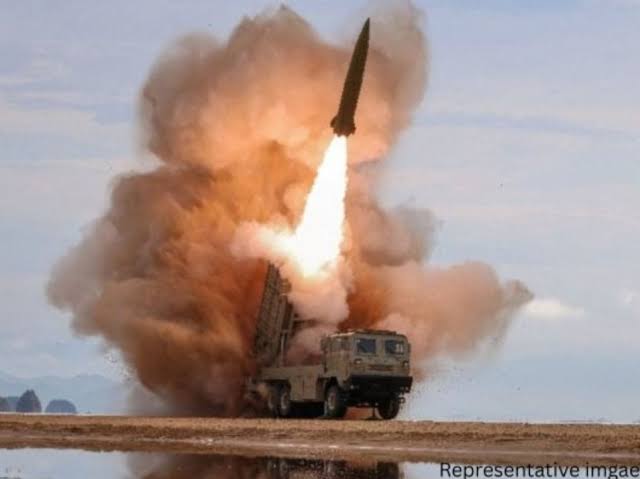
Such messages typically identify the country involved, describe the launch as suspected and indicate that further information will follow. This allows the government to communicate the initial warning before all details about the missile’s flight path, range or destination have been established.
Subsequent updates can provide more specific information as authorities assess available data.
The initial alert’s brief wording therefore serves a practical purpose. It communicates the development without presenting preliminary information as a confirmed account of the missile’s trajectory or impact.
For the public, the most useful details often emerge in later notices, including whether the missile passed over Japanese territory, entered Japan’s exclusive economic zone or posed a direct threat to the country.
The repeated format has attracted attention online, but the central purpose of the notification remains the communication of a potentially significant security development.
North Korea’s missile launches keep Japan on alert
The recurring alerts reflect the continuing security concerns posed by North Korea’s missile programme.
According to the supplied report, SBS News cited Japanese government figures to describe the October 12 launch as North Korea’s 16th ballistic missile launch of 2026. It reportedly came nine days after another launch.
The frequency of such incidents means that Japanese authorities may need to issue similar preliminary notifications whenever a suspected launch is detected.
South Korea’s military has also reported missile activity during the period. The country’s Joint Chiefs of Staff said a missile launched from Wonsan on October 3 travelled more than 700 kilometres.
The details of individual launches can differ, including the missile’s estimated range, flight path and whether it enters waters claimed as part of Japan’s exclusive economic zone. These details are generally assessed after the initial warning.
The repeated alerts have also gained international visibility, with the September 20 post alone reportedly receiving more than 10 million views.
Regional tensions add to the significance of the alerts
The missile launches have taken place amid broader tensions on the Korean Peninsula.
In September, a landmine explosion in the Demilitarized Zone injured three South Korean soldiers. North Korea denied responsibility for the incident, according to the supplied report.
The incident added to existing security concerns between the two Koreas, while missile launches continued to draw attention from regional governments.
Japan and South Korea closely monitor North Korean missile activity because the launches can have implications for regional security, military readiness and civilian safety.
For Japan, a suspected launch can require rapid assessment by government agencies and military authorities. Initial public notices are therefore often followed by more detailed information once the available data has been examined.
The wider security context helps explain why missile alerts can attract substantial public attention, even when the wording of the initial messages remains largely unchanged.
What happens after the first alert?
Japan’s initial notices are generally followed by updates from the Prime Minister’s Office and relevant government authorities.
These subsequent communications may provide information about the missile’s trajectory, estimated flight distance and whether it entered Japan’s exclusive economic zone. They may also clarify whether the missile is believed to have passed over Japanese territory or whether any immediate danger to the public has been identified.
South Korea’s military similarly releases information about detected launches, including estimates of their origin and range, as the assessment develops.
The distinction between an initial alert and a subsequent update is important. A preliminary notice signals that authorities have detected a suspected launch; it does not necessarily establish every detail of the incident.
For this reason, the use of standardised language can help ensure that the first warning is issued quickly while more precise information is gathered.
Online criticism meets a public-safety message
Mugalli’s post has drawn attention to the unusual contrast between the repeated wording of the alerts and the millions of views recorded by some earlier messages.
The accusation raises a broader question about how government accounts communicate emergencies on social media and how audiences interpret repeated posts that attract large numbers of interactions.
At the same time, the available evidence does not establish that the Japanese government account is deliberately using missile warnings to increase engagement. The same wording can be explained by a standardised notification process designed to communicate preliminary information quickly.
With North Korea continuing to conduct missile launches, Japan is likely to remain focused on monitoring developments and informing the public when suspected launches are detected.
The online debate, meanwhile, highlights how emergency communications can become subjects of social media scrutiny, even when their primary purpose is to provide timely information about a potential security threat.