







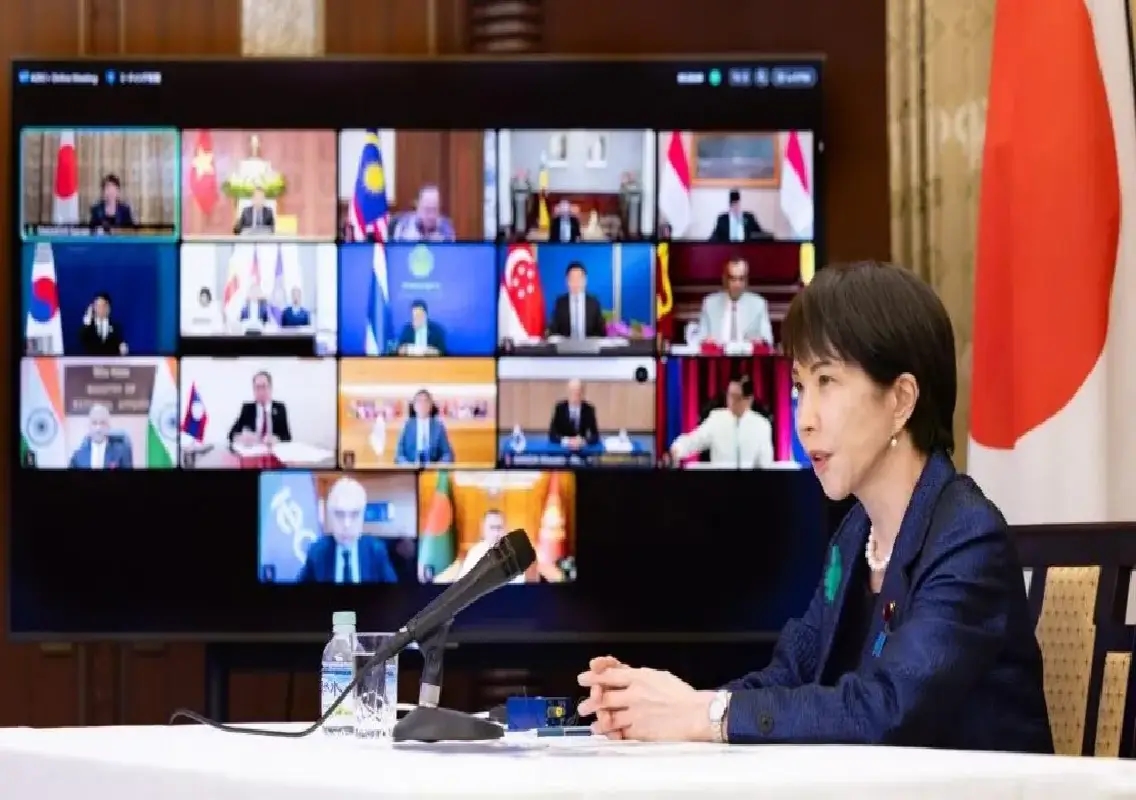


Tokyo: Japan has pledged $10 billion (₹83,000 crore approx.) to help Asian nations secure energy supplies, particularly crude oil, as the region faces disruptions triggered by the ongoing Iran conflict.
Prime Minister Sanae Takaichi announced the initiative following an online meeting with leaders from across Asia, highlighting the urgent need for coordinated action to stabilise supply chains and ensure energy security.
Focus on Southeast Asia energy needs
The cooperation framework is aimed primarily at supporting countries in Southeast Asia, which are heavily dependent on imported oil and are particularly vulnerable to global supply disruptions.
Japan’s Foreign Ministry stated that the $10 billion package is roughly equivalent to a year’s worth of crude oil imports for nations in the Association of Southeast Asian Nations.
The funding will be used to help countries procure crude oil and petroleum products, strengthen supply chains, and expand strategic reserves to cushion against future shocks.
Strait of Hormuz disruption raises concerns
A key concern driving the initiative is the vulnerability of Asian economies to disruptions in the Strait of Hormuz. Nearly 90 per cent of oil and gas passing through this critical waterway is destined for Asia, making any blockade or conflict in the region a major threat to energy security.
The ongoing Iran war has heightened fears of supply interruptions, pushing governments across Asia to seek alternative arrangements and strengthen reserves.
Funding through multiple institutions
Japan’s financial support will be channelled through a mix of public and multilateral institutions, including the Japan Bank for International Cooperation, Nippon Export and Investment Insurance, Japan International Cooperation Agency, and the Asian Development Bank.
Leaders from countries such as the Philippines, Malaysia, Singapore, Thailand, Vietnam, Bangladesh, and South Korea welcomed the initiative during the meeting.
Domestic reserves and supply concerns
Takaichi assured that the initiative would not adversely affect Japan’s domestic oil availability. As of the end of 2025, Japan had reserves sufficient for 254 days of consumption. However, the global energy crisis has already prompted the government to tap into these reserves.
Last month, Japan released a record 50 days’ worth of oil and plans to release an additional 20 days’ supply in early May.
Naphtha shortage raises healthcare concerns
Apart from fuel supply, concerns are growing over potential shortages of naphtha, a key petrochemical derived from crude oil and widely used in manufacturing plastics and medical supplies.
Hospitals in Japan are particularly worried, as essential items such as syringes, gloves, and dialysis equipment depend on naphtha-based materials. Authorities have urged calm, but experts warn that prolonged shortages could strain the healthcare system, especially amid an ageing population.
Regional impact and response
Across Southeast Asia, rising oil prices have already begun to affect daily life. Governments are encouraging energy conservation measures such as carpooling and reduced use of air-conditioning.
The Philippines has declared a national energy emergency, while President Ferdinand Marcos Jr has called on ASEAN to activate its fuel-sharing mechanism.
“No single country in Asia can insulate itself from supply chain shocks of this scale by acting alone,” Marcos said during the summit.
Conclusion
Japan’s $10 billion pledge underscores the growing urgency of regional cooperation in the face of global energy disruptions. As geopolitical tensions continue to impact supply chains, coordinated efforts like this initiative will be crucial in maintaining stability and ensuring energy security across Asia.