







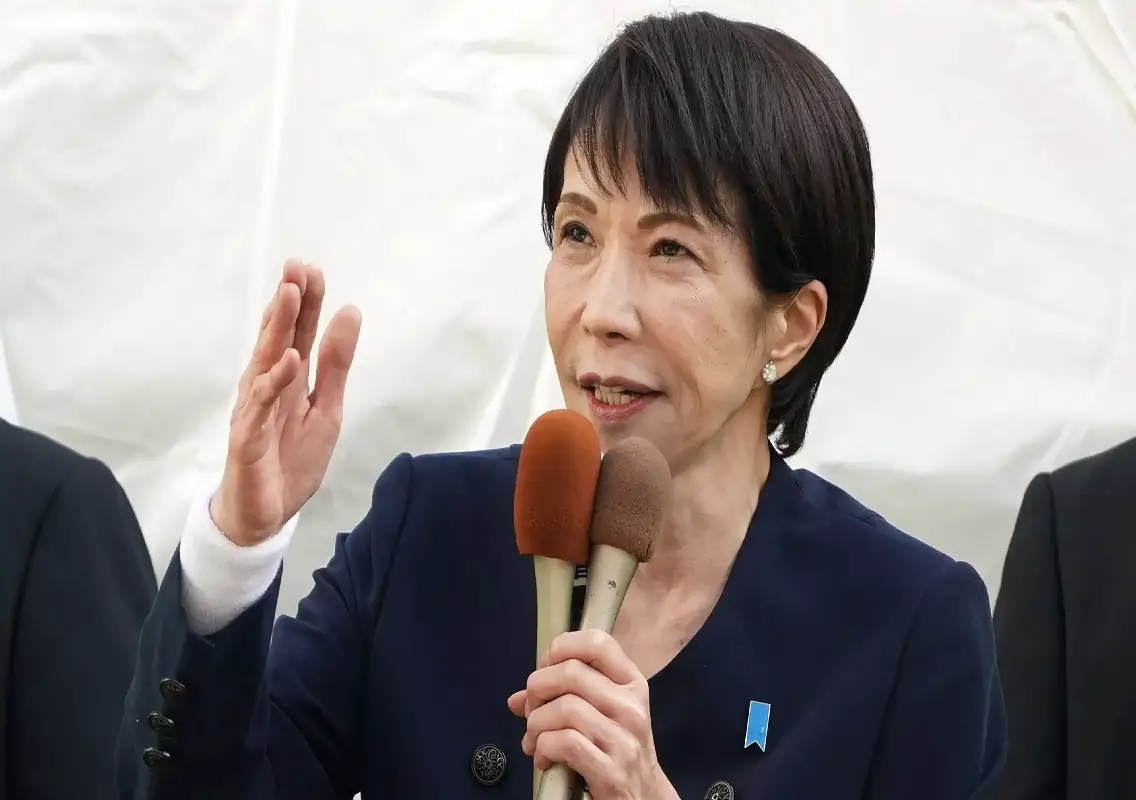


Tokyo: Japanese Prime Minister Sanae Takaichi has warned that the long-standing security alliance between Japan and the United States would effectively collapse if Tokyo failed to act in the event of an attack on US forces during a conflict involving Taiwan. Her remarks come amid heightened regional tensions and renewed scrutiny of Japan’s potential role in any future crisis across the Taiwan Strait.
Speaking on a TV Asahi news programme on Monday, ahead of a snap election scheduled for February, Takaichi clarified and partially walked back comments she had made in November, which were widely interpreted as signalling Japan’s readiness to intervene militarily in the event of an attack on Taiwan. Those earlier remarks had drawn sharp criticism from Beijing, which considers the self-governed island a part of its territory.
Clarifying Japan’s position on Taiwan
Addressing questions about her November comments, Takaichi stressed that Japan’s actions in a Taiwan-related contingency would be guided strictly by domestic law and the specific circumstances at hand. She said that while Japan was not signalling an automatic military intervention, it could not remain passive if US forces operating jointly with Japan came under attack.
“If the US military, acting jointly with Japan, comes under attack and Japan does nothing and runs home, the Japan-US alliance will collapse,” Takaichi said during the broadcast. Her statement underlined the centrality of the alliance to Japan’s national security strategy, particularly in an increasingly volatile Indo-Pacific region.
She explained that one of the most likely scenarios in the event of serious hostilities around Taiwan would involve evacuation operations. “If something serious happens there, we would have to go to rescue the Japanese and American citizens in Taiwan,” the prime minister said, adding that such a situation could necessitate joint action by Japanese and US forces.
Acting within legal boundaries
Takaichi was careful to emphasise that any response by Japan would remain within the framework of its Constitution and security legislation, which place limits on the use of military force. “We will respond strictly within the bounds of the law, making a comprehensive judgment based on the circumstances,” she said.
Japan has gradually expanded the scope of its security role in recent years, particularly after revising its interpretation of the pacifist Constitution to allow for limited collective self-defence. This enables Japan to assist an ally under attack if the situation threatens the country’s own survival. Takaichi’s comments suggest that a Taiwan crisis could fall under such a category, especially if US forces based in or operating with Japan were targeted.
Beijing’s sharp reaction
The prime minister’s earlier remarks in November had already triggered a strong response from China. Beijing accused Tokyo of interfering in China’s internal affairs and escalating regional tensions. In the weeks that followed, China reportedly discouraged its citizens from travelling to Japan, citing concerns over public security and alleged criminal acts against Chinese nationals.
Relations between the two Asian neighbours have further deteriorated amid reports that Beijing has tightened controls on exports of rare-earth products to Japan. These materials are critical for a wide range of industries, from electric vehicles and consumer electronics to advanced military hardware such as missiles and radar systems. Any prolonged disruption could have serious implications for Japanese manufacturing and defence preparedness.
Symbolic strain in ties
The strain in bilateral relations was underscored this week by a symbolic development in Tokyo. On Tuesday, two giant pandas, which had long been on loan from China and were a popular attraction, departed Japan for their home country. Their departure means that Japan is now without any pandas for the first time in nearly 50 years, a moment widely seen as emblematic of cooling ties between Tokyo and Beijing.
While panda diplomacy has often been used by China as a soft-power tool, analysts say the timing of their departure highlights the broader downturn in relations, driven by strategic mistrust and diverging views on regional security.
Taiwan at the centre of regional anxiety
Taiwan remains one of the most sensitive flashpoints in East Asia. China has not ruled out the use of force to bring the island under its control, while the United States has pledged to help Taiwan defend itself, though without an explicit security guarantee. Japan, which hosts major US military bases and lies close to Taiwan, would be directly affected by any conflict in the area.
Japanese policymakers have increasingly argued that “a Taiwan contingency is a Japan contingency,” pointing to the potential threat to sea lanes, regional stability and Japan’s own territory. Takaichi’s remarks reflect this growing consensus within parts of Japan’s political establishment, even as public debate continues over how far the country should go in supporting US-led security efforts.
Conclusion
Prime Minister Sanae Takaichi’s comments underline the delicate balance Japan is trying to strike: reaffirming its commitment to the US alliance while avoiding an outright pledge of military intervention in a Taiwan conflict. As tensions in the region continue to simmer, Tokyo’s stance will remain under close watch — not only in Washington and Beijing, but across the Indo-Pacific. The coming months, including Japan’s snap election, may further shape how openly and firmly the country articulates its role in one of Asia’s most dangerous geopolitical flashpoints.