







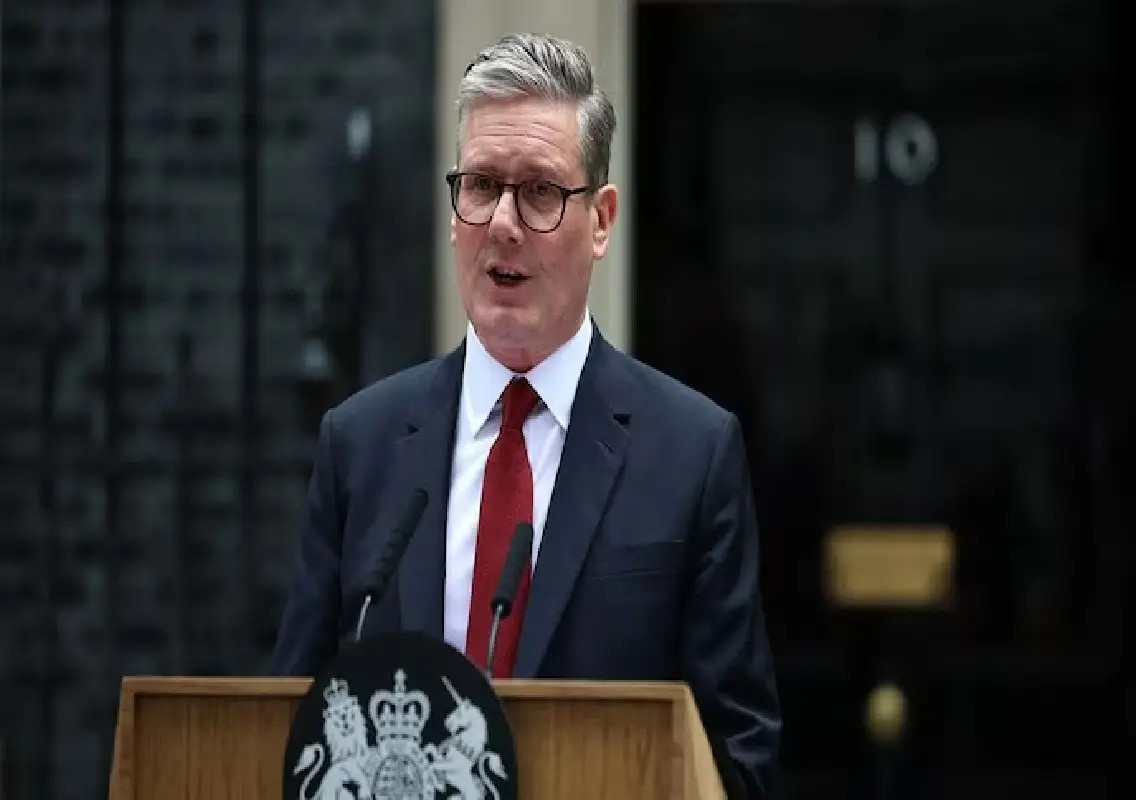


British Prime Minister Keir Starmer is set to pledge closer ties with the European Union as he attempts to revive his struggling leadership following major electoral setbacks for the Labour Party across England, Scotland, and Wales.
In a speech scheduled for Monday, Starmer is expected to promise that his government will “face up to the big challenges” and restore “hope” to Britain while positioning the country “at the heart of Europe” nearly a decade after the Brexit referendum.
The speech comes ahead of the State Opening of Parliament on Wednesday, where King Charles III will present the government’s legislative agenda.
Labour faces mounting internal pressure
Starmer is facing growing pressure within the Labour Party after disappointing performances in recent local elections across England and legislative elections in Scotland and Wales.
The election results have reportedly triggered concerns among Labour lawmakers regarding the party’s political direction and declining public support.
According to reports, several Labour MPs have privately urged Starmer to announce a timeline for stepping down amid dissatisfaction over the government’s economic performance and policy decisions.
Labour’s popularity has declined sharply since the party secured a landslide victory less than two years ago.
The government has faced criticism over:
- Slow economic growth
- Rising cost-of-living pressures
- Public service challenges
- Welfare policy reversals
- Internal leadership tensions
Angela Rayner criticises government approach
Former Deputy Prime Minister Angela Rayner, who is often viewed as a potential successor to Starmer, publicly criticised the government’s functioning while stopping short of demanding his resignation.
“What we are doing isn’t working, and it needs to change,” she reportedly said.
Rayner also accused the leadership of fostering “a toxic culture of cronyism” and called for Labour to return to its traditional social democratic principles.
Her remarks have intensified speculation about divisions within the ruling party.
Closer Europe ties likely key focus
Seeking to regain political momentum, Starmer is expected to place renewed emphasis on rebuilding Britain’s relationship with Europe.
The United Kingdom formally exited the European Union in 2020 following the 2016 Brexit referendum.
Although Starmer has ruled out:
- Rejoining the European Union
- Returning to the customs union
- Re-entering the single market
his government has supported measures aimed at improving post-Brexit cooperation with European nations.
These include efforts to:
- Reduce trade barriers
- Improve diplomatic coordination
- Support a proposed youth mobility agreement with European countries
Political analysts believe the shift reflects Labour’s attempt to appeal to moderate and pro-European voters without reopening the divisive Brexit debate fully.
Political fragmentation reshaping UK landscape
The recent election results also highlighted the growing fragmentation of British politics.
Labour reportedly lost support to:
- Nigel Farage-led Reform UK
- The Green Party of England and Wales
The results underscore the weakening dominance of Britain’s two traditional major parties — Labour and the Conservatives.
Observers say voters are increasingly frustrated with economic stagnation, public service concerns, and political instability.
Controversial appointments add to scrutiny
Starmer has also faced criticism over his appointment of Peter Mandelson as Britain’s ambassador to Washington.
The move sparked backlash among sections of the party and critics who questioned the government’s political priorities.
Despite the mounting challenges, Starmer is expected to use Monday’s speech to project stability and leadership ahead of Parliament’s new legislative session.
Political observers believe the coming weeks could prove crucial in determining whether Starmer can regain authority within Labour and reconnect with voters ahead of future national elections.