







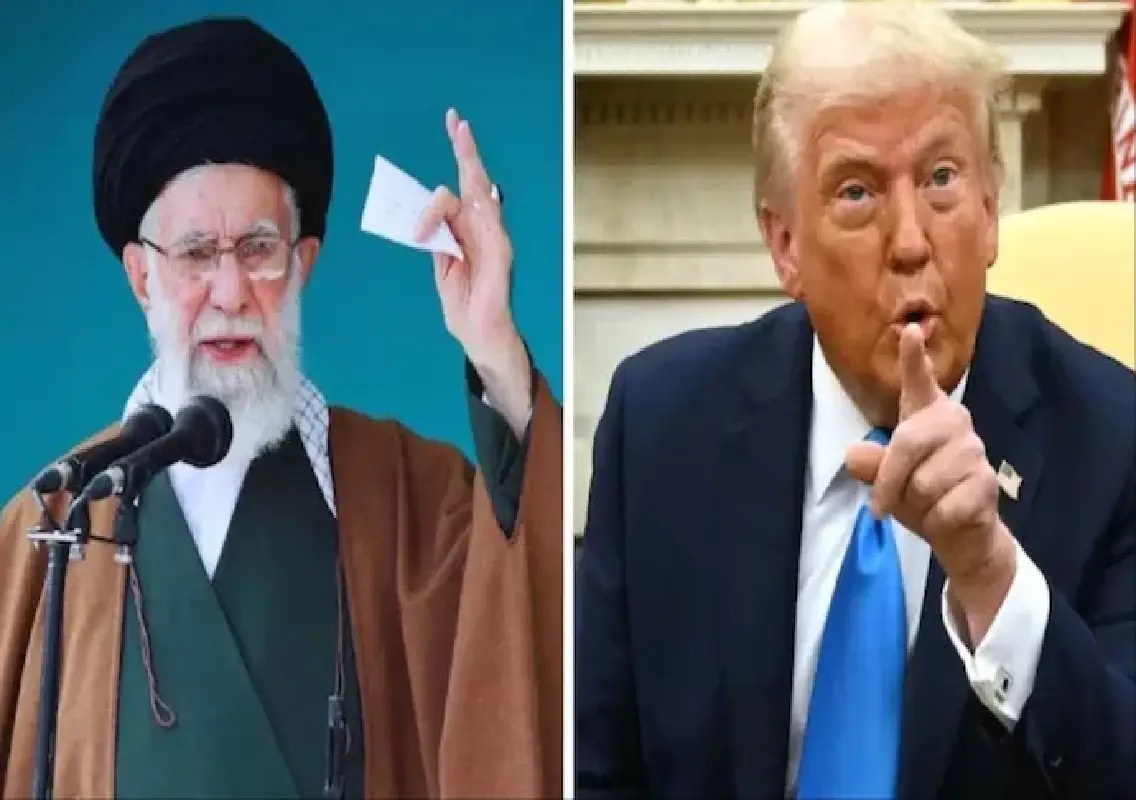


Washington: Tensions between the United States and Iran escalated sharply after US President Donald Trump threatened military intervention if Iranian forces fired on peaceful protesters, prompting a scathing response from a senior adviser to Iran’s Supreme Leader Ayatollah Ali Khamenei, who mocked Washington’s record of so-called “rescue operations” in the Middle East.
Trump’s warning sparks sharp response from Tehran
The exchange unfolded after Donald Trump issued a direct warning to Iran’s leadership, stating that the United States was “locked and loaded” to intervene if Iranian authorities used violence against protesters. His comments were aimed squarely at Supreme Leader Ayatollah Ali Khamenei, amid reports of growing unrest and anti-government chants in parts of Iran.
Responding within hours, Ali Shamkhani, a senior aide to Khamenei and a former secretary of Iran’s Supreme National Security Council, dismissed Trump’s threat as hollow and reckless. Taking to social media platform X, Shamkhani reminded Americans and the world of what he described as the disastrous outcomes of US military interventions in Iraq, Afghanistan and Gaza.
“Iranians know US ‘rescue’ record well, from Iraq and Afghanistan to Gaza,” Shamkhani wrote, adding that any attempt to interfere in Iran’s internal security would provoke a swift and “regret-inducing response”.
Reference to Afghanistan and Iraq withdrawals
Shamkhani’s remarks pointed directly to the US withdrawal from Afghanistan in 2021, which brought an abrupt end to nearly two decades of American military presence. The pullout, carried out under the Biden administration but negotiated earlier during Trump’s presidency, saw the Taliban regain control of the country within weeks.
Iranian officials and critics of the US have repeatedly highlighted that large quantities of American military equipment were left behind during the withdrawal. Shamkhani echoed this narrative, noting that weapons and equipment funded by Washington ended up in the hands of the Taliban, undermining US claims of protecting democracy and stability.
He also cited the US exit from Iraq at the beginning of the last decade, arguing that it created a security vacuum that contributed to the rise of the Islamic State (ISIS). The militant group went on to wage a brutal campaign between 2013 and 2017, devastating large parts of Iraq and neighbouring Syria and resulting in thousands of deaths and mass displacement.
Warning against “adventurism”
Accusing Trump of indulging in what he called “adventurism”, Shamkhani cautioned the US to focus on the safety of its own soldiers rather than issuing threats. He warned that Iran’s national security was a “red line” and not something that could be tested through aggressive rhetoric or social media posts.
“Any intervening hand nearing Iran’s security on pretexts will be cut off with a regret-inducing response,” he said, underlining Tehran’s long-standing position that foreign military involvement would only escalate tensions in the region.
Iranian leaders have consistently framed US actions in the Middle East as destabilising, often contrasting them with what they describe as Iran’s role in resisting Western and Israeli influence.
Trump’s threat and context of protests
Earlier, Trump had posted a stark message warning Tehran against using force on demonstrators. “If Iran shoots and violently kills peaceful protesters, which is their custom, the United States of America will come to their rescue,” he wrote, adding that US forces were ready to act.
The comments came amid reports circulating online of protests and chants calling for the death of Iran’s Supreme Leader and the return of the country’s exiled monarchic leadership. Some videos shared on social media showed crowds allegedly shouting slogans such as “Mullahs must leave Iran” and “Javid Shah”, meaning “long live the Shah”.
Iranian officials dismiss protests as fabricated
Iranian authorities have moved quickly to downplay these reports. Ahmad Alamolhoda, Khamenei’s representative in Iran’s Razavi Khorasan province, dismissed the footage as fake and accused foreign media of manipulating visuals using artificial intelligence.
According to Alamolhoda, Israeli media outlets and what he described as “enemy-affiliated channels” filmed ordinary crowds and then used AI technology to superimpose anti-government slogans onto the videos. He claimed the objective was to create a false impression that Iranians had turned against the Islamic Revolution and were seeking the collapse of the current system.
Such accusations reflect Tehran’s broader narrative that unrest within Iran is often exaggerated or orchestrated by foreign powers seeking regime change.
Rising rhetoric and uncertain trajectory
The exchange between Trump and Iranian officials highlights the fragile and often volatile nature of US-Iran relations, especially during periods of internal tension within Iran. While Trump is no longer in office, his statements continue to carry weight, particularly as he remains a central figure in American politics.
For Iran, public warnings of military action from Washington revive memories of past confrontations and reinforce its emphasis on sovereignty and deterrence. Analysts note that while neither side may seek direct conflict, sharp rhetoric increases the risk of miscalculation at a time when the Middle East remains deeply unstable.
Conclusion
As protests, counterclaims and political posturing continue, the latest war of words underscores how quickly regional tensions can escalate. With both sides invoking past conflicts and drawing red lines, the situation remains highly sensitive, with global implications far beyond the immediate exchange of threats and responses.