







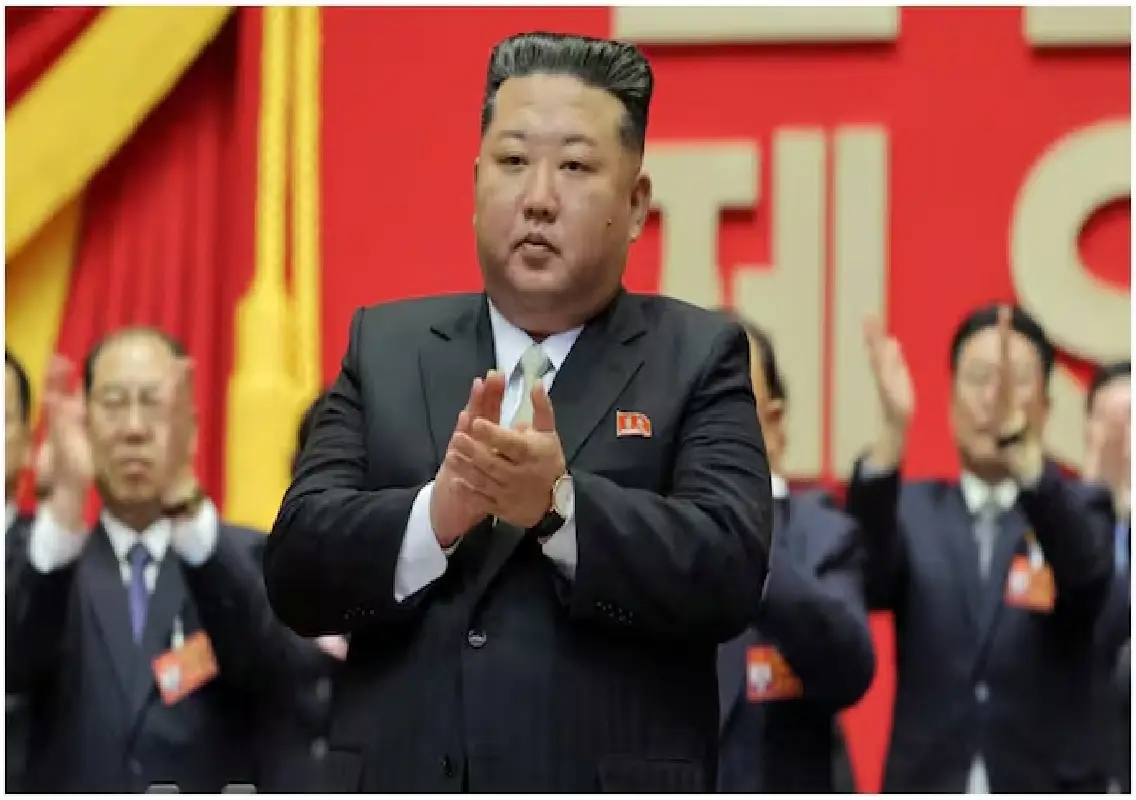


North Korea has conducted a test of a high-thrust, solid-fuel engine for weapons, with leader Kim Jong Un describing it as a significant step in strengthening the country’s strategic military capabilities, according to state media reports.
The development is being viewed by analysts as part of Pyongyang’s continued efforts to modernise its missile arsenal, particularly systems capable of reaching the mainland of the United States.
Engine test marks technological upgrade
According to the Korean Central News Agency (KCNA), the test involved a newly upgraded engine built using composite carbon fibre materials. The engine reportedly achieved a maximum thrust of 2,500 kilotons, marking a notable increase compared to earlier tests.
The use of solid-fuel technology is considered a major advancement, as such missiles are easier to deploy quickly and are harder to detect before launch compared to liquid-fuel systems.
Part of long-term military strategy
The test is part of North Korea’s ongoing five-year military development plan, which aims to enhance what it describes as “strategic strike means.” This term is widely interpreted as referring to nuclear-capable intercontinental ballistic missiles (ICBMs).
Kim Jong Un reportedly stated that the successful test holds “great significance” in elevating the country’s military strength to a higher level.
Focus on multi-warhead capability
Experts suggest that the increased engine thrust may be linked to efforts to develop missiles capable of carrying multiple warheads. Such systems are designed to improve the chances of bypassing missile defence systems.
North Korea has, in recent years, conducted multiple missile tests showcasing potential long-range capabilities. These include solid-fuel ICBMs, which represent a more advanced and flexible launch system.
Ongoing technological challenges
Despite these advancements, some international experts believe North Korea still faces technical hurdles, particularly in ensuring that warheads can survive the extreme conditions encountered during atmospheric re-entry.
However, other analysts argue that the country’s sustained focus on its nuclear and missile programmes over several years may have helped it overcome some of these challenges.
Rising tensions and geopolitical context
The latest test comes amid heightened global tensions and follows recent remarks by Kim Jong Un criticising US foreign policy. He has also reiterated his stance on maintaining North Korea’s nuclear capabilities.
Relations between North Korea and the United States have remained strained since talks between Kim and former US President Donald Trump stalled in 2019 without a concrete agreement on denuclearisation.
While North Korea has occasionally signalled openness to dialogue, it has consistently opposed preconditions related to dismantling its nuclear arsenal.
Conclusion
The engine test underscores North Korea’s continued focus on advancing its strategic weapons programme. As the country enhances its missile capabilities, the development is likely to have significant implications for regional and global security dynamics.