







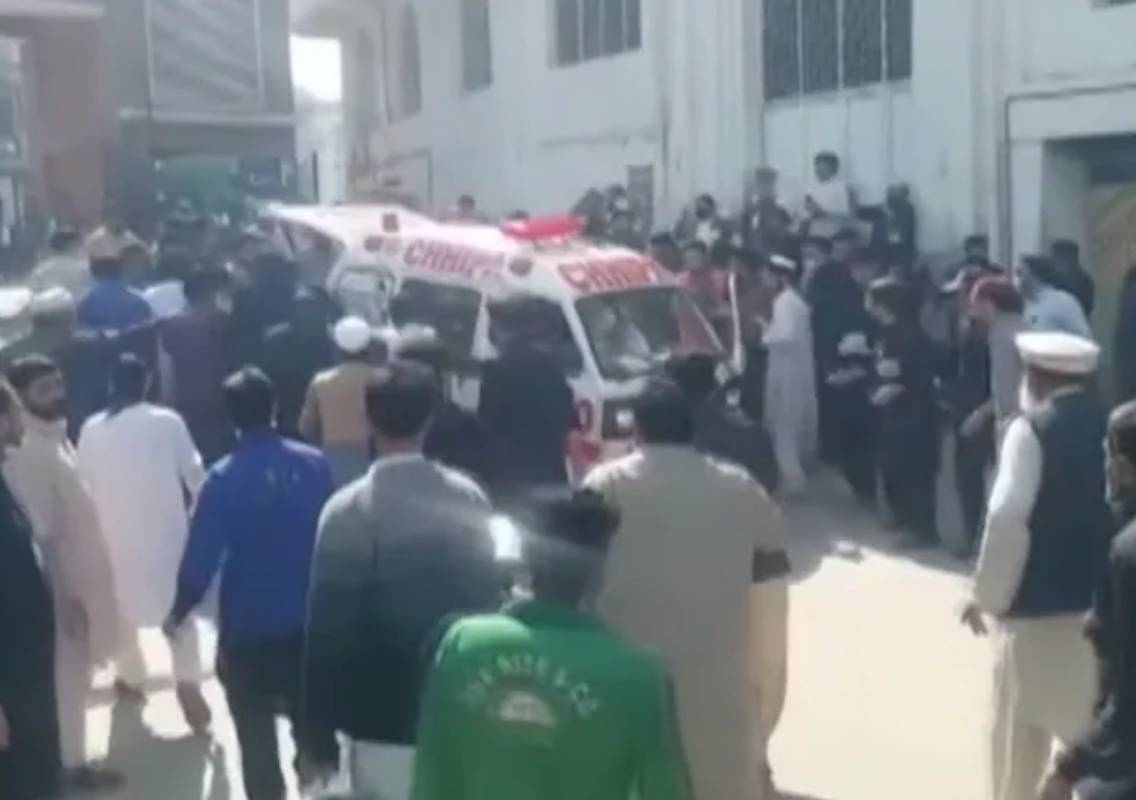


Kohat: At least 21 people, including 15 police personnel, were killed and more than 80 others injured after an explosives-laden vehicle struck a mosque inside the Kohat Police Lines in Pakistan’s Khyber Pakhtunkhwa province during Friday prayers on September 18. The bombing was followed by an attempted assault on the police compound, triggering a gunfight between security forces and armed attackers.
The attack took place in Kohat, a city in northwestern Pakistan close to the Afghan border. An explosives-laden vehicle reportedly rammed the gate or outer wall of the Old Police Lines, after which armed men attempted to enter the compound. The incident caused extensive damage to the mosque and surrounding police facilities.
Death toll and casualties
According to Khyber Pakhtunkhwa officials cited by Dawn, 21 people were killed, including 15 police officials, while more than 80 people were injured. Three of the injured were reported to be in critical condition. Earlier reports had put the death toll at 16 before the figure rose as rescue operations continued.
The mosque was being used for Friday prayers when the attack occurred, meaning police personnel, their family members and civilians were present in the compound. Rescue officials said many of the injured were worshippers.
The explosion damaged the mosque and brought down sections of the surrounding police facility. Rescue teams and local residents were seen searching through debris and helping injured people reach hospitals.
Reuters reported earlier that the attack involved a suicide car bomb followed by a gunfight and that several attackers were killed during the ensuing security operation.
How the attack unfolded
Khyber Pakhtunkhwa police chief Zulfiqar Hameed said an explosives-laden vehicle was used in the initial attack. At least seven armed attackers subsequently attempted to enter the police compound, according to reports from the scene.
Police engaged the attackers in a gunfight, with several militants killed. Pakistani authorities also reported a second explosion at a police building during the exchange of fire.
The coordinated nature of the assault meant that emergency teams had to deal with both the casualties from the initial blast and the security threat posed by the gunmen. A clearance operation was subsequently launched around the compound.
Militant group link remains under scrutiny
Initial international reports said no group had immediately claimed responsibility. Reuters reported that the Pakistan Taliban, or Tehreek-e-Taliban Pakistan (TTP), publicly denied involvement at that stage.
However, Pakistani media later reported a claim of responsibility from the Hafiz Gul Bahadur-led Ittehadul Mujahideen, a militant faction operating in the region. Dawn reported that the group claimed the attack, while other reports described the assault as being linked to militant organisations associated with the wider Pakistani Taliban network.
The differing claims underline the need for caution over attributing responsibility while investigations are continuing. Pakistani President Asif Ali Zardari, in a statement reported by Anadolu, referred to the perpetrators using the government’s term “Fitna al-Khawarij”, which Islamabad uses in reference to the TTP and associated militants.
Kohat lies in a violence-hit region
Kohat is located in Khyber Pakhtunkhwa, a province that has experienced repeated militant attacks, particularly in districts close to the Afghan border.
The latest attack came amid a wider increase in violence involving Pakistani security forces and militant groups. A day earlier, a roadside explosive attack in neighbouring Hangu district killed six Pakistani soldiers travelling in a security convoy.
Pakistani forces also carried out counter-militancy operations in the region, with officials reporting the deaths of suspected militants. The developments have added to security concerns across Khyber Pakhtunkhwa.
Pakistan has repeatedly accused Afghanistan’s Taliban government of allowing TTP members to operate from Afghan territory. Kabul has rejected such accusations. Although the TTP and the Afghan Taliban share ideological and historical links, they remain separate organisations.
Pakistan-Afghanistan tensions remain high
The Kohat attack comes against the backdrop of deteriorating security relations between Pakistan and Afghanistan. Islamabad has argued that militant groups operating from or around Afghan territory have been able to plan attacks inside Pakistan.
Afghan Taliban authorities have rejected allegations that they provide safe havens to the TTP. The issue has remained a major source of tension between the neighbouring countries since the Taliban returned to power in Afghanistan in 2021.
Security officials and analysts have repeatedly pointed to the difficult terrain along the Pakistan-Afghanistan border as a challenge for preventing militant movement.
Shehbaz Sharif condemns attack
Pakistan Prime Minister Shehbaz Sharif condemned the Kohat attack and directed authorities to accelerate rescue and relief operations.
Pakistan’s Interior Ministry also condemned the assault and said such attacks would not weaken the country’s resolve against militant violence.
The immediate priority remained treating the injured and completing the security operation around the police compound. With several people reported to be seriously injured, authorities warned that the casualty figures could change further.
The Kohat attack is also likely to intensify scrutiny of security arrangements at police facilities and places of worship in Khyber Pakhtunkhwa, particularly as militant violence continues to affect the region.