







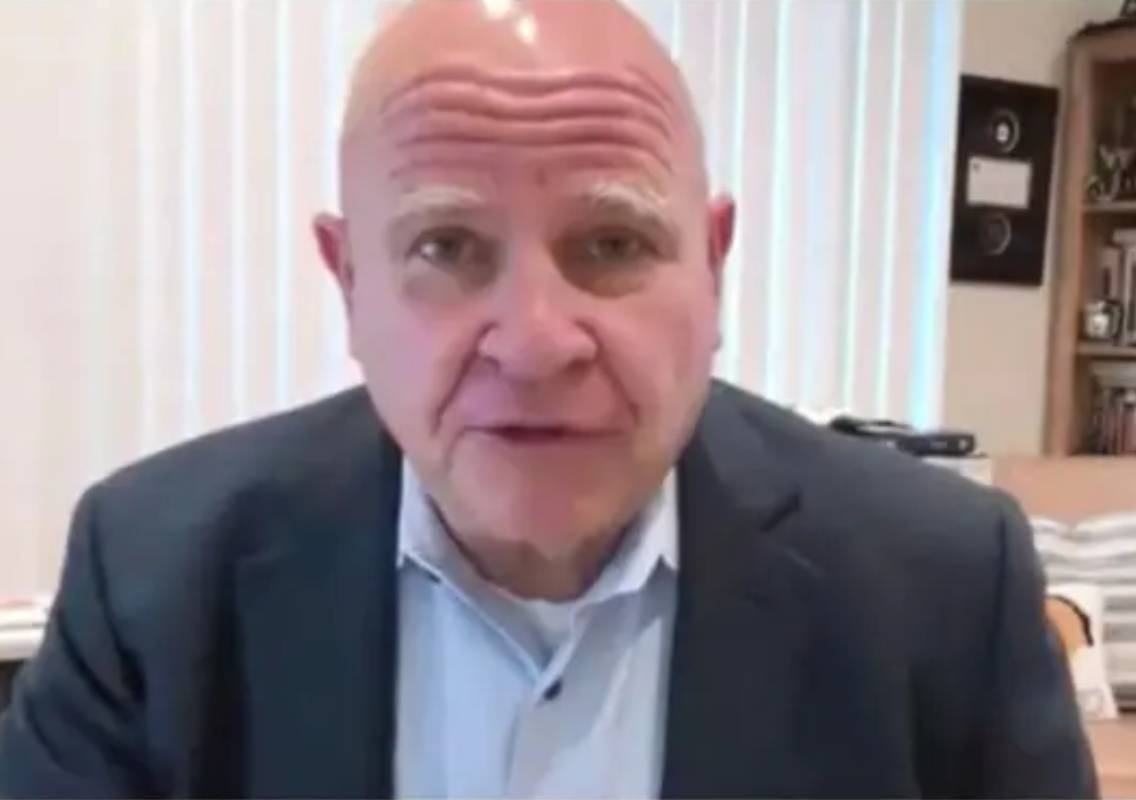


New Delhi: Former US National Security Advisor Lt Gen H.R. McMaster has backed tougher economic measures against countries buying Russian energy, while also calling for Washington to take into account India’s security concerns and its long-standing defence and energy ties with Moscow.
McMaster’s remarks came after the US House of Representatives passed the bipartisan Lindsey O. Graham Sanctioning Russia and Iran Act of 2026 by a vote of 262-159. The legislation, which had earlier cleared the US Senate, gives the US president authority to impose tariffs of up to 100% on imports from countries that continue to buy Russian oil and gas, subject to the provisions and exceptions in the legislation. The bill has now been sent to President Donald Trump.
Speaking about the proposed measures, McMaster argued that stronger economic pressure was necessary to raise the cost for Moscow of continuing its war-related activities. At the same time, he acknowledged that Washington itself continues to face vulnerabilities because of dependence on Russian nuclear fuel.
McMaster calls for stronger economic pressure on Russia
McMaster said the United States should use the tariff powers available under the legislation to increase pressure on Russia.
“I think we should fire that gun,” McMaster said, arguing that economic pressure should make it more difficult for Russian President Vladimir Putin to continue military operations at an acceptable cost.
The legislation passed by the House includes sanctions targeting Russian officials, financial institutions and parts of the country’s energy and shipping networks. It also provides the administration with authority to impose secondary tariffs on countries importing Russian-origin oil and natural gas.
The bill’s passage followed months of bipartisan negotiations in Congress. The Senate approved the measure in August before the House agreed to the Senate amendments in September.
‘It is crazy that we’re buying uranium from Russia’
While supporting tougher measures against Russian energy buyers, McMaster also pointed to what he described as a contradiction in Western policy.
He referred to continued US dependence on Russian nuclear fuel and said Washington should not allow a hostile government to retain economic leverage through critical supply chains.
“It is crazy that we’re buying uranium from Russia. I think it’s nuts,” McMaster said.
The issue highlights the difficulties involved in rapidly replacing Russian supplies in strategically important sectors. The proposed sanctions framework includes provisions and potential exemptions relating to certain critical dependencies, meaning enforcement could involve specific waivers or exceptions rather than an immediate end to every form of Russian-related trade.
The broader legislation is designed to reduce Russia’s ability to generate revenue through energy exports while extending economic pressure to countries that facilitate or maintain certain Russian energy flows.
McMaster urges US to understand India’s security concerns
Despite his support for stronger action against Russian energy buyers, McMaster said Washington should approach India differently because of the country’s strategic circumstances.
He pointed to India’s relationships with both China and Pakistan and its long-standing reliance on Russian military equipment.
“Do you really want to alienate Russia? Probably not at the moment,” McMaster said while discussing India’s position.
He also expressed sympathy for India’s strategic calculations, saying the country’s foreign-policy choices need to be understood in the context of its security environment.
India has historically sourced a significant portion of its defence equipment from Russia and has continued purchasing Russian energy despite pressure from Western countries following Russia’s invasion of Ukraine.
The debate has become more important after the US House approved legislation that could expose major Russian energy buyers such as India and China to additional tariffs. The exact implementation of those tariff powers would depend on subsequent action by the US administration.
McMaster raises concerns over Pakistan’s role
McMaster also spoke about India’s security relationship with Pakistan.
He said one of his frustrations had been what he described as Washington’s reluctance to recognise what he characterised as Pakistan’s “double-dealing” on security matters.
According to McMaster, India’s concerns over terrorism and its relationship with Pakistan should be part of the wider US understanding of India’s strategic choices.
His comments come as Washington and New Delhi continue to manage differences over trade and India’s relationship with Russia while maintaining cooperation in areas including defence and the Indo-Pacific.
McMaster says India-US relationship has long-term potential
McMaster also argued that the India-US relationship should be viewed over a longer timeframe rather than solely through the immediate dispute over Russian energy purchases.
He said China’s regional ambitions could remain an important factor bringing India and the United States closer.
“China wants a servile relationship with India,” McMaster said, contrasting Beijing’s approach with what he described as Washington’s support for national sovereignty.
He also said the United States should not necessarily pressure India to immediately choose between Washington and Moscow.
“I think we should not worry about that as much and have faith that really the long-term future is in favour of the India-US relationship,” he said.
McMaster’s comments were framed around the distinction between immediate geopolitical choices and longer-term strategic alignment. His remarks do not represent a change in official US policy, but they highlight the debate within American strategic circles over how Washington should handle India’s ties with Russia.
US tariff legislation puts India in focus
The legislation has drawn particular attention in India because of its potential implications for countries that continue to purchase Russian oil and gas.
The Congressional Research Service has noted that the measure authorises new tariffs on imports from Russia and certain other countries that either import Russian crude oil or natural gas or facilitate sanctions evasion.
The House vote was 262-159, with the legislation receiving bipartisan support before being sent to Trump’s desk.
The legislation does not automatically mean that a 100% tariff will immediately be imposed on Indian goods. The authority granted to the US president would have to be exercised through subsequent executive action.
This distinction is significant for Indian exporters, as the eventual impact would depend on the products covered, the tariff rate selected and any exemptions or waivers introduced by Washington.
India-US trade talks continue
The tariff issue is unfolding alongside ongoing India-US trade discussions.
The United States is scheduled to host the G20 Trade Ministerial in Milwaukee, Wisconsin, from September 30 to October 1. The meeting will bring together G20 trade ministers and is expected to cover a range of international trade issues.
India’s Commerce and Industry Minister Piyush Goyal is also expected to travel to the US later this month for the G20 Trade Ministerial and bilateral discussions with US Trade Representative Jamieson Greer, according to a recent report.
The discussions will take place against the backdrop of differences over tariffs, India’s Russian energy purchases and the broader direction of bilateral trade relations.
India’s Russian ties remain a strategic issue
McMaster’s comments underline the difficulty Washington faces in applying a uniform approach to countries purchasing Russian energy.
For India, Russian oil and defence cooperation form part of a broader strategic relationship that predates the current geopolitical tensions. New Delhi has repeatedly linked its energy sourcing decisions to national interests and energy security.
At the same time, India and the United States have expanded cooperation in areas including defence, technology and the Indo-Pacific.
The US sanctions legislation therefore creates another point of tension even as both countries continue negotiations and strategic engagement. The extent to which Washington uses the tariff authority, and whether exemptions or waivers are granted for particular circumstances, will determine its practical impact on India.
For now, McMaster’s remarks reflect a call for tougher pressure on Russia alongside an acknowledgement that India’s strategic calculations differ from those of the United States.