







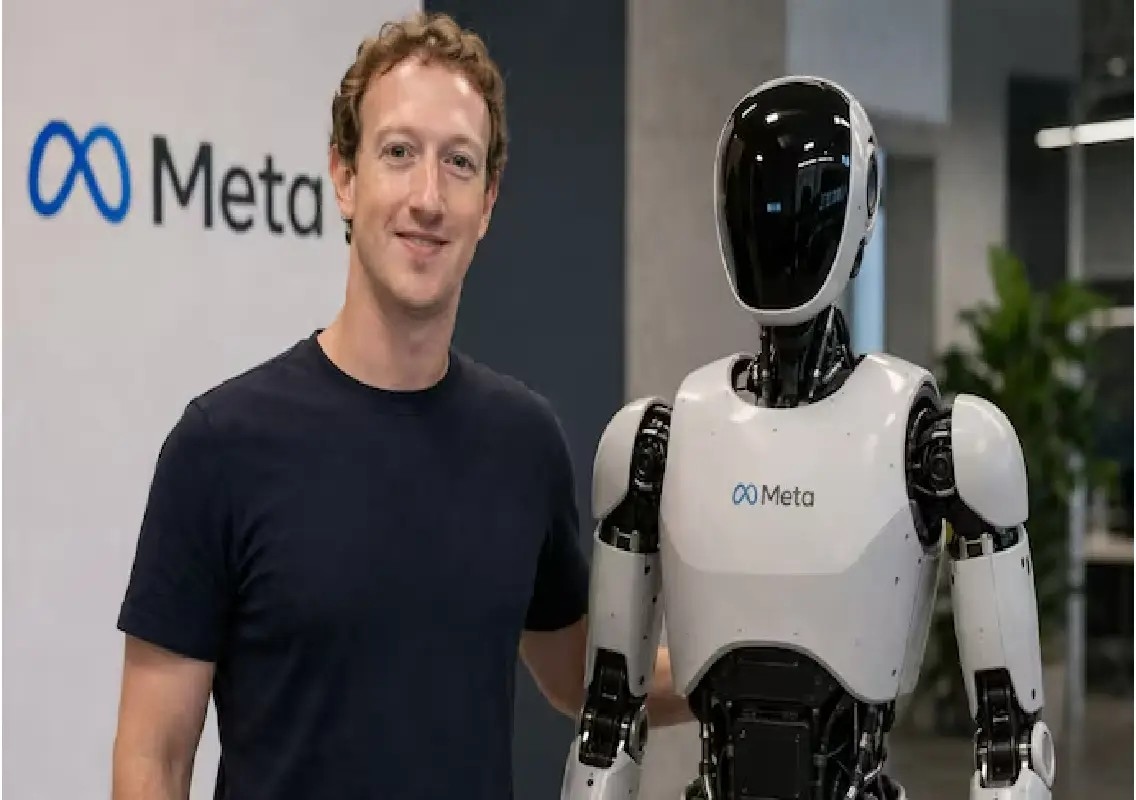


Meta has intensified its push into artificial intelligence and robotics with the acquisition of startup Assured Robot Intelligence (ARI), signalling a deeper focus on developing AI systems for humanoid robots.
The move marks Meta’s growing interest in combining large language models (LLMs) with physical systems, aiming to enable robots to better understand, predict, and adapt to human behaviour in real-world environments.
Focus on robotic intelligence
Confirming the acquisition, a Meta spokesperson said ARI specialises in advanced robotic intelligence designed for dynamic and complex settings. While financial details of the deal have not been disclosed, the acquisition reflects Meta’s strategy to expand beyond traditional AI applications such as chatbots and virtual assistants.
The deal comes shortly after a reported setback in Meta’s acquisition plans elsewhere, underlining the company’s urgency to strengthen its AI capabilities.
ARI team joins Meta’s AI division
Following the acquisition, ARI’s founding team—including Xiaolong Wang, Lerrel Pinto, and Xuxin Cheng—will join Meta’s Superintelligence Labs (MSL), the company’s core AI research unit.
MSL is led by Alexandr Wang, who joined Meta after the company’s major investment in Scale AI. The division is tasked with building next-generation AI systems, including those capable of interacting with the physical world.
ARI’s team is expected to collaborate closely with Meta’s Robotics Studio, which focuses on developing foundational technologies for humanoid robots.
Building a platform for humanoid robots
Industry reports suggest that Meta is exploring the creation of a universal software platform for humanoid robots—similar to how Android operates in the smartphone ecosystem.
Such a platform could allow multiple manufacturers to build robots powered by Meta’s AI systems. Meta CTO Andrew Bosworth has previously indicated that the company aims to develop software that can be licensed to other firms.
This approach could position Meta as a key player in the robotics ecosystem, even if it does not manufacture hardware directly.
Shift from metaverse to AI and robotics
The acquisition also reflects Meta’s evolving priorities. After scaling back its metaverse ambitions, including reduced focus on Horizon Worlds, the company is now investing more heavily in AI-driven technologies.
The focus on humanoid robotics represents a natural extension of Meta’s work in AI agents and virtual avatars, bringing intelligence from digital environments into the physical world.
Growing competition in humanoid robotics
Meta is entering an increasingly competitive space. Companies like Tesla are developing humanoid robots such as Optimus, while firms in China, including Unitree, are making rapid advancements in robotic mobility and performance.
Meanwhile, Google is also investing in robotics through its AI models designed to power intelligent machines.
These developments highlight a broader industry shift toward creating robots capable of performing real-world tasks, from industrial work to household assistance.
What lies ahead
While Meta has not announced a specific humanoid robot product, reports indicate that its robotics team is working on sensors, control systems, and AI software that could eventually be integrated into commercial robots.
The long-term goal appears to be building an ecosystem where Meta’s AI powers a wide range of robotic applications across industries.
Conclusion
Meta’s acquisition of ARI underscores its ambition to lead in the next phase of AI evolution—bringing intelligence into the physical world through humanoid robots. As competition intensifies, the company’s success will depend on how effectively it can integrate advanced AI with practical, real-world applications.