







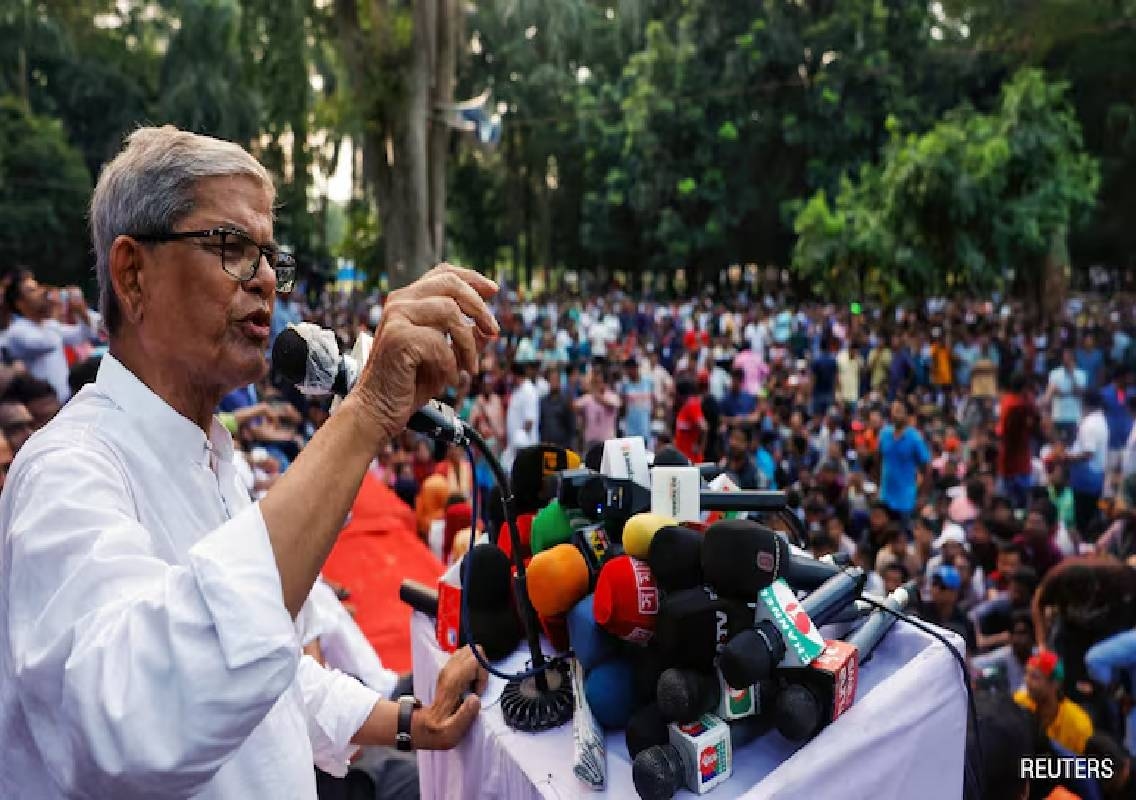


Dhaka: Mirza Fakhrul Islam Alamgir has completed a political journey spanning more than five decades, rising from a student activist at Dhaka University to become the 23rd President of Bangladesh.
The 78-year-old veteran of the Bangladesh Nationalist Party (BNP) was elected president on August 20, defeating Liberal Democratic Party leader Oli Ahmed in Bangladesh’s first contested presidential election in 35 years. Alamgir secured 255 votes, while Ahmed received 88. He was sworn in on Friday.
His elevation comes after decades in public life, including years as one of the BNP’s most prominent leaders during its opposition to Sheikh Hasina’s government.
Early years as a student leader
Alamgir’s political involvement began during his student years at the University of Dhaka.
He joined the East Pakistan Students’ Union, a left-leaning student organisation, and became president of its Dhaka University unit during the mass uprising of 1969 against the then Pakistan-backed government.
The movement was an important chapter in the political history of what was then East Pakistan, coming just two years before Bangladesh’s independence.
Alamgir’s early involvement in student politics established the foundation for a career that would eventually take him to the country’s highest constitutional office.
From teaching to politics
After completing his education, Alamgir entered the teaching profession and worked as an educator before moving into full-time politics.
He left government service in 1986 to begin a political career. His decision marked the start of a transition from education and public administration towards frontline politics.
The move came at a time when Bangladesh’s political landscape was undergoing significant changes, and Alamgir gradually became involved in national political activity.
His experience in education and administration later became part of the public profile he built within the BNP.
Joining the Bangladesh Nationalist Party
Alamgir joined the Bangladesh Nationalist Party, or BNP, in the 1990s and steadily rose through the party’s organisational ranks.
The BNP was founded by former Bangladeshi President Ziaur Rahman and became one of the country’s two major political forces, alongside the Awami League.
Alamgir eventually emerged as one of the party’s most important organisers and public speakers.
He became BNP secretary general in 2011 and continued in the role as the party faced years of opposition politics, political confrontation and legal challenges.
A prominent voice during opposition years
Alamgir became particularly well known as one of the BNP’s leading public faces during the years when Sheikh Hasina and the Awami League dominated Bangladesh’s political system.
He frequently addressed rallies, press conferences and political programmes on behalf of the party.
His role became even more important as BNP leaders and activists faced arrests and political pressure during the prolonged confrontation between the BNP and Awami League.
For years, Alamgir remained one of the party’s most visible figures and became closely associated with its opposition campaign.
Minister in the Khaleda Zia government
Alamgir also held government positions during the BNP’s earlier period in power.
After the BNP-led coalition won the 2001 general election, he became state minister for agriculture and later served as state minister for civil aviation and tourism.
His ministerial experience gave him an understanding of government administration before he returned to a more prominent role in opposition politics.
His career therefore included experience on both sides of the political divide — as a government minister and as a senior opposition leader.
Rise to BNP secretary general
Alamgir’s position within the BNP strengthened over the years.
He became the party’s secretary general and eventually served as one of its longest-serving senior leaders.
During the years of opposition, he became a key spokesperson for the party and frequently represented its position on national political issues.
His measured public style and long experience helped him maintain a prominent position within the BNP despite periods of political instability.
Bangladesh’s political upheaval
The political environment changed dramatically in 2024 when widespread protests led to the fall of Sheikh Hasina’s government.
Hasina left Bangladesh following the protests, and an interim administration led by Nobel laureate Muhammad Yunus took charge.
The BNP subsequently returned to national political prominence and eventually won the February 2026 general election.
Tarique Rahman, the BNP chairman, became prime minister, while Alamgir took on a senior ministerial role in the new government.
From minister to presidential candidate
Before his presidential election, Alamgir was serving as the minister for local government, rural development and cooperatives under Prime Minister Tarique Rahman.
He was also continuing as BNP secretary general.
His nomination for president therefore represented a major transition — from being one of the BNP’s most influential party figures to becoming a candidate for the country’s highest constitutional office.
Before the vote, Alamgir spoke of his vision for a Bangladesh focused on prosperity, social welfare, dignity, security and opportunities for ordinary citizens.
First contested presidential election in 35 years
Alamgir’s election was historically significant because Bangladesh had not witnessed a contested presidential election in 35 years.
He defeated Oli Ahmed in Parliament by 255 votes to 88.
The result reflected the BNP and its allies’ strong parliamentary position following their victory in the February general election.
The presidency in Bangladesh is largely ceremonial, with executive authority primarily resting with the prime minister.
However, the president remains the country’s head of state and commander-in-chief of the armed forces, giving the office constitutional importance.
A new role outside party politics
Alamgir’s move to the presidency also creates a significant change in his political role.
For years, he was closely identified with BNP organisational politics and served as one of its most prominent public voices.
As president, however, he assumes a constitutional position that stands above day-to-day party politics.
His transition will therefore be closely watched as Bangladesh’s new government seeks to establish a different political environment following years of intense confrontation between major political parties.
A career shaped by political change
Alamgir’s career has closely followed Bangladesh’s political evolution.
He entered public life during the final years of Pakistan’s rule over East Pakistan, witnessed the country’s independence era, moved through education and government service, entered national politics and eventually became one of the BNP’s leading figures.
His career also spans periods of military influence, democratic transitions, political competition and prolonged confrontation between Bangladesh’s major parties.
His election as president now adds another chapter to that long political history.
What lies ahead
As president, Alamgir will take office at a time when Bangladesh is undergoing another major political transition.
The BNP’s return to power has changed the country’s political balance, while the Awami League has been excluded from the 2026 election after the upheaval that brought down Hasina’s government.
Alamgir’s long experience in opposition politics could prove significant as the country attempts to move towards greater political stability.
His challenge will be to establish himself as a constitutional head of state while leaving behind the role of an active party politician.
Conclusion
Mirza Fakhrul Islam Alamgir’s rise from a student leader at Dhaka University to Bangladesh’s 23rd president represents a political journey spanning more than five decades.
He began his political career in the student movement of the 1960s, later worked in government service and education, joined the BNP and eventually became one of its longest-serving senior leaders. He also held ministerial positions during the BNP’s earlier period in government.
His election as president followed the BNP’s return to power in 2026 and came in Bangladesh’s first contested presidential election in 35 years. Alamgir defeated Oli Ahmed by 255 votes to 88 and subsequently took the oath of office.
His transition from a leading party politician to head of state marks a new phase in a career that has closely mirrored Bangladesh’s turbulent political history.