







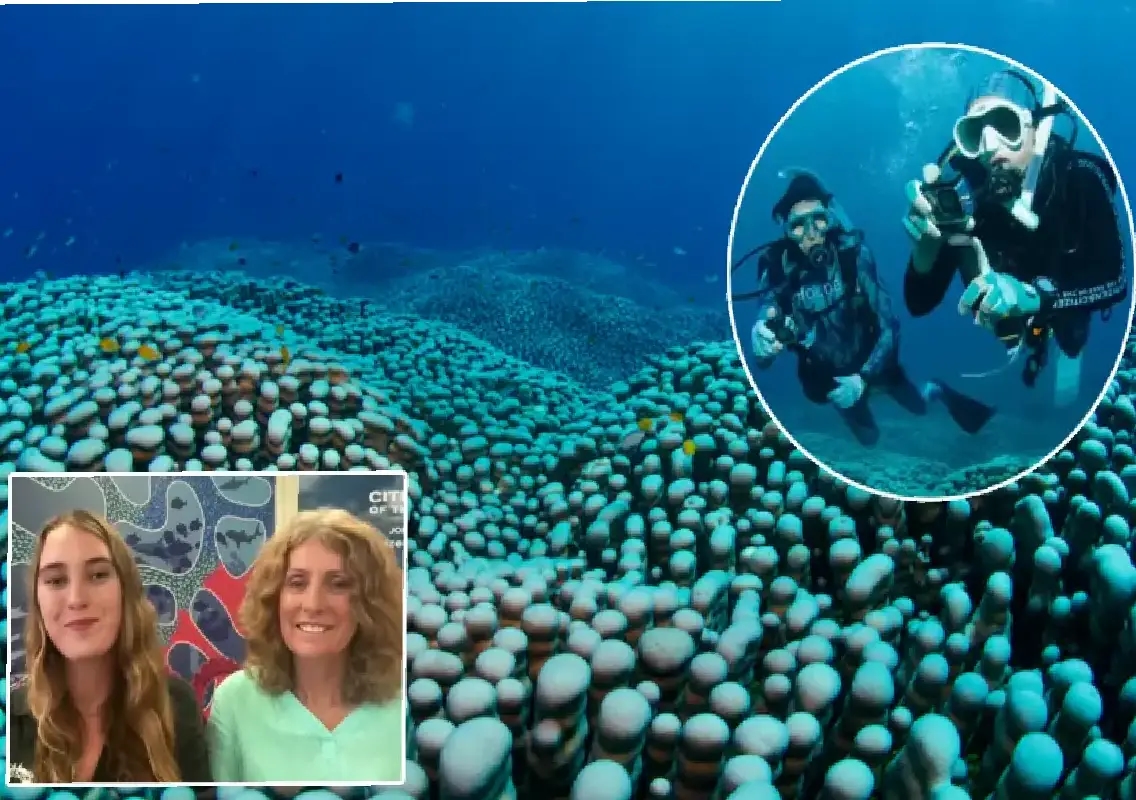


A mother-daughter team participating in a community research initiative has helped document the largest known coral colony on the Great Barrier Reef.
Jan Pope and her daughter Sophie Kalkowski-Pope have been contributing to the Great Reef Census, a citizen science project led by Citizens of the Reef aimed at mapping unexplored sections of the vast marine ecosystem.
Massive discovery in uncharted waters
While scuba diving in a relatively uncharted section of the reef late last year, Jan encountered an enormous coral formation stretching hundreds of feet. Recognising its significance, she returned two weeks later with Sophie to record detailed images and videos.
Experts later confirmed that the coral colony spans over 40,000 square feet and is the largest documented on the Great Barrier Reef. The colony is identified as Pavona clavus, a hardy coral species capable of forming extensive structures.
Scientists believe the massive formation likely originated from a single polyp, gradually expanding into a vast interconnected colony.
A win for citizen science
Corals are marine invertebrates composed of thousands of tiny polyps functioning as a single organism. However, rising ocean temperatures and coral bleaching remain major threats to reef ecosystems worldwide.
The discovery offers hope that significant, thriving coral structures still exist despite environmental pressures. It also highlights the growing role of citizen science in conservation.
Sophie described the experience as deeply meaningful, noting that the find demonstrates how ordinary individuals can contribute meaningfully to environmental research.
Conservationists say continued monitoring and protection efforts are essential to preserve these fragile yet vital ecosystems for future generations.