







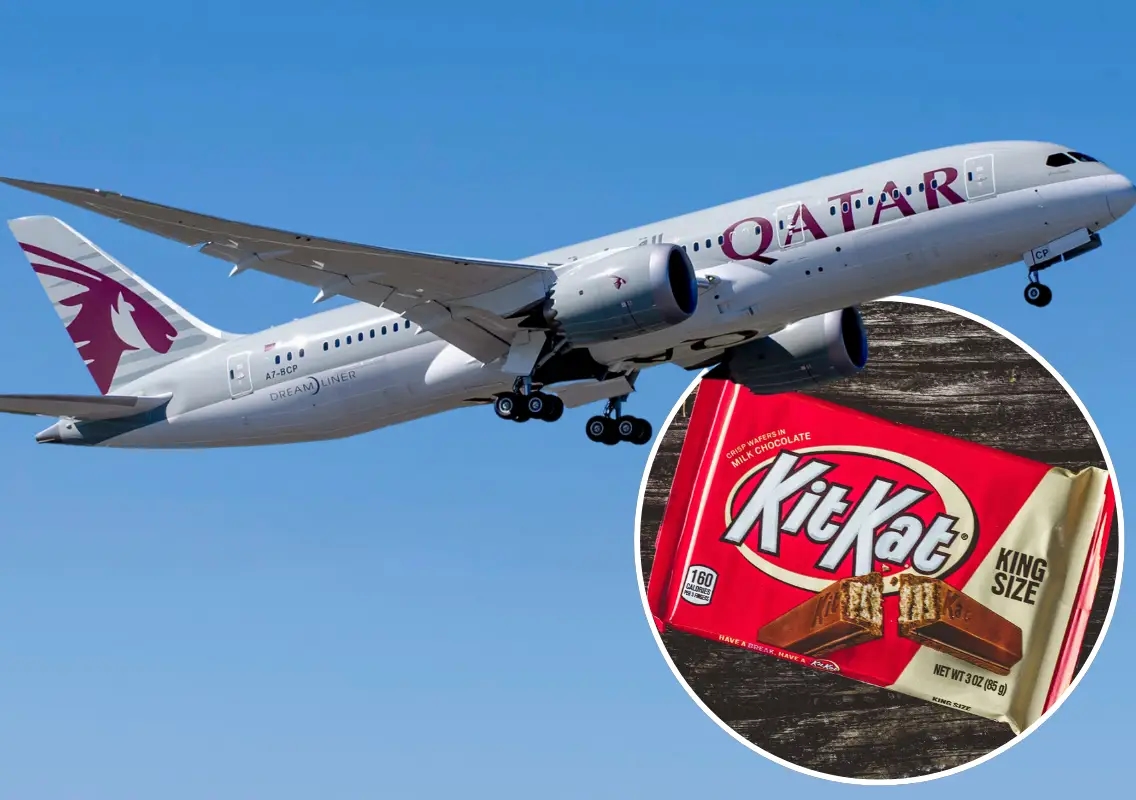


A US-based mother has filed a lawsuit against Qatar Airways, alleging that her three-year-old daughter suffered a severe allergic reaction after being served a chocolate bar during a long-haul flight from Washington Dulles International Airport to Doha.
The mother, identified as Swetha Neerukonda, has sought USD 5 million in damages, claiming that the incident caused her daughter significant medical distress and required hospitalisation. The airline has not yet publicly responded to the lawsuit.
Incident Reported on US–Qatar Flight
According to the complaint filed in a federal court in Alexandria, Virginia, Neerukonda informed the cabin crew about her daughter’s severe dairy and nut allergies before the flight took off. During the journey, she briefly left her seat to use the lavatory and allegedly returned to find her daughter being offered a chocolate bar.
The lawsuit states that the child began displaying signs of an allergic reaction soon after. Neerukonda reportedly administered an epinephrine injection herself to stabilise her daughter’s condition. The family later continued their journey to India, where the child was admitted to hospital for further treatment.
Legal Claims and Allegations
In her filing, Neerukonda alleges that the airline’s cabin crew did not adequately respond to the emergency. The complaint asserts that the flight attendants “failed to act with due care” despite being informed of the allergy in advance.
The lawsuit further contends that no in-flight medical announcement was made, and that the mother was not provided immediate assistance. The document seeks damages for emotional distress, medical expenses, and negligence.
Qatar Airways has not issued an official statement regarding the case. The airline’s internal policies regarding passenger allergies and in-flight medical support have not been detailed in the public court documents.
Air Travel and Allergy Protocols
Severe allergic reactions, or anaphylaxis, can be life-threatening and require immediate medical attention. While the Federal Aviation Administration (FAA) mandates airlines to carry emergency medical kits, regulations do not require the inclusion of EpiPens, which can be administered without professional medical training.
Most airlines, including international carriers, rely on vials of epinephrine that must be administered by qualified personnel. The absence of a standard global policy on managing passenger allergies has prompted several families worldwide to raise concerns about in-flight safety.
Similar Reported Cases
In recent years, a few other air travel–related allergy incidents have been reported internationally. Several lawsuits have alleged inadequate allergy management on board, prompting public discussions about whether airlines should enhance passenger safety protocols.
Aviation medical experts suggest that passengers with severe allergies should carry prescribed emergency medication and alert airline staff well before boarding. Airlines are also encouraged to review their food handling procedures and crew training to reduce such risks.
Next Steps in the Case
Neerukonda’s lawsuit, filed on October 31, seeks a jury trial and compensation for medical costs and alleged emotional suffering. The case will now proceed through the US federal court system in Virginia.
As of now, Qatar Airways has not filed a formal response to the complaint. The outcome of the case could influence how airlines worldwide handle declared food allergies in-flight