







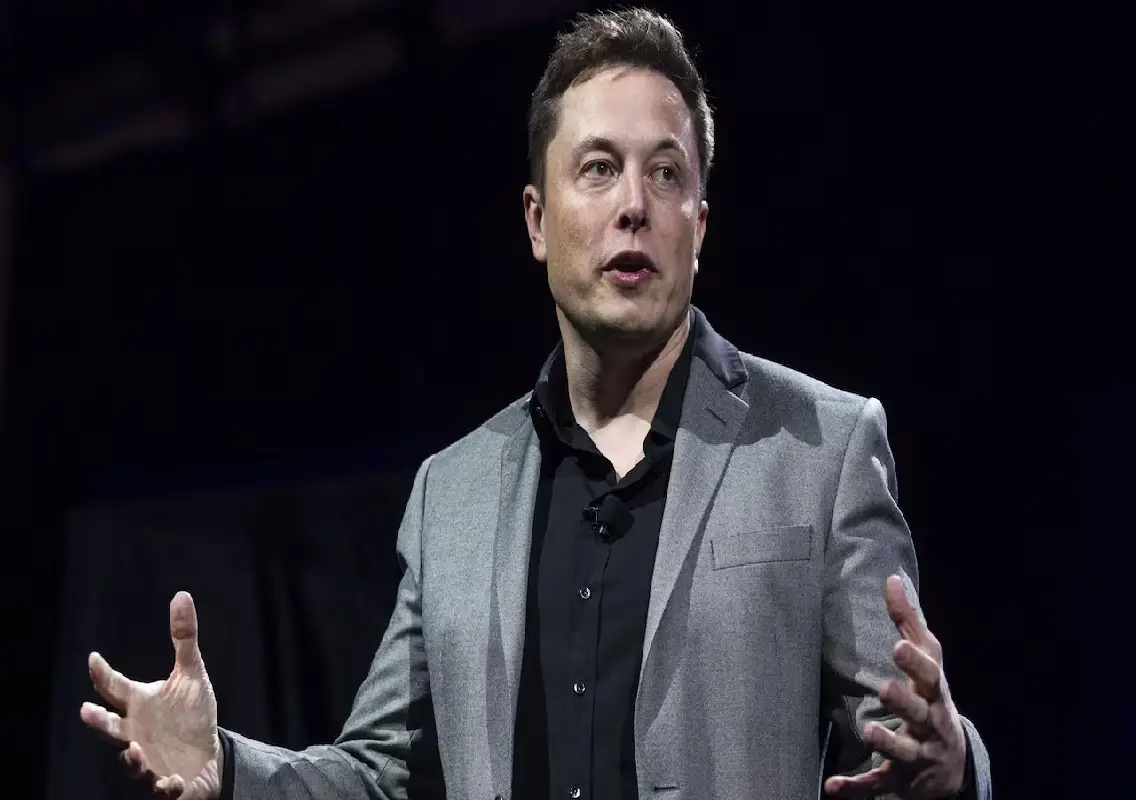


Tech billionaire Elon Musk has reignited debate over the future of work by suggesting that governments may need to provide direct financial support to citizens as artificial intelligence begins to replace human jobs at scale.
In a recent post on X, Musk proposed the idea of a “universal high income” funded by governments, arguing that it could be the most practical solution to address widespread unemployment caused by automation and robotics.
‘Universal high income’ as a solution
Elon Musk stated that issuing regular payments directly to people could help stabilise economies as traditional employment opportunities decline. He argued that such a system would act as a safety net in an AI-driven world where machines perform a growing share of tasks.
According to Musk, concerns about inflation under such a model may be overstated. He suggested that the increased productivity brought by robots and AI would significantly boost the supply of goods and services, thereby keeping prices in check even if governments inject more money into the economy.
AI advancing faster than governments
During a recent podcast discussion with futurist Peter H. Diamandis and technology expert Dave Blundin, Musk elaborated on the rapid pace of AI development.
He claimed that AI is evolving “10 times faster than government,” making it difficult for policymakers to respond effectively. Traditional regulatory frameworks, he noted, are often too slow and complex to keep up with the speed of technological change.
Blundin echoed similar concerns, pointing out that existing government systems are not equipped to handle the scale and pace of transformation driven by AI.
Direct payments seen as fallback option
In this context, Musk suggested that instead of attempting to slow down AI progress, governments could focus on maintaining economic stability through direct financial support.
He cited examples such as stimulus payments during the COVID-19 pandemic and financial disbursements made during the tenure of Donald Trump, noting that such mechanisms have already been used in times of crisis.
However, Musk acknowledged that implementing a universal income system would come with challenges, including determining eligibility, payment amounts, and long-term sustainability.
AI’s impact beyond employment
Beyond job displacement, Musk highlighted the transformative potential of AI across industries, particularly in healthcare. He pointed to the global shortage of skilled doctors and surgeons, noting that training them requires significant time and resources.
In contrast, he suggested that AI-powered robots—such as those being developed by Tesla—could eventually outperform human surgeons, making advanced medical care more accessible worldwide.
Musk attributed this rapid progress to a combination of factors, including improvements in AI models, faster computing hardware, and advancements in robotics.
Future of AI likely to be decentralised
Addressing concerns about a single dominant AI system, Musk dismissed the idea of one all-powerful intelligence controlling the future. Instead, he predicted that multiple AI systems would operate simultaneously due to physical and technological constraints.
This, he suggested, would lead to a more distributed network of intelligence rather than centralised control.
Conclusion
Musk’s remarks add to the growing global conversation about the economic and social implications of artificial intelligence. While the idea of a universal high income remains controversial, it reflects increasing concerns about how societies will adapt to large-scale automation.
As AI continues to evolve at an unprecedented pace, policymakers may be forced to explore unconventional solutions to ensure economic stability and social welfare in the years ahead.