







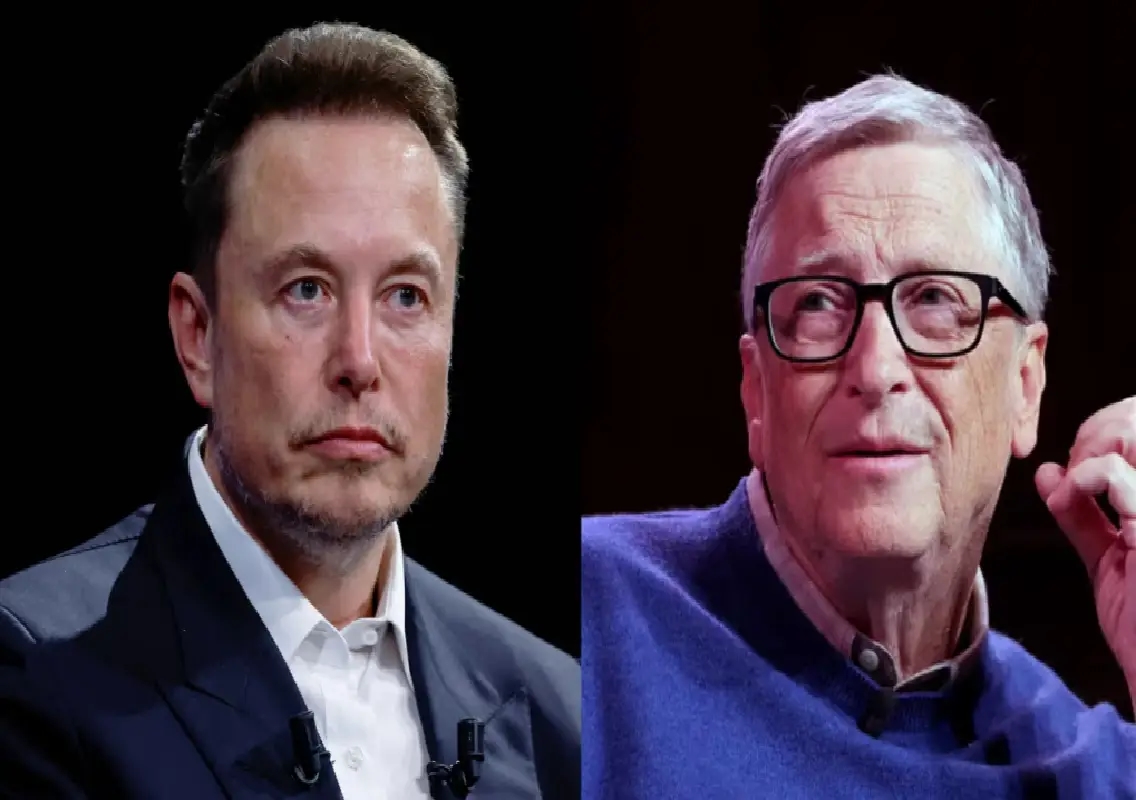


Elon Musk and Bill Gates have reignited their long-running public feud, this time over foreign aid, global health funding and allegations surrounding deaths linked to cuts in the United States Agency for International Development (USAID). The latest exchange between the two billionaires has drawn global attention, as it touches upon the morality of aid, the role of governments versus private philanthropy, and the consequences of funding decisions on vulnerable populations.
USAID is a key US government agency that provides financial assistance to developing and low-income countries. Its programmes support vaccination drives, disease prevention initiatives, hospital funding, food distribution, disaster relief, maternal health, sanitation projects and education. For decades, USAID has been among the world’s largest contributors to public health campaigns, backing efforts to combat measles outbreaks, HIV, tuberculosis and polio, particularly across Africa and Asia. Hospitals and non-governmental organisations in these regions have traditionally relied on USAID grants to supply medicines, conduct medical camps and deliver life-saving vaccines to children.
DOGE and the USAID funding freeze
The current dispute traces back to earlier this year, after Donald Trump began his second term as US President. One of his early administrative moves was appointing Elon Musk to co-lead the newly created Department of Government Efficiency (DOGE), a task force aimed at reducing federal expenditure.
Among DOGE’s most controversial decisions was the shutdown of USAID’s independent operations and the freezing of large portions of its funding. Musk publicly defended the move, criticising USAID and describing it as a “criminal organisation” that misused taxpayer money. He welcomed the halt in overseas aid, arguing that US funds should be prioritised for domestic needs.
Supporters of the decision echoed Musk’s stance, asserting that foreign aid programmes were wasteful or poorly monitored. Some also questioned why private foundations and wealthy individuals were not stepping in to fill funding gaps if humanitarian needs were truly urgent.
Gates’ strong opposition
Bill Gates emerged as one of the most vocal critics of the funding freeze. In May, the Microsoft co-founder accused Musk of indirectly harming some of the world’s poorest children by supporting deep cuts to foreign aid. Gates warned that slashing USAID funding could undo decades of progress in controlling infectious diseases and improving child survival rates.
He cited specific concerns, including reports that hospitals in Gaza province in Mozambique had lost critical grants. According to Gates, the loss of funding may have disrupted HIV prevention and treatment programmes, putting lives at risk. He framed the issue as a moral responsibility, urging Musk to personally meet children affected by the cuts and witness the consequences on the ground.
Gates argued that government-backed aid remains essential in low-resource settings, where private philanthropy alone cannot match the scale, reach and coordination of federal programmes like USAID.
Musk’s rebuttal and accusations
Musk responded sharply over the weekend on X, dismissing claims that USAID cuts had led to deaths as false and politically motivated. He accused Gates of spreading misinformation and reiterated his long-held criticism of the billionaire philanthropist.
Pointing to the Bill and Melinda Gates Foundation’s vast resources, Musk noted that the foundation manages over $80 billion in funds. He questioned why Gates did not directly fund affected health programmes if lives were truly at risk, instead of blaming policy decisions. Musk maintained that private philanthropy should take greater responsibility, rather than governments relying on taxpayer money to fund global health initiatives.
A wider debate on aid and accountability
What began as a personal clash between two influential figures has now expanded into a broader global debate. At its core are questions about morality, accountability and responsibility in addressing global health challenges.
Gates has consistently maintained that federal aid plays a critical role in public health outcomes, particularly in regions where health systems are fragile and underfunded. He argues that abrupt funding cuts can have immediate and deadly consequences, especially for children and vulnerable populations.
Musk, on the other hand, has insisted that such claims are exaggerated and lack clear evidence. He has argued that the current aid model is inefficient and that wealthy individuals and private organisations should step up rather than relying on government spending.
Conclusion
The renewed Musk-Gates feud underscores a deeper ideological divide over how the world should respond to poverty, disease and inequality. As governments reassess foreign aid priorities and private philanthropy continues to grow in influence, the debate over who bears responsibility for global health outcomes is likely to intensify. For now, the clash highlights how decisions made in Washington and Silicon Valley can ripple across continents, affecting millions far beyond US borders.