







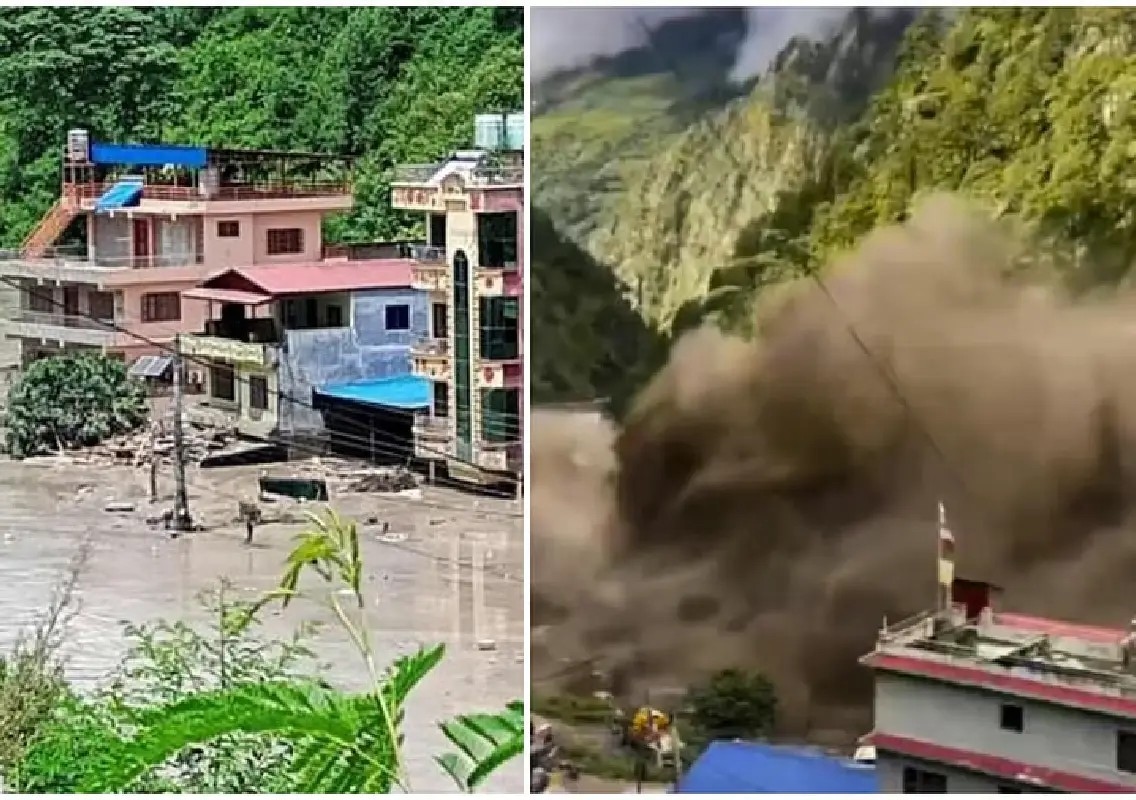


Kathmandu: At least eight people have been killed after a massive flash flood swept through parts of Nepal near the Tibet border on Wednesday, washing away villages, roads, bridges and power infrastructure. Rescue teams have been deployed as authorities warn of further danger along rivers downstream.
The flooding struck the mountainous Rasuwa district, particularly areas around Syapru Besi and Timure. The Bhote Koshi River rose suddenly, sending powerful floodwaters through settlements and infrastructure along its course.
The situation remained fluid on Wednesday afternoon, with authorities continuing search-and-rescue operations and assessing the scale of destruction. Some reports put the confirmed death toll at nine as rescue teams recovered additional bodies, while several people remained missing.
The disaster has also affected areas across the border in China’s Tibet region, where a mudslide disrupted the Gyirong border crossing and authorities reported casualties and missing people.
Sudden surge sweeps through river settlements
The flash flood hit the Bhote Koshi river system in the morning, catching people in several settlements by surprise.
The river originates in Tibet before flowing into Nepal and eventually joining the Trishuli river system. The sudden rise in water caused widespread destruction along areas close to the river.
Houses, vehicles and other property were swept away, while roads and bridges were damaged or completely destroyed. Officials warned people living in low-lying areas along the Bhote Koshi and Trishuli rivers to move to safer locations.
Witness accounts described extensive devastation in communities close to the river. Rescue officials have faced major difficulties reaching some of the worst-hit areas because floodwaters remain high and transport links have been disrupted.
Helicopters deployed for rescue operations
The Nepal government has mobilised helicopters to assist with rescue and relief operations.
However, the high water levels and difficult terrain have prevented helicopters from landing in some of the worst-affected locations, including Syapru Besi and Timure.
The Nepal Army and police have joined the rescue effort, while authorities continue to search for people who may have been trapped or swept away.
At least 25 people had been rescued by Wednesday afternoon, according to updates cited by the Indian Express. Rescue teams were also working to reach isolated communities and determine the full number of missing people.
The difficult Himalayan terrain is adding to the challenge, with damaged roads and bridges making conventional rescue operations harder.
Hydropower projects badly affected
The flooding has also caused significant damage to Nepal’s energy infrastructure.
The country’s Energy Ministry reported that around 430 MW of electricity supply had been affected, mainly because of damage to hydroelectric projects and related infrastructure.
That represents more than 12% of Nepal’s total hydropower capacity of around 3.2 GW, according to a Reuters calculation.
Nepal relies heavily on hydropower for electricity generation, making damage to power projects particularly significant.
The floods have also affected transmission infrastructure, raising concerns about electricity supply in the affected areas and the wider economic consequences of the disaster.
Authorities will need to inspect damaged facilities before determining how long repairs and restoration may take.
Cause of sudden flooding remains under investigation
The exact cause of the sudden flood has not yet been conclusively established.
Initial reports indicated that the surge came from the direction of Tibet. Nepalese authorities have been examining several possible explanations, including a glacial lake outburst flood, a landslide-related blockage or another sudden release of water.
The Flood Forecasting Division has indicated that rainfall within Rasuwa did not appear sufficient to explain the scale of the sudden flooding, while satellite imagery showed significant rainfall on the Tibetan side.
This has raised questions about whether conditions upstream of the border contributed to the rapid rise in the Bhote Koshi.
Experts and authorities are expected to continue examining satellite data and conditions in the high-altitude areas before identifying the precise trigger.
Tibet border area also hit
The disaster has not been confined to Nepal.
Across the border, a mudslide affected China’s Gyirong County in Tibet. The Gyirong border port, an important route connecting China and Nepal, was affected by the disaster.
Chinese state media reported major casualties and missing people in the area, while roads, communication links and electricity infrastructure were disrupted. Chinese President Xi Jinping called for search-and-rescue efforts and stronger monitoring and early-warning systems.
The impact on the border crossing could also affect trade and transport between the two countries.
The region has previously suffered major flood-related disruption, highlighting the vulnerability of infrastructure along the mountainous Nepal-China border.
Downstream areas placed on alert
As floodwaters move downstream, authorities are warning communities along the Bhote Koshi and Trishuli river systems to remain alert.
The Bhote Koshi eventually joins Nepal’s Trishuli river, which flows towards India as part of the Gandak river system. This makes monitoring downstream water levels important beyond the immediate disaster zone.
Officials have advised people living close to riverbanks and in lower-lying areas to move towards safer ground if necessary.
The warnings are particularly important because damaged bridges and roads could make evacuation more difficult if water levels rise again.
Similar disaster struck the region last year
The latest disaster has revived memories of another devastating flood in the Bhote Koshi river in 2025.
That earlier flood killed nine people and left 24 missing. It also destroyed the Friendship Bridge linking Nepal and China, disrupting trade and transport for months.
The recurrence of severe flooding in the same river system has increased concerns about the vulnerability of settlements and infrastructure in the Himalayan region.
Authorities are now facing the immediate task of rescuing people and restoring essential services, while also assessing how communities can be better protected against future disasters.
Himalayan communities face growing disaster risks
The latest flooding highlights the difficult conditions faced by communities living in the Himalayan region.
Mountain valleys are particularly vulnerable to sudden flooding, landslides, avalanches and glacial lake-related disasters. Settlements and infrastructure are often located along narrow river corridors, where there is limited room for floodwaters to spread safely.
The combination of rugged terrain, rapidly changing weather and development along river systems can make disasters particularly destructive.
The destruction of roads, bridges and power projects in the latest flood demonstrates how a sudden natural disaster can affect not only lives and homes but also essential infrastructure and economic activity.
Rescue and assessment continue
With several people still reported missing and some areas difficult to access, authorities have warned that the death toll could rise.
Rescue teams are continuing to search affected settlements, while officials assess damage to homes, transport links and energy facilities.
The immediate priority remains locating missing people, moving residents from vulnerable areas and providing assistance to those whose homes and livelihoods have been destroyed.
The full extent of the damage is expected to become clearer as rescue teams reach areas that remain cut off.
A devastating blow to communities
The flash floods have left a trail of destruction across parts of Nepal’s mountainous north, with villages washed away and critical infrastructure damaged.
At least eight people were initially confirmed dead, while subsequent reports indicated that the toll had risen to nine as more bodies were recovered. Several people remain missing, and rescue operations are continuing.
The damage to approximately 430 MW of electricity capacity adds another major challenge for Nepal, while disrupted roads and bridges could hamper relief operations and affect communities for days or longer.
As authorities continue the search for survivors, the disaster is also a reminder of the risks faced by people living in fragile Himalayan environments. For now, rescuers remain focused on reaching isolated communities, accounting for those missing and moving people away from rivers as the threat of further flooding persists.
Tags: Nepal flash floods August 2026 death toll, Bhote Koshi River flood in Nepal, Rasuwa flash flood villages washed away, Nepal flood damage to hydropower projects, Nepal Tibet border flash flood rescue operations