







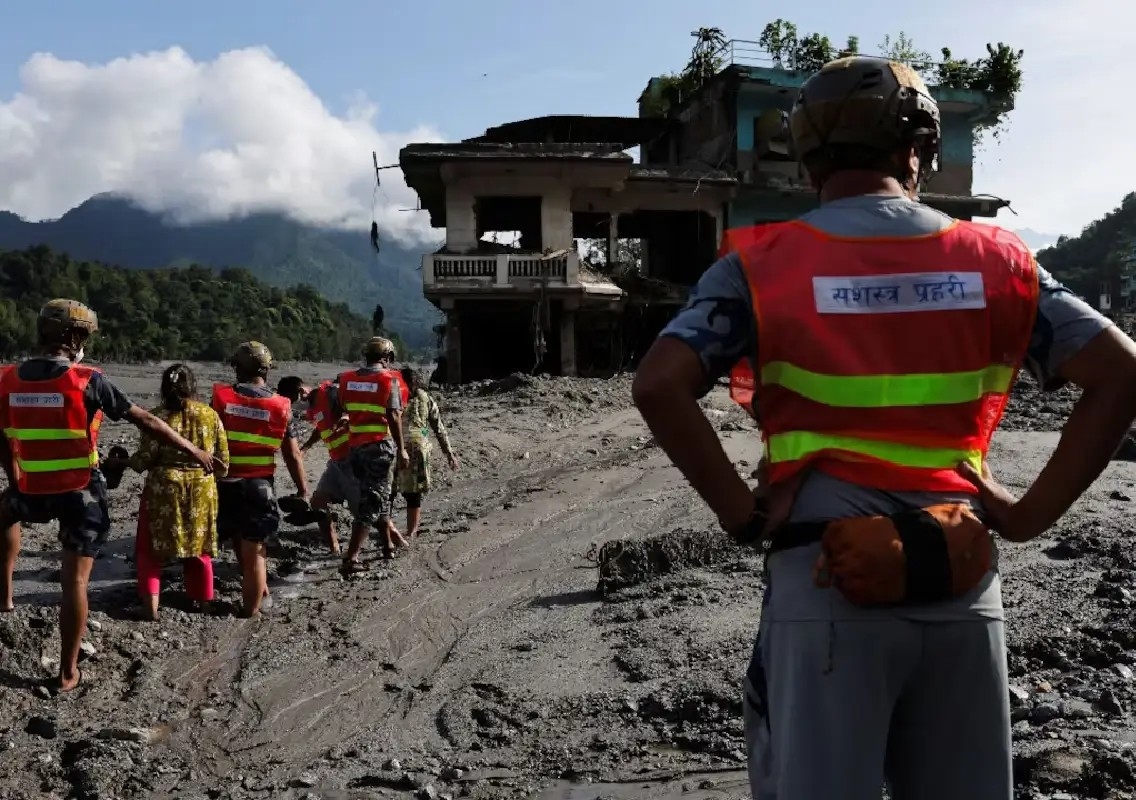


Kathmandu: Nepal is facing a growing crisis in handling the dead after devastating floods swept through several districts, with hospital morgues reaching capacity and authorities setting up temporary facilities to store bodies recovered from rivers.
In Chitwan, 137 bodies had been recovered along the Trishuli and Narayani rivers from Phishling to Golaghat by 9.30 am on Thursday. With hospitals able to accommodate only 30 to 50 bodies, authorities are converting an unused government building in Bharatpur into a temporary facility with space for around 250 bodies.
Chitwan prepares space for 250 bodies
The temporary facility at the Industrial Enterprise Development Institute on Vidhyut Road will be equipped with air conditioners and temperature controls. Dry ice will also be used to slow decomposition.
If the facility reaches capacity, authorities have decided to consider the electric crematorium at Devghat as an additional option.
The shortage has also brought grieving families to Chitwan, with relatives arriving from Rasuwa, Nuwakot, Gorkha and other districts in search of missing loved ones.
Pokhara morgues already above capacity
Pokhara has received bodies from several flood-hit districts after local facilities ran out of space.
A total of 93 bodies have been transported to Pokhara from Tanahun, Gorkha, Nawalparasi East and Dhading. Hospitals in Kaski can collectively accommodate 88 bodies, meaning the city is already beyond its normal capacity.
Officials said additional bodies may have to be moved to Tanahun, Lamjung, Gorkha, Baglung, Parbat and Syangja if recoveries continue.
Bodies are currently being stored at temperatures between 2 and 6 degrees Celsius. However, officials said this method can generally preserve remains for only around 10 days to two weeks. Longer storage would require facilities capable of maintaining sub-zero temperatures, which Pokhara currently lacks.
Authorities prepare for unidentified remains
Police are photographing bodies, taking fingerprints, conducting post-mortems and collecting DNA samples as part of the identification process.
Where facial identification is possible, photographs are being released to help families locate missing relatives. DNA samples will be sent to Kathmandu for testing when required.
Officials are also preparing secure burial locations for unidentified or unclaimed remains. Each body will receive a tag number, with details recorded to allow identification at a later stage.
Authorities expect the number of unidentified bodies to rise as recovery operations continue and have decided to coordinate with central authorities to manage such remains within one to two weeks.
Gorkha and Nawalparasi send bodies elsewhere
Gorkha has sent 11 bodies recovered along the Trishuli River to Gandaki Provincial Hospital in Pokhara after its local morgue ran out of space. By Thursday evening, 39 bodies had been recovered in areas of Gorkha bordering the river.
Nawalparasi East is facing a similar shortage. Forty-one bodies have been sent to Pokhara and eight to Palpa District Hospital, while others are being kept at hospitals in Madhyabindu, Gaindakot, Devchuli and Kawasoti.
Authorities have also converted a community forest hall in Kawasoti into a temporary morgue by installing an additional air conditioner.
In Nawalparasi West, 27 bodies had been recovered by Thursday evening.
Dhading sends remains to Kathmandu and Pokhara
Dhading has recovered 37 bodies and human remains, including 12 men, 10 women, two bodies whose sex could not be determined and 13 body parts.
With limited morgue and refrigeration facilities, six bodies have been sent to Kathmandu while the remaining bodies and human remains have been transferred to Pokhara.
As recovery operations continue across the flood-hit districts, Nepal’s authorities are now confronting a grim logistical challenge: identifying the dead, preserving remains and helping families determine whether their missing relatives have been found.