







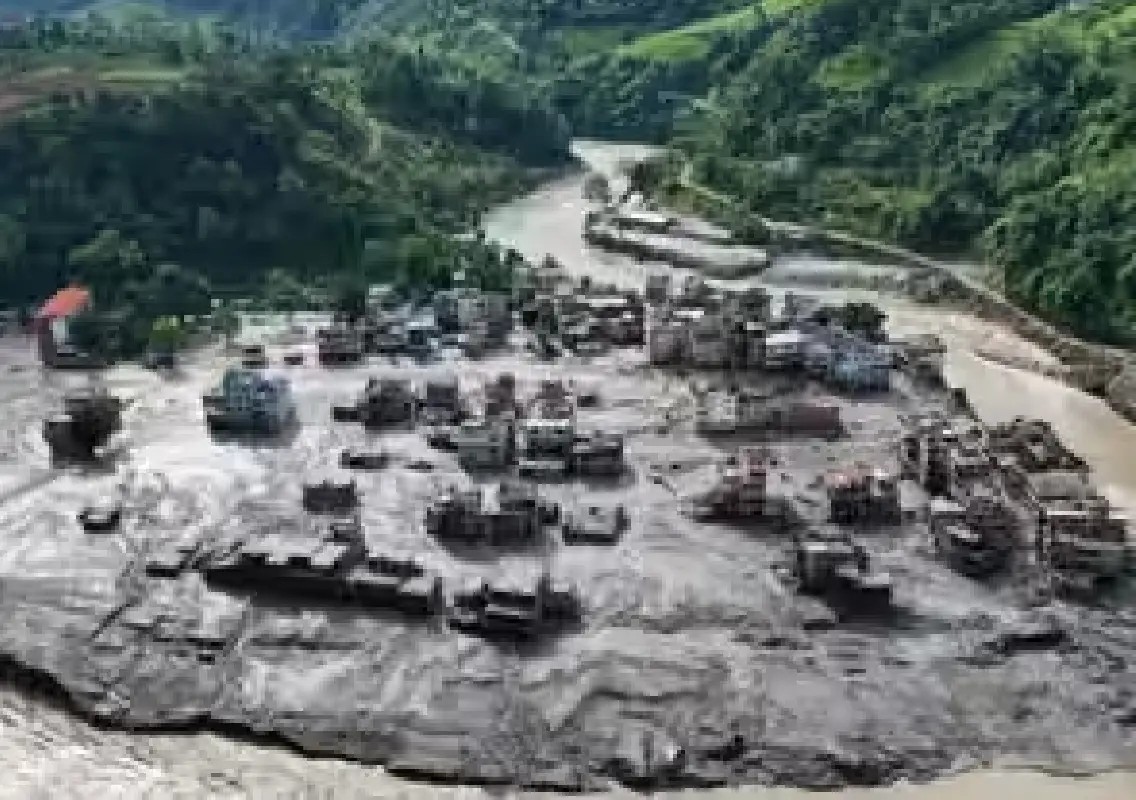


Kathmandu: A devastating flash flood along the Nepal-China border has left hundreds dead and 2,478 people missing, as rescue teams continue searching through vast areas covered by mud, rocks and debris. Nepal has sought specialised international assistance for technical operations following one of the worst natural disasters to hit the Himalayan region.
Flood leaves a trail of destruction
The disaster struck on Wednesday after a glacier collapse unleashed a torrent of water, ice, rock and mud through mountain river systems. Communities, roads, bridges and hydropower infrastructure were swept away, while the Gyirong border crossing in Tibet was also severely damaged.
More than 3,700 people have been rescued in Nepal, but difficult terrain, damaged infrastructure and continuing flood risks are making the search for survivors extremely challenging.
The missing include hundreds of foreign nationals, including tourists, workers and pilgrims travelling through the Himalayan region. The figures remain subject to change as authorities continue verifying reports from affected areas.
Nepal seeks specialised technical assistance
Nepal has clarified that it does not currently require foreign search-and-rescue teams, with its own security forces leading those operations. Instead, the government is seeking specialised expertise for difficult tasks such as rescuing people trapped in tunnels, restoring communications and transport links, identifying bodies and conducting DNA testing.
Nepal has also requested Bailey bridges from India and China to help restore damaged transport links. International assistance has begun arriving as the country prepares for a prolonged recovery and reconstruction effort.
Fresh flood risks complicate rescue work
Rescue operations have been further affected by poor weather and the threat of additional flooding from water bodies formed by debris blocking Himalayan rivers. Helicopter operations were temporarily suspended in some areas because of weather conditions.
The scale of the tragedy has left families desperately searching for missing relatives while authorities continue recovering bodies and assessing the damage.
The disaster has also renewed concerns about the vulnerability of the rapidly warming Himalayan region, where unstable glaciers and extreme weather can create cascading risks for communities living downstream.