









Kathmandu: Nepal is facing one of its worst natural disasters in recent years, with the death toll from devastating flash floods rising to 939 and 3,925 people still reported missing, according to the country’s National Disaster Risk Reduction and Management Authority (NDRRMA).
The disaster struck on August 26 after a massive flow of ice, rock, mud and water swept through Himalayan valleys near the Nepal-China border. The resulting floods and landslides devastated communities, damaged roads and bridges and severely affected hydropower projects.
The catastrophe has also affected Tibet. Chinese authorities have reported 16 additional deaths and 546 missing people, taking the combined death toll in Nepal and Tibet to 955, with 4,471 people still unaccounted for.
The search is becoming a race against time
More than 21,000 security personnel have been deployed for search and rescue operations across Nepal’s affected areas.
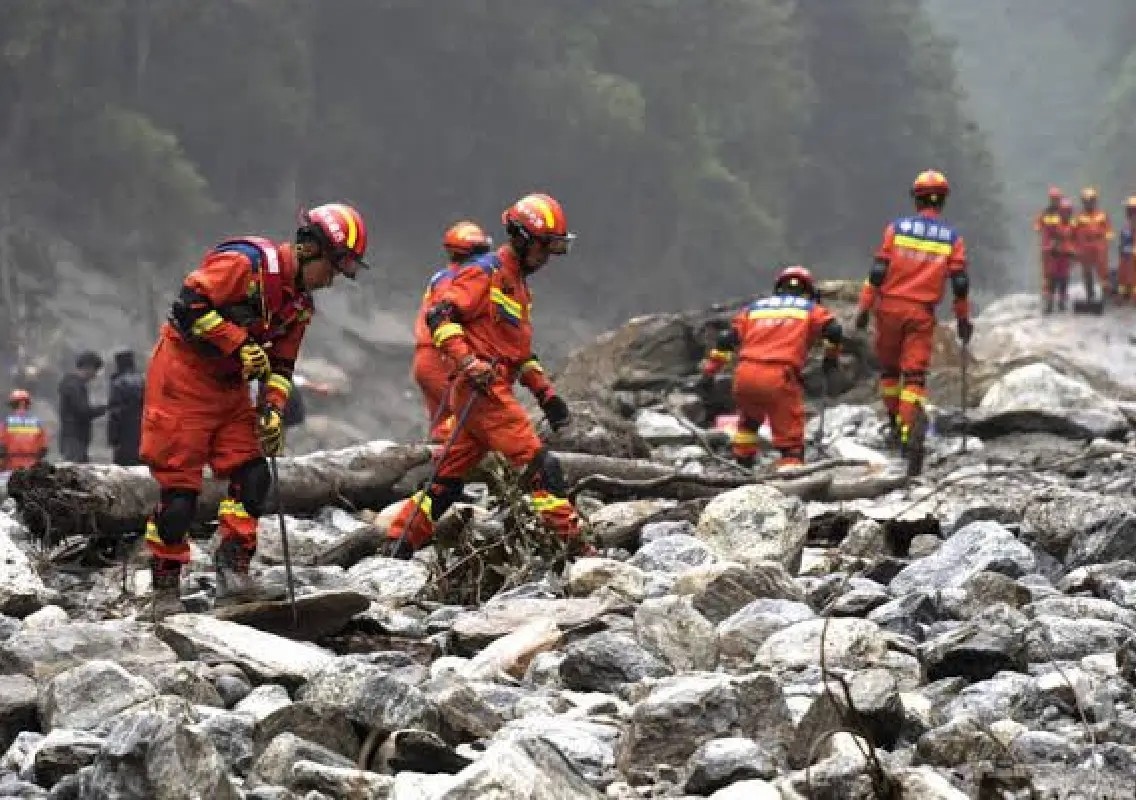
Army, police and specialised rescue teams are searching through debris, damaged settlements and tunnels where workers are believed to remain trapped. More than 11,000 people affected by the floods had been rescued, according to Nepal’s disaster authorities.
The difficult terrain is making the operation extremely challenging.
Roads and bridges have been destroyed in several areas, forcing rescue teams to depend heavily on helicopters and specialised equipment to reach isolated communities.
The number of missing people has also fluctuated as communications are restored, survivors are located and families provide updated information.
Hydropower tunnels have become a major concern
Some of the most difficult rescue operations are taking place at hydropower projects.
The floods struck several facilities along the Trishuli and Bhotekoshi river systems, where hundreds of workers were present.
The number of missing hydropower workers in Nepal has fallen from an earlier estimate of 933 to 639, but many are still believed to be trapped in tunnels or cut off by enormous quantities of mud and debris.
At the Upper Trishuli-3A project, army engineers have been using controlled blasting to gain access to blocked sections of a tunnel where workers are believed to be trapped.
Other rescue operations are continuing at Upper Trishuli-3B, Chilime, Langtang Khola and Mailung Khola hydropower projects. Chinese, Indian and South Korean specialists are assisting Nepali teams at different locations.
Thousands of families are still waiting
The missing include Nepali citizens, security personnel, hydropower workers and foreign nationals.
Nepal’s latest figures show 592 foreign nationals among those reported missing. The missing also include 45 army personnel, 38 police personnel and 18 customs and immigration officials.
The situation has been particularly distressing for families who have lost contact with relatives.
Hospitals and other facilities have been crowded with people searching for information about missing family members. Authorities are collecting photographs and DNA samples to help identify recovered remains.
The scale of the disaster has overwhelmed existing forensic and mortuary facilities in some areas.
Identifying the dead has become another challenge
The floodwaters carried bodies over long distances, making identification extremely difficult.
In Chitwan, where hundreds of bodies were recovered, some remains had deteriorated significantly after remaining in water for several days. Authorities have taken DNA samples and recorded identifying details before temporarily burying some unidentified bodies because of limited storage capacity and health concerns.
The temporary burials have sparked concern among some families and public figures, particularly because Nepal’s predominantly Hindu population traditionally cremates its dead.
Officials have said the burials are temporary and that families will be able to reclaim remains once identities are established and perform the appropriate funeral rites.
The issue has added another painful dimension to an already overwhelming disaster.
India is also helping with the rescue effort
India has been assisting Nepal with rescue and forensic operations.
An Indian forensic team specialising in DNA analysis has been working in Nepal to help identify victims. Indian teams have also assisted with aerial assessments and rescue operations around hydropower projects.
Indian authorities have separately recovered 17 bodies from rivers in Uttar Pradesh that are believed to have been swept downstream from Nepal. These bodies have not been included in Nepal’s official death toll.
The cross-border nature of the disaster has therefore required cooperation between Nepal, India and China.
Roads and bridges have been washed away
The floods have caused extensive damage to Nepal’s infrastructure.
At least 19 motorable bridges and several major roads have been washed away, including routes connecting Nepal with China. The Rasuwagadhi border crossing has also been affected.
The destruction has complicated rescue and relief operations while threatening trade and movement through some of the country’s important northern corridors.
For communities cut off by damaged roads, helicopters have become an essential lifeline for delivering food, water and medical supplies.
Why scientists are worried about the changing climate
The disaster has also raised fresh concerns about climate change and the stability of Himalayan environments.
The floods were triggered by a major collapse or avalanche involving ice and rock near the Nepal-Tibet border. Scientists have warned that rising temperatures are causing glaciers across the Himalayas to melt faster, increasing the potential for dangerous glacial and mountain-related events.
Nepal Prime Minister Balendra Shah has described the disaster as extraordinary and called for stronger international action on climate change.
The Himalayas are an important source of water for hundreds of millions of people across Asia. Changes in the region’s glaciers and mountain ecosystems can therefore have consequences far beyond Nepal.
Relief work continues amid new risks
Even as rescue teams continue their search, authorities remain alert to the possibility of further flooding and landslides.
Damaged rivers, unstable slopes and continuing rain are making some areas dangerous for rescuers.
The government has mobilised security personnel and helicopters while humanitarian supplies are being transported to affected communities.
International support is also increasing, with countries and organisations offering financial assistance, technical expertise and emergency equipment.
But the scale of destruction means recovery will take much longer than the immediate rescue operation.
Nepal now faces a long road ahead
The immediate priority remains finding survivors and recovering those who have died.
But once the rescue phase ends, Nepal will face the enormous task of rebuilding homes, roads, bridges, hydropower facilities and livelihoods.
The disaster has already affected tens of thousands of people, while the Red Cross has estimated that around 93,000 people may have been affected by the catastrophe.
For families still waiting for news, however, the most urgent question remains unanswered: where are their loved ones?
As rescuers continue digging through mud, debris and blocked tunnels, every hour matters.
The rising death toll is a measure of the disaster’s terrible scale, but the thousands still missing represent thousands of families holding on to hope.