







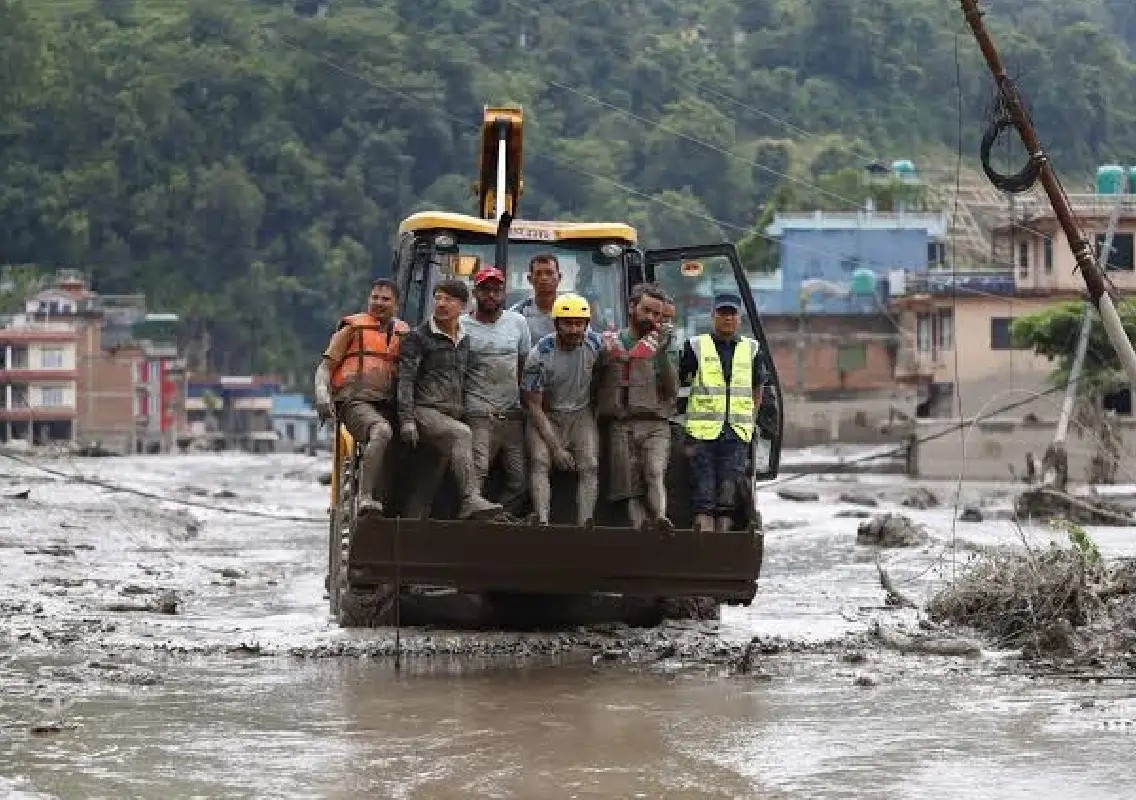


Kathmandu: The devastating flash floods along the China-Nepal border have become an international tragedy, with people from around 30 countries reported missing as rescue teams continue searching areas hit by Wednesday’s disaster.
At least 472 people have died in Nepal and China, while more than 1,500 remain unaccounted for. Thousands have been rescued, but the scale of the disaster has made it difficult for authorities to establish the whereabouts of everyone caught in the floods.
Nepal and China face the worst impact
Nepal’s disaster management authority reported 469 deaths and 977 people missing on Friday morning. Helicopters have rescued 3,253 people, while more than 150 injured survivors have been taken to hospitals in Kathmandu and nearby districts.
Across the border in Tibet’s Gyirong County, Chinese state media reported three deaths and 558 people missing. Of those missing, 260 were foreigners, according to CCTV.
China’s Foreign Ministry also said nearly 100 Chinese citizens remained unaccounted for on the Nepal side.
Missing people come from across the world
The disaster has affected tourists, workers and people travelling for religious purposes from a wide range of countries.
India reported 288 nationals still uncontactable, including 73 people working on a power project. The United States reported 90 missing, while Ukraine reported 55, Malaysia 51 and Australia 39.
Britain reported 33 missing and Canada 25. South Korea, Germany, Russia, Japan, New Zealand and France also reported missing nationals.
Nepal’s tourism authorities reported smaller numbers from Belgium, Spain, Italy, Kazakhstan, Portugal, Ireland, the Netherlands, Belarus, Finland, Hungary, Israel, Lithuania, the Philippines, Bulgaria, Switzerland, Serbia and Sweden.
Rescue teams race against time
The international spread of those missing has added urgency to an already complex rescue operation. Authorities are working to verify reports from different countries while search teams continue reaching isolated and damaged areas.
Officials have warned that the figures may change as more survivors are located and information is cross-checked.
The disaster has highlighted how the Himalayas’ fragile terrain can turn a popular region for tourism, work and religious travel into a zone of extreme danger within hours.