







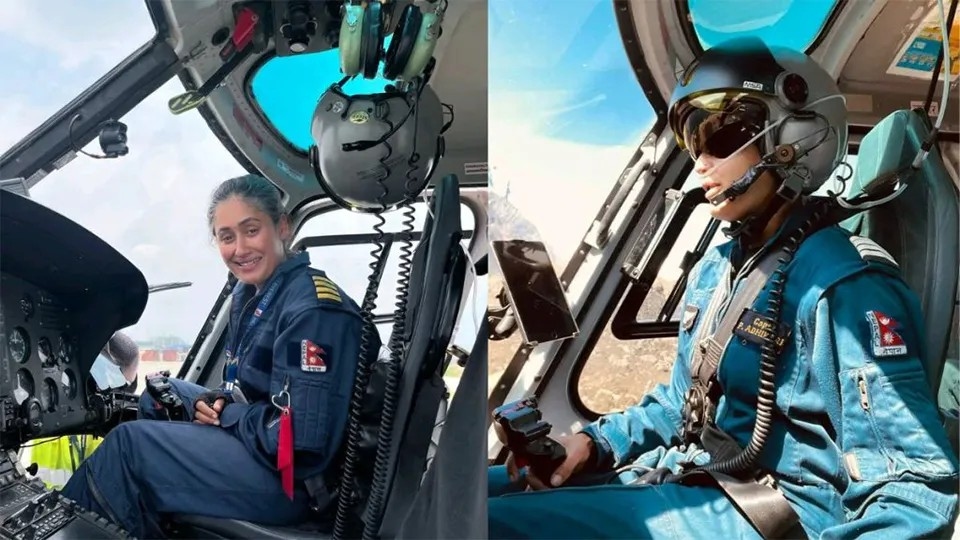


As devastating floods and landslides leave roads destroyed, bridges swept away and communities isolated across Nepal, rescue crews are relying on helicopters to reach people trapped in some of the country’s most difficult terrain.
Among those repeatedly flying into the disaster zone is Captain Priya Adhikari, Nepal’s first woman helicopter captain, who has completed about 100 rescue missions in six days.
Flying where roads can no longer reach
Adhikari has flown into areas along the Nepal-Tibet border where landslides, debris, unstable slopes and unpredictable weather have made ground rescue extremely difficult.
In Timure in Rasuwa district, for instance, destroyed roads and bridges left communities cut off. Helicopters became a vital link for rescuers and survivors.
The missions have involved more than evacuating survivors. Crews have also travelled to inaccessible locations to retrieve the bodies of people who lost their lives in the disaster.
A career shaped by Himalayan rescue
Adhikari’s journey into aviation began unexpectedly. While studying environmental science and working as cabin crew, she was invited by friends to accompany a helicopter crew. The experience inspired her to pursue flying.
With her parents’ support, she travelled to the Philippines for flight training around 11 years ago. She returned to Nepal and became a full-time helicopter pilot in 2017.
Her work has since included high-altitude search-and-rescue missions involving injured mountaineers in the Himalayas, including areas around Mount Everest. Some operations have taken her to altitudes of around 6,200 metres.
Breaking barriers while serving others
Adhikari has also participated in rescue operations following Nepal’s devastating earthquake. Despite witnessing the risks of helicopter aviation, including losing colleagues in accidents, she continued flying.
Her latest missions have once again placed her at the centre of Nepal’s emergency response. In narrow Himalayan valleys where as many as 20 helicopters have reportedly operated, every flight requires careful judgement.
For Adhikari, the responsibility remains clear: reach those who need help when the ground can no longer provide a way forward.