







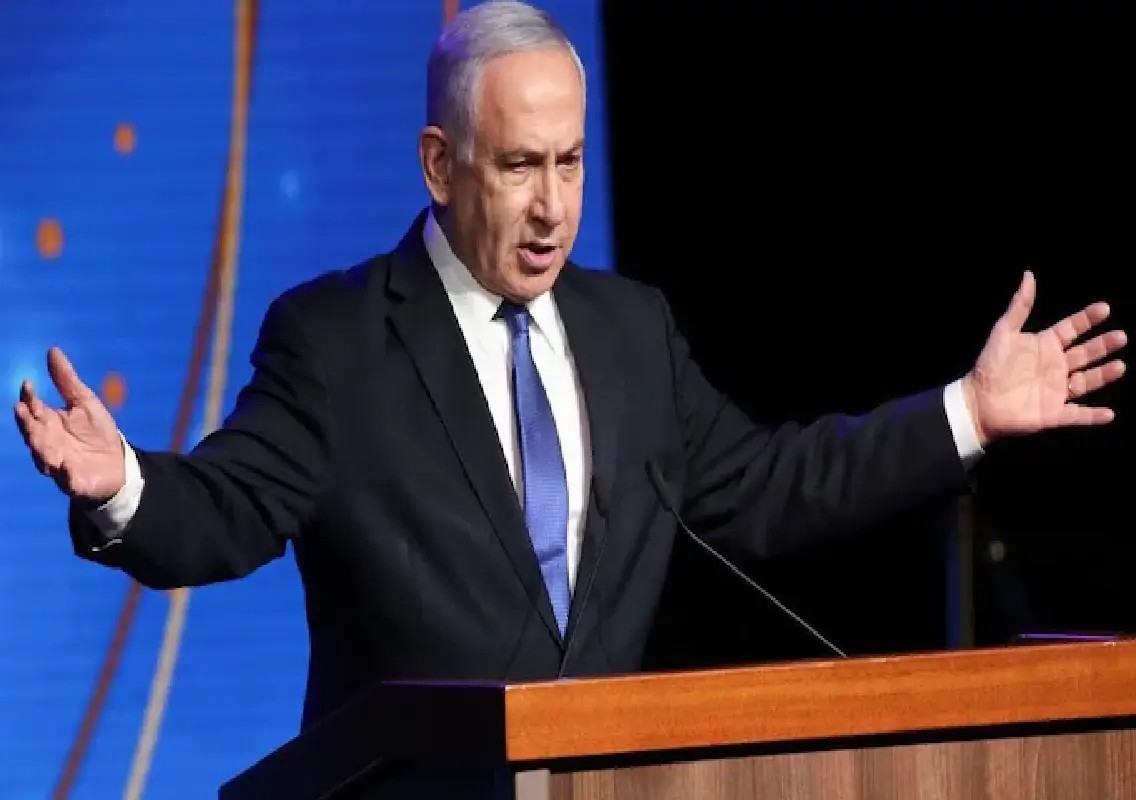


Jerusalem: Israeli Prime Minister Benjamin Netanyahu has ordered Israeli troops to advance further into southern Lebanon in the ongoing conflict with the Iran-backed militant group Hezbollah, despite a ceasefire that was announced more than six weeks ago.
The move marks a significant escalation in the cross-border conflict, which has become one of the most serious regional spillovers of the wider confrontation involving Iran and its allies. The renewed military push comes amid continued exchanges of fire between Israeli forces and Hezbollah fighters.
Israeli forces expand operations
Announcing the decision, Netanyahu said he had instructed the Israeli military to broaden its ground operations in Lebanon and deepen control over areas previously held by Hezbollah.
According to the Israeli military, troops have captured the historic Beaufort Castle, a 900-year-old fortress, along with a strategic ridge in southern Lebanon. Military officials said the positions provide a commanding view of large parts of southern Lebanon and northern Israel.
The operation follows one of the heaviest days of Hezbollah attacks on northern Israel since the ceasefire, with rocket and drone strikes prompting school closures and security restrictions in affected areas.
Israeli forces are reportedly advancing beyond the Litani River and moving towards the Zaharani River, approximately 10 kilometres further north.
Conflict continues despite ceasefire
Although a ceasefire was reached in April and later extended by 45 days in May through diplomatic efforts, hostilities have continued on both sides.
Hezbollah has increasingly relied on drones and rocket attacks, while Israeli forces have carried out repeated airstrikes and ground operations targeting militant infrastructure.
The conflict began after Hezbollah launched attacks on Israel in support of its ally Iran, triggering a wider military response from Israel.
The fighting has displaced more than 12 lakh people in Lebanon since March, according to Lebanese authorities. Tens of thousands of Israeli residents living near the border have also been forced to leave their homes because of ongoing security threats.
Heavy casualties reported
The Lebanese government says more than 3,370 people have been killed during the conflict so far.
Israeli authorities have reported the deaths of 24 soldiers and four civilians during the same period. The Israeli military also confirmed that one soldier was killed during the latest operations in southern Lebanon.
Lebanese media reported that overnight airstrikes on the village of Deir El Zahrani killed eight people, while security sources said Israeli aircraft carried out dozens of strikes across southern Lebanon on Sunday.
There was no immediate response from Hezbollah regarding the latest Israeli advance.
International concern grows
The escalating violence has drawn international attention and concern. France has called for an emergency meeting of the United Nations Security Council to discuss the deteriorating situation in Lebanon.
Diplomatic efforts to restore stability have continued in recent weeks. The United States recently hosted defence representatives from both Israel and Lebanon in Washington as part of efforts to advance a US-backed peace framework and address the issue of Hezbollah’s military presence.
However, the latest developments suggest that tensions remain high despite ongoing negotiations.
Strategic significance of Beaufort Castle
Israeli Defence Minister Israel Katz said the military intends to maintain control of Beaufort Castle as part of a security zone in southern Lebanon.
The site carries both military and symbolic significance. It was last occupied by Israeli forces before Israel withdrew from southern Lebanon in 2000 after an 18-year presence in the region.
Military officials stated that the latest operation aims to establish control over the Beaufort Ridge and the Wadi al-Saluki area while weakening Hezbollah’s operational capabilities and infrastructure.
Analysts believe the capture of the fortress is intended to demonstrate Israeli military progress amid continued challenges posed by Hezbollah’s drone warfare and cross-border attacks.
Uncertain path ahead
The renewed military offensive highlights the fragility of the ceasefire and raises concerns about the possibility of a broader regional conflict.
With Israeli troops advancing further into southern Lebanon, Hezbollah continuing its attacks and international efforts struggling to secure a lasting peace, the situation remains highly volatile.
Observers warn that without a durable diplomatic solution, the conflict could continue to destabilise the region and deepen the humanitarian crisis affecting civilians on both sides of the border.