









Jerusalem: Benjamin Netanyahu has announced plans for Israel to expand its military control over 70 per cent of the Gaza Strip, marking another major escalation in the ongoing conflict that has already displaced most of Gaza’s population.
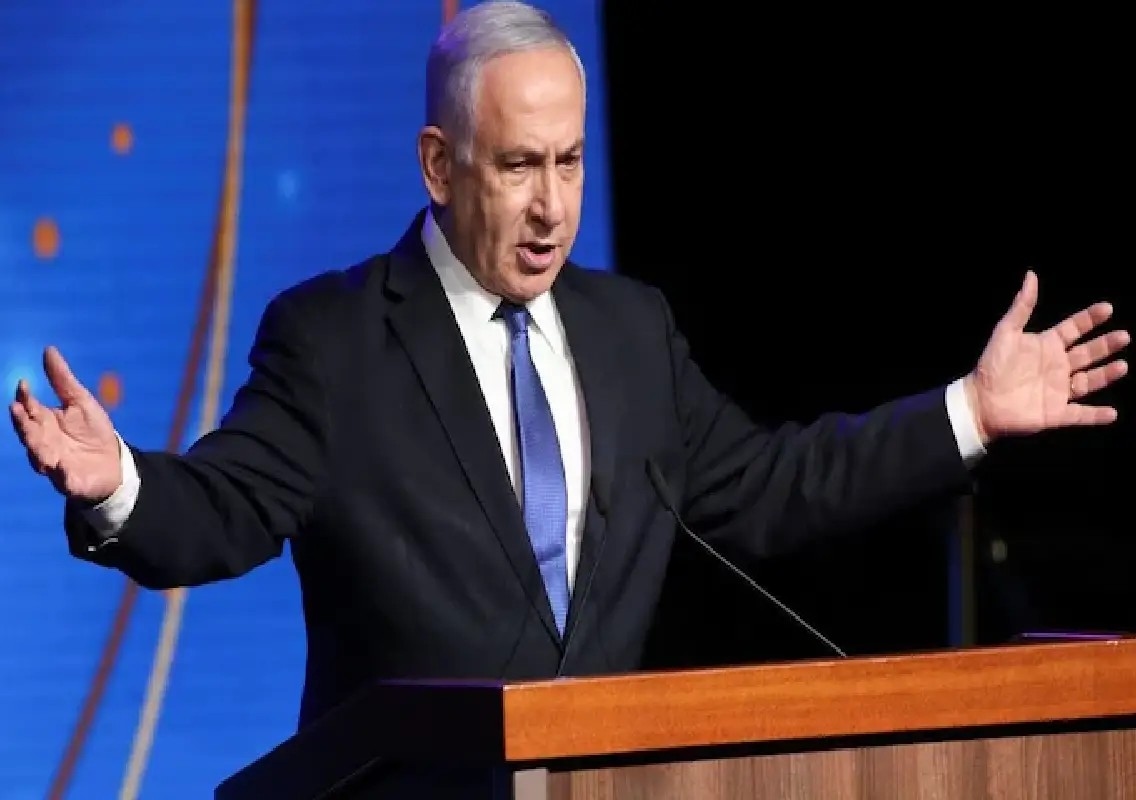
Speaking at a conference in the occupied West Bank on Thursday, Netanyahu said Israeli forces were steadily increasing their territorial control inside the Palestinian enclave and would continue military operations against Hamas.
According to Netanyahu, Israeli forces currently control approximately 60 per cent of Gaza, up from an earlier estimate of 50 per cent.
“My directive is to move to — take it step by step — first of all 70. Let’s start with that,” Netanyahu reportedly said during the event.
The remarks come amid continuing tensions despite indirect ceasefire negotiations between Israel and Hamas.
Gaza conflict intensifies despite ceasefire talks
Israel and Hamas remain engaged in indirect negotiations concerning the next phase of the ceasefire arrangement, including issues related to hostage releases, troop withdrawals and disarmament proposals.
Despite the truce framework, fighting and military strikes have continued across parts of Gaza.
Gaza health authorities claim that around 900 Palestinians have been killed in Israeli strikes since the ceasefire took effect.
Israeli officials maintain that continued military pressure is necessary to weaken Hamas and prevent future attacks on Israeli territory.
Meanwhile, Hamas has accused Israel of violating ceasefire terms by gradually extending military control deeper into the Gaza Strip.
The Palestinian group described the expansion as an attempt to impose “new facts on the ground by force” and warned that such actions could further undermine prospects for de-escalation.
Israeli control in Gaza continues expanding
Maps reportedly shared by the Israeli military with international aid organisations in late April indicated that Israeli forces already controlled approximately 64 per cent of Gaza.
If control expands further toward the proposed 70 per cent target, analysts warn that nearly two million Palestinians could be forced into increasingly crowded and devastated areas of the coastal enclave.
Large sections of Gaza have already suffered extensive destruction due to months of air strikes, artillery attacks and ground operations.
Under the October 2025 ceasefire agreement, Israeli troops had initially withdrawn to a military boundary referred to as the “yellow line,” covering roughly 53 per cent of Gaza.
However, Hamas recently alleged that Israeli forces had quietly advanced beyond that boundary in recent weeks.
Humanitarian organisations have repeatedly expressed concern over worsening living conditions, overcrowding and shortages of essential supplies within Gaza.
Humanitarian concerns deepen
International aid agencies continue to warn about severe humanitarian conditions inside the Gaza Strip as infrastructure damage and displacement intensify.
Thousands of homes, hospitals, schools and public facilities have reportedly been destroyed or severely damaged during the conflict.
Human rights groups and international organisations have repeatedly called for greater protection of civilians and increased humanitarian access to affected areas.
The conflict has also triggered mounting diplomatic pressure on regional and global powers to secure a lasting ceasefire agreement.
Several countries and international organisations continue to push for negotiations aimed at preventing further escalation in the region.
Israel expands operations in Lebanon
Alongside developments in Gaza, Israel has also intensified military activity in southern Lebanon against Hezbollah.
The Israeli military recently declared a large area in southern Lebanon a “combat zone” and ordered residents to evacuate north of the Zahrani River.
The evacuation order reportedly covered territory extending nearly 40 kilometres north of the Israeli border.
Israeli officials stated that military operations would target Hezbollah fighters and infrastructure within the designated area.
The latest warning followed more than 120 Israeli strikes across southern and eastern Lebanon earlier this week despite a ceasefire announced in April.
According to reports, many residents fled toward the coastal city of Sidon following the evacuation notice.
The renewed military operations have further heightened fears of broader regional instability involving multiple fronts across the Middle East.
Regional tensions remain high
Analysts believe the simultaneous escalation in Gaza and Lebanon reflects growing regional tensions and increasing uncertainty surrounding ceasefire negotiations.
The conflict continues to draw international attention due to concerns about civilian casualties, humanitarian conditions and the possibility of wider military confrontation across the Middle East.
Diplomatic efforts by international mediators remain ongoing, though prospects for a long-term settlement continue to face significant obstacles.
Observers warn that any further expansion of military operations could deepen the humanitarian crisis and complicate peace efforts in the region.