







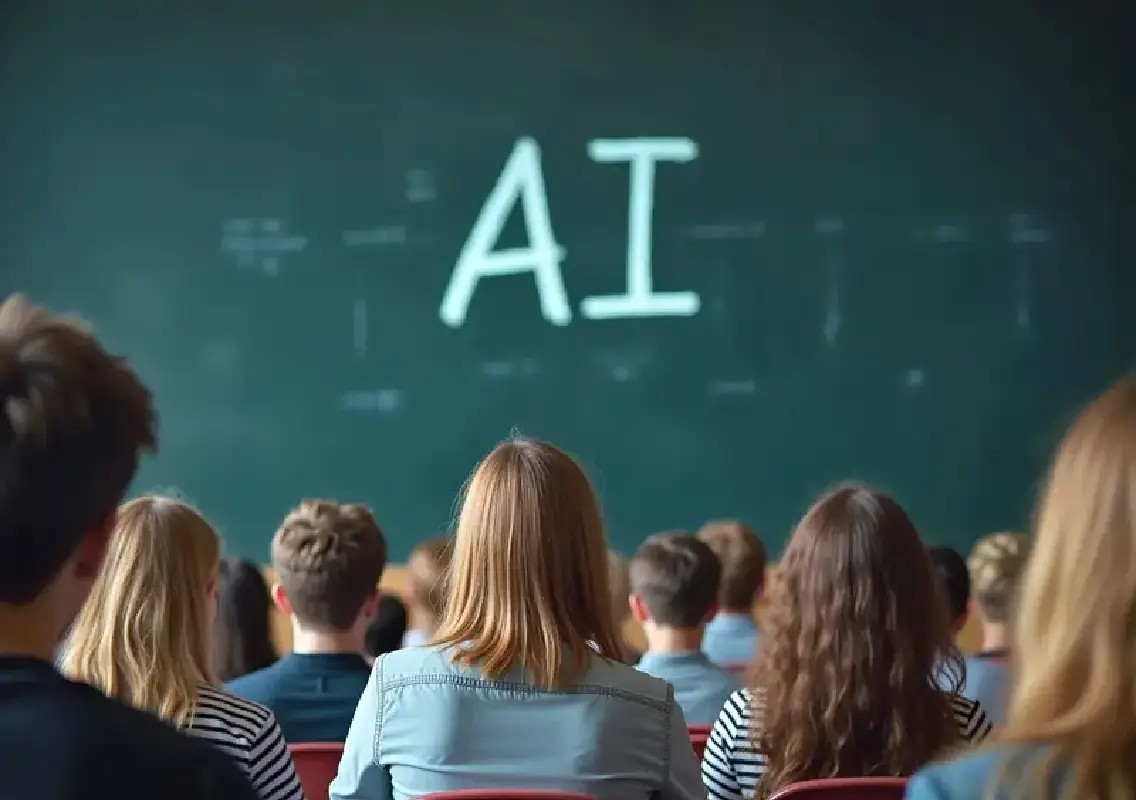


New York City has announced a major new policy restricting students’ use of generative artificial intelligence in public schools, with the measures set to affect nearly 600,000 students during the 2026-27 academic year.
The policy, announced by Mayor Zohran Mamdani and other city officials, will impose a one-year moratorium on student-facing generative AI tools from 2-K through Grade 8. The move is aimed at ensuring that technology supports rather than replaces human interaction and critical learning.
Younger students face tighter AI restrictions
Under the new policy, students in the younger grades will not be permitted to use AI tools and companion chatbots for learning. City officials said the restrictions will provide time for educators, parents, experts and elected representatives to examine the impact of artificial intelligence on children and recommend future measures.
A limited number of high school classrooms will be permitted to participate in closely monitored AI pilot programmes. At the same time, all high school students will receive AI literacy lessons twice a year covering topics including bias, ethics and critical thinking.
Teachers will continue to be allowed to use AI for lesson planning and administrative tasks, provided the tools meet the city’s safety requirements.
Screen time rules will also change
The policy also introduces new recommendations on digital-device use. One-to-one device use will face restrictions among the youngest students, while suggested daily screen-time limits will be 30 minutes for Grades 3 to 5 and 45 minutes for Grades 6 to 8.
Mayor Mamdani said the measures were intended to protect human connection in classrooms and ensure children develop problem-solving and social skills through interaction with teachers and classmates.
Growing concern over AI in education
The restrictions come amid increasing concern among parents, educators and lawmakers about artificial intelligence and excessive screen-based learning.
Parent groups have called for stronger safeguards, while more than half of the New York City Council reportedly supported calls for tighter controls on AI use in classrooms.
The debate reflects a wider question facing education systems worldwide: how to benefit from rapidly developing technology without allowing it to undermine independent thinking, creativity and meaningful human interaction.