







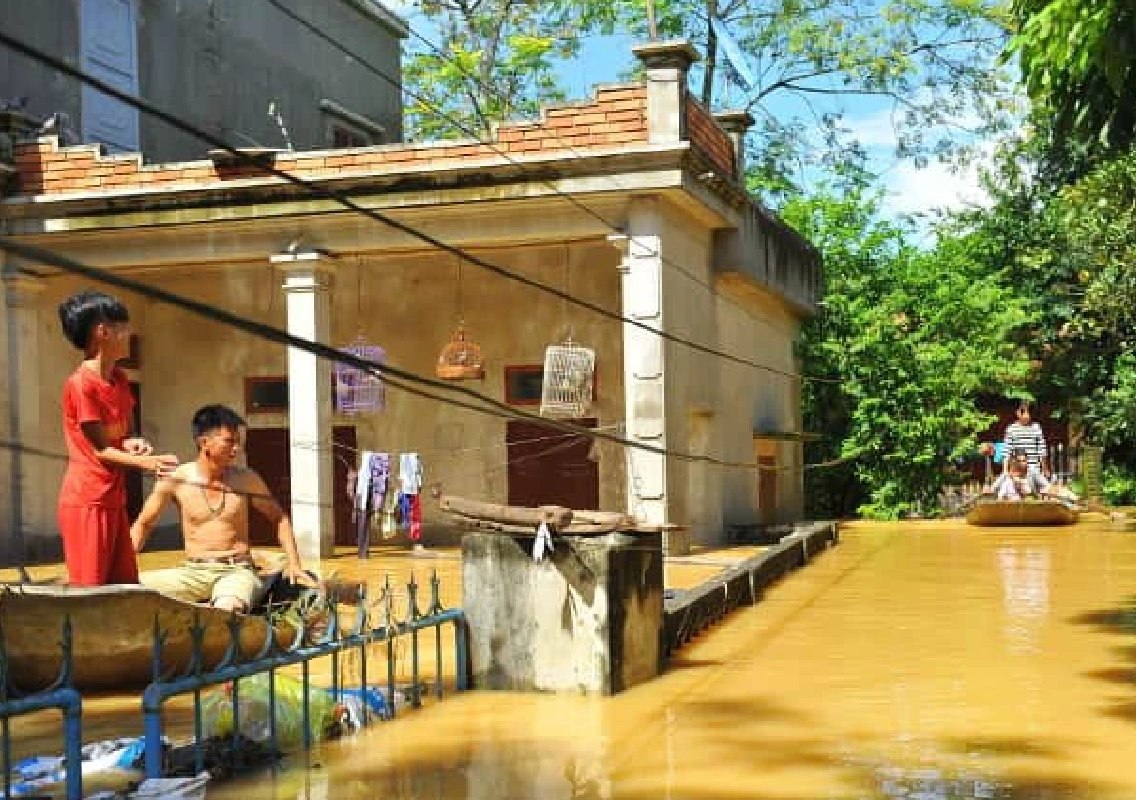


Thousands of children in northern Vietnam are expected to face difficulties returning to school following severe floods and landslides that have ravaged the region.
The recent extreme weather in northern Vietnam, especially in the mountainous areas of the northwest, has led to widespread destruction. Since early July, heavy downpours have caused flash floods and landslides, resulting in significant damage to homes and infrastructure.
According to Vietnam’s General Statistics Office, nearly 29,000 houses have been damaged and approximately 90,000 hectares of crops have been destroyed. In Son La province alone, around 1.3 million people have been affected by the floods. Save the Children reports that the floods have left the countryside littered with broken bridges and severely damaged roads.
The disaster has also claimed lives, with eleven reported fatalities in the region. In addition to residential damage, around 2,670 houses and 29 school buildings have been affected, according to Vietnamese disaster officials.
The charity Save the Children has highlighted the plight of around 4,500 children who will face significant challenges returning to school at the beginning of September. “The recovery will take many months and without immediate intervention, these children could face numerous dangers,” warned Le Thi Thanh Huong, Country Director of Save the Children Vietnam.
The principal of a school in Son La province, Ha Cong Minh, described the situation, noting, “The road to school is very rough with landslides and broken bridges making it hard to travel. Children must cross streams to get to school.”
The floods have caused an estimated $85 million in damages in the first seven months of the year, a significant increase from the previous year’s figures. Additionally, the severe weather has resulted in 91 deaths or disappearances.
Between June and November, Vietnam is prone to heavy rains that often lead to flooding and landslides. Scientists have noted that such extreme weather events are becoming more frequent and intense due to climate change.