







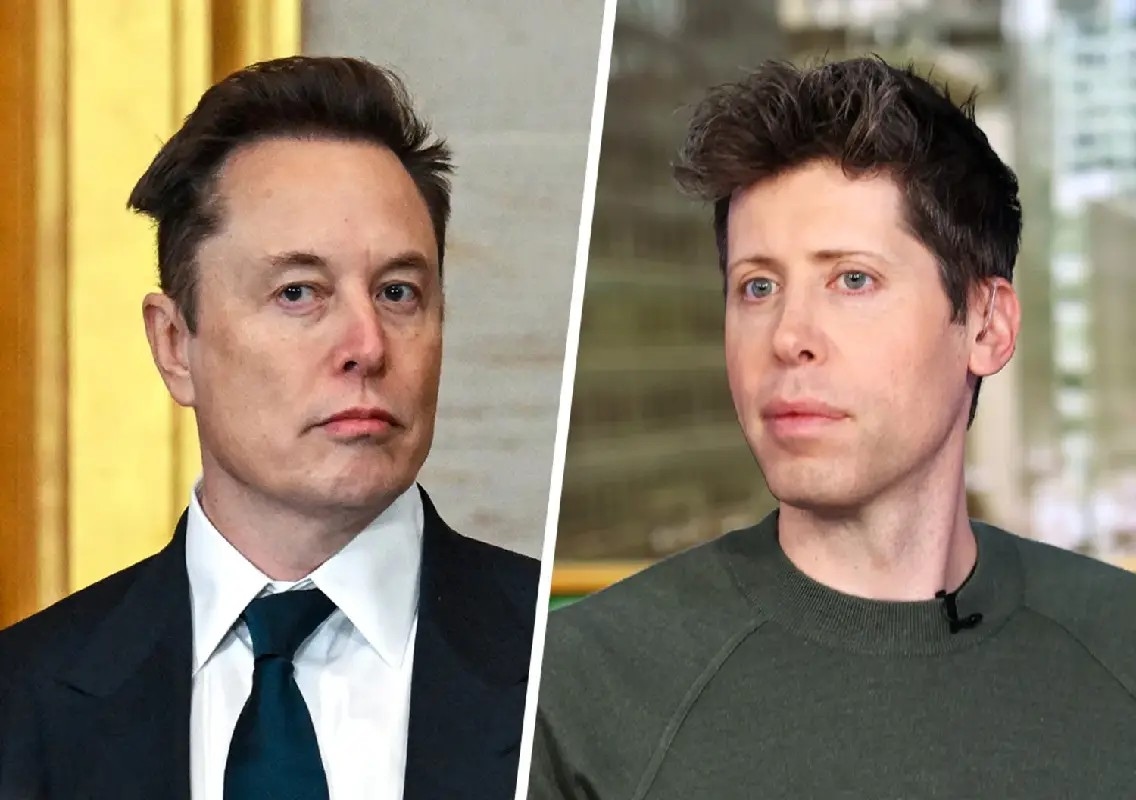


A high-stakes legal dispute between OpenAI and Elon Musk is drawing global attention, highlighting tensions over the future of artificial intelligence, corporate control, and the original vision behind one of the world’s most influential AI organisations.
What began as a collaborative effort to build AI for the benefit of humanity has now evolved into a courtroom battle involving billions of dollars, competing ambitions, and questions about governance in the rapidly growing AI sector.
Origins rooted in nonprofit vision
The conflict traces back to 2015, when OpenAI was founded by key figures including Sam Altman and Greg Brockman. According to reports, Musk was approached to support the initiative, which was envisioned as a nonprofit research organisation focused on developing Artificial General Intelligence (AGI) for public benefit.
Musk has claimed that he contributed around $38 million in the early years, backing the mission on the understanding that OpenAI would prioritise transparency and societal good over commercial gain.
Allegations of shift to profit model
At the centre of the lawsuit is Musk’s claim that OpenAI deviated from its founding principles by transitioning to a for-profit structure. He argues that the company became increasingly aligned with Microsoft, effectively operating as a closed-source, commercially driven entity.
Musk contends that OpenAI leveraged its original nonprofit image and early support to build a powerful corporate platform, and is now seeking damages along with structural changes to the organisation.
OpenAI rejects claims
OpenAI has strongly denied the allegations, stating that Musk’s claims lack merit. The company maintains that Musk left the organisation voluntarily in 2018 and had, at one point, sought greater control over it.
The organisation also argues that shifting to a hybrid commercial model was necessary to sustain the immense costs associated with advanced AI development, including computing infrastructure, specialised chips, and large-scale research operations.
OpenAI has further suggested that Musk’s legal action may be influenced by competitive dynamics, given his involvement in launching his own AI venture.
Stakes extend beyond courtroom
The case is being closely watched because of its potential to reveal internal details about one of the most influential AI companies in the world. Key figures expected to be involved include Musk, Altman, Brockman, and Satya Nadella.
The dispute comes at a critical time, with OpenAI reportedly exploring a future public listing that could value the company at nearly $1 trillion. Any prolonged legal uncertainty could impact investor confidence and strategic planning.
Industry-wide implications
Beyond the immediate parties, the case could have broader implications for the AI industry. It raises important questions about:
- Whether AI organisations should prioritise public good or profitability
- How early funding agreements are interpreted over time
- The balance between openness and commercial secrecy in AI development
The outcome may influence how future AI ventures are structured and governed.
Risk of long-term impact
While the legal battle is unlikely to “finish” OpenAI in the short term, experts suggest prolonged litigation could create significant challenges. These may include slower decision-making, reputational damage, investor hesitation, and increased competition from rivals.
The exposure of internal communications and strategies could also shift the competitive landscape, especially as companies race to dominate the global AI market.
Conclusion
The dispute between OpenAI and Elon Musk represents more than a corporate disagreement—it reflects the growing pains of an industry at the forefront of technological transformation. As artificial intelligence continues to reshape economies and societies, the outcome of this case could set important precedents for how such powerful technologies are developed, controlled, and governed in the future.