




Islamabad: Pakistan has barred Taiwanese airlines from using its airspace, aligning the move with Beijing’s One-China policy and prompting carriers to reroute flights between Asia and Europe, according to a Bloomberg report.
Pakistan Defence Minister Khawaja Asif confirmed the restriction, saying the country’s aviation division permitted only mainland Chinese airlines to fly over its airspace in accordance with the One-China policy.
“The aviation division follows the One China policy — only mainland China is allowed,” Asif told Bloomberg News on Wednesday. “We have permitted only Chinese airlines to fly over Pakistan.”
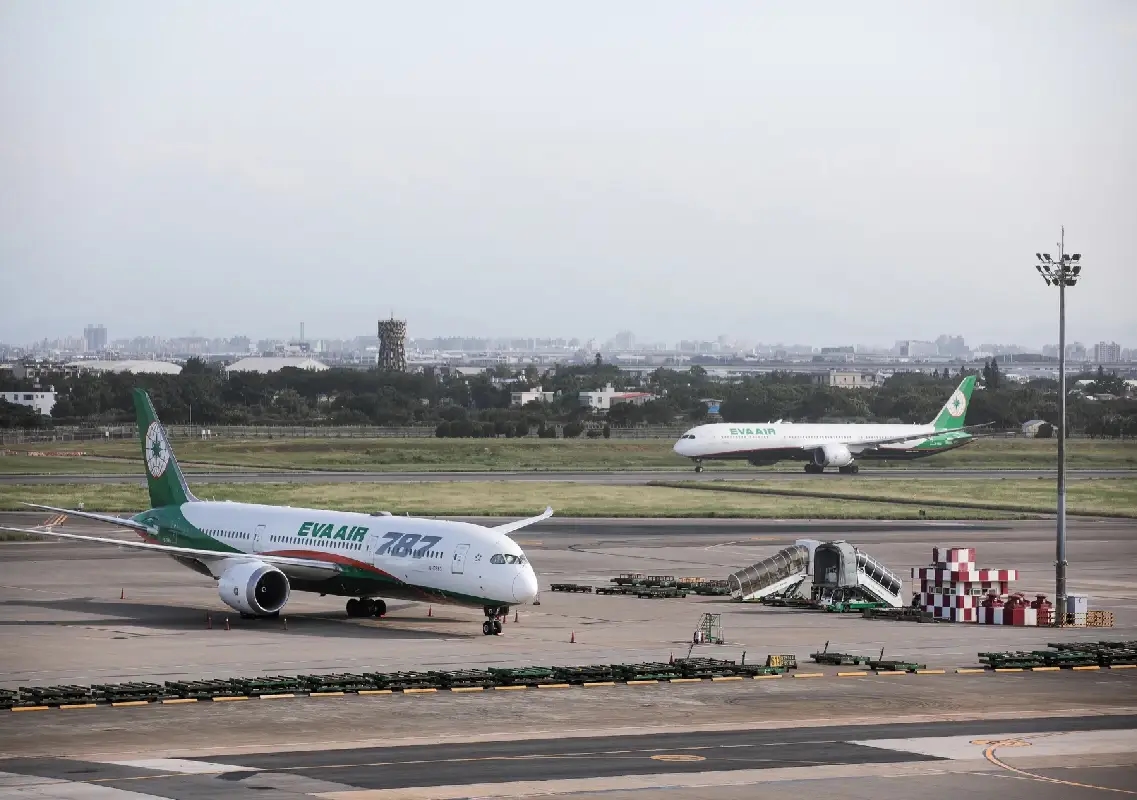
The move affects Taiwanese carriers China Airlines Ltd. and EVA Airways Corporation, which have reportedly changed their flight paths to avoid Pakistani airspace. It also underscores the close diplomatic and strategic relationship between Islamabad and Beijing, particularly on the sensitive issue of Taiwan’s political status.
Taiwanese airlines reroute flights over Russia
According to Bloomberg, which cited flight-tracking data from Flightradar24, China Airlines and EVA Airways had not flown over Pakistan since the morning of October 25.
At least a dozen flights operated by the two airlines between Asia and Europe reportedly travelled over Russia from Sunday onwards, indicating a shift in their usual routing.
Airlines select flight paths based on several factors, including airspace permissions, safety considerations, weather conditions, fuel consumption and operational requirements. Restrictions on access to a country’s airspace can require carriers to take longer alternative routes, potentially affecting flight times and operating costs.
The extent of the additional travel time and financial impact on the Taiwanese airlines was not immediately clear from the reported information.
Taiwan’s Civil Aviation Administration declined to comment on the reported rerouting of flights, according to Bloomberg. However, it said it had never prohibited airlines from flying over Russia.
The use of Russian airspace offers an alternative for some Asia-Europe routes, although the precise routing available to each airline depends on its operational arrangements and the airspace restrictions applicable to its flights.
Pakistan reiterates support for Beijing on Taiwan
Pakistan’s decision reflects its longstanding diplomatic position on Taiwan. Islamabad recognises the People’s Republic of China as the sole legitimate government of China and regards Taiwan as part of Chinese territory.
Pakistan has described Taiwan as an “inalienable part” of the People’s Republic of China and opposes moves towards Taiwanese independence. It also rejects proposals that would recognise “two Chinas” or treat Taiwan as a separate sovereign state.
President Asif Ali Zardari and Prime Minister Shehbaz Sharif have reaffirmed Pakistan’s support for Beijing’s position on several occasions.
The One-China policy is a central element of Pakistan’s foreign policy and its strategic partnership with China. The two countries maintain close cooperation across diplomatic, economic and security matters.
Pakistan has also expressed concern about tensions in the Taiwan Strait, warning that an escalation could affect regional peace and stability.
Islamabad has backed Beijing’s opposition to Taiwan’s participation in international organisations, including proposals to invite the island to the World Health Organization’s annual assembly.
The latest airspace decision extends that diplomatic alignment into civil aviation, restricting Taiwanese carriers while allowing airlines from mainland China to use Pakistani airspace, according to Asif’s statement.
What the One-China policy means
The One-China policy concerns the question of which government represents China and the international status of Taiwan.
The People’s Republic of China, established in 1949, claims Taiwan as part of its territory and opposes any formal recognition of Taiwanese independence. Beijing has consistently sought to limit Taiwan’s international participation and diplomatic relations with countries that recognise the People’s Republic of China.
Taiwan, officially known as the Republic of China, has its own elected government, military and institutions. It operates independently of the mainland Chinese government, although Beijing maintains its claim over the island.
Countries maintain different formulations of their One-China policies. Pakistan’s position closely follows Beijing’s stance, and its latest aviation restriction has been presented by its defence minister as an implementation of that policy.
The restriction is significant because international aviation depends on agreements and permissions that allow airlines to cross national airspace. Governments can impose restrictions that affect foreign carriers, forcing airlines to revise routes when access is denied.
In this case, the reported shift by China Airlines and EVA Airways suggests that the restriction is already influencing flight operations between Asia and Europe.
Regional implications remain unclear
The immediate impact of Pakistan’s decision is the need for affected Taiwanese carriers to plan routes that avoid Pakistani airspace. The reported use of Russian airspace by flights operated by the two airlines illustrates one way carriers can adjust their routes.
However, the available information does not establish the full commercial consequences of the restriction, including whether passengers will face longer journeys, whether schedules will change significantly or how much additional operating costs the airlines may incur.
The development also comes against the backdrop of persistent tensions over Taiwan’s international status and Beijing’s efforts to discourage diplomatic and institutional recognition of the island as a separate state.
For Pakistan, the decision reinforces its stated commitment to China’s position on Taiwan. For Taiwanese airlines, it introduces another airspace restriction to account for when planning international services.
The longer-term implications for regional aviation and relations across the Taiwan Strait will depend on whether the restriction remains in place and whether other countries take similar measures.