







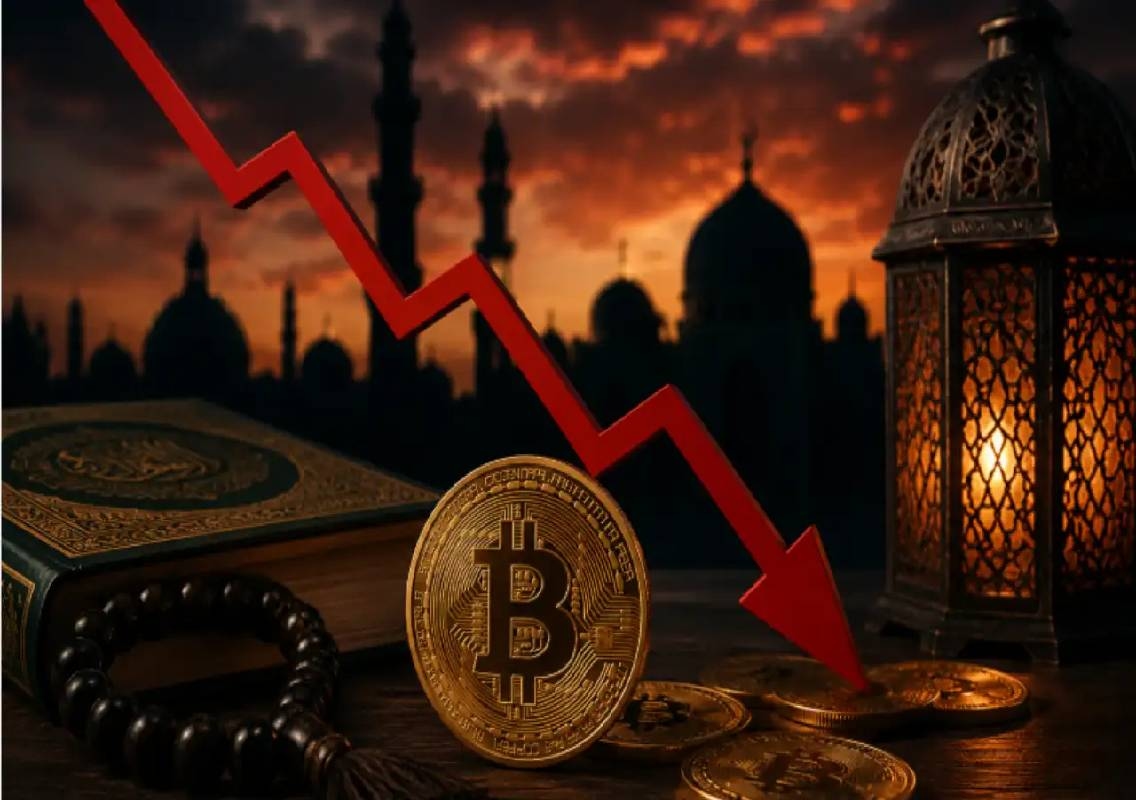


Karachi: Pakistan’s efforts to position itself as a cryptocurrency-friendly destination have encountered a major challenge after one of the country’s most influential Islamic scholars declared cryptocurrency trading “haram” (forbidden) under Islamic law.
Mufti Muhammad Taqi Usmani, a globally recognised authority on Islamic finance, issued a fatwa stating that trading cryptocurrencies such as Bitcoin, Ethereum and stablecoins does not comply with Sharia principles. The ruling has triggered widespread debate across Pakistan and other Muslim-majority countries, while prompting some religious investors to exit the crypto market.
Although the fatwa is not legally binding, its influence could significantly affect investor sentiment given Mufti Usmani’s standing in the Islamic finance community.
What is a fatwa?
A fatwa is a religious opinion or legal interpretation issued by a qualified Islamic scholar on matters concerning Islamic law (Sharia).
Unlike government legislation or a court order, a fatwa is generally not legally enforceable. However, when issued by a respected scholar, it can strongly influence the beliefs and financial decisions of followers.
Mufti Taqi Usmani serves as a senior scholar at Darul Uloom Karachi and is regarded internationally as one of the foremost experts on Islamic banking and finance. His opinions often shape Islamic financial practices across several countries.
Why has cryptocurrency been declared ‘haram’?
According to the fatwa, cryptocurrencies fail to satisfy the Islamic criteria for legitimate wealth and involve excessive uncertainty.
The ruling argues that digital assets involve:
- Excessive uncertainty (gharar)
- Speculation resembling gambling (maysir)
- Assets lacking recognised intrinsic value
Islamic finance prohibits financial transactions involving excessive speculation, gambling-like behaviour, interest (riba) and investments considered unjust or excessively risky.
The fatwa states that cryptocurrencies, crypto tokens and stablecoins used for investment or trading fall within these prohibited categories.
Comes at a crucial time for Pakistan
The religious ruling comes just as Pakistan has been attempting to build a regulated cryptocurrency ecosystem.
Over the past year, the government has taken several steps to encourage digital asset innovation, including:
- Establishing the Pakistan Crypto Council
- Creating the Pakistan Virtual Assets Regulatory Authority (PVARA)
- Developing regulations for digital assets
- Exploring blockchain-based financial initiatives
Authorities have argued that a regulated crypto sector could improve financial inclusion, attract investment and modernise payment systems.
Does the fatwa make crypto illegal?
No.
The fatwa is a religious opinion, not a legal ban.
Pakistan’s legal framework governing cryptocurrencies remains separate from Islamic religious rulings. Digital assets continue to operate under an evolving regulatory environment, and the fatwa itself does not prohibit cryptocurrency trading under Pakistani law.
However, because of Mufti Usmani’s influence, analysts believe many observant Muslim investors could voluntarily avoid cryptocurrency investments.
Impact on crypto markets
According to market participants quoted by The Economic Times, the announcement prompted selling by some religious investors in Pakistan, while a number of investors in India and the United Arab Emirates also reportedly liquidated holdings following the ruling.
Some cryptocurrency companies have warned that the impact could widen if other prominent Islamic scholars issue similar opinions.
However, the broader global cryptocurrency market has not witnessed a significant decline solely because of the fatwa, indicating that its immediate impact has remained largely regional.
Could the ruling influence other countries?
The possibility cannot be ruled out.
Mufti Taqi Usmani’s influence extends well beyond Pakistan, particularly in countries where Islamic finance plays a major role.
Experts believe the ruling could affect investor sentiment in Muslim-majority markets if other respected religious institutions endorse similar interpretations of Sharia law regarding cryptocurrencies.
At the same time, many Islamic scholars worldwide continue to debate the permissibility of digital assets, and there is no universal consensus within Islamic jurisprudence on cryptocurrency. Some scholars consider certain cryptocurrencies permissible under specific conditions, while others share concerns similar to those raised in this fatwa.
Conclusion
Pakistan’s ambitious plans to emerge as a regional cryptocurrency hub have encountered an unexpected challenge from religious authorities. While Mufti Muhammad Taqi Usmani’s fatwa does not change the country’s legal position on digital assets, it is likely to influence many Muslim investors and reignite the global debate over whether cryptocurrencies are compatible with Islamic finance. The long-term impact will depend on whether other Islamic scholars and institutions adopt similar positions and how Pakistan balances religious concerns with its digital finance ambitions.