







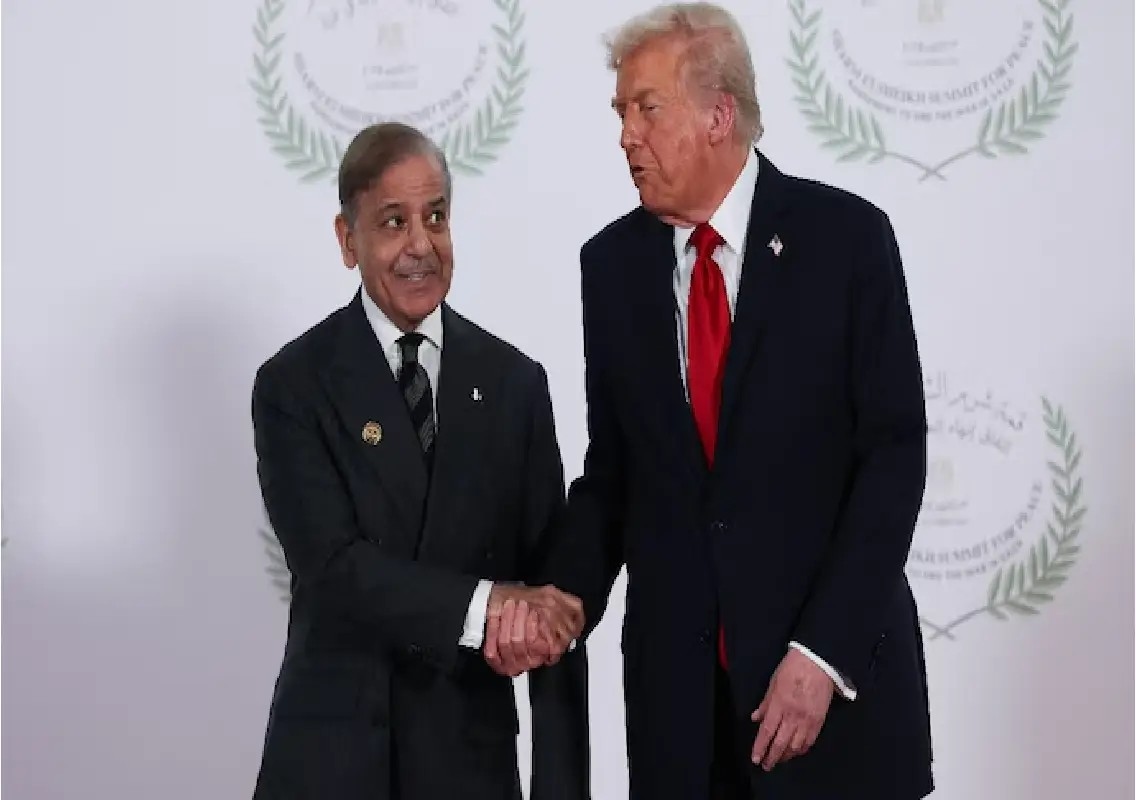


Islamabad: Pakistan is facing renewed discussion over its long-standing position on recognising Israel after reports suggested that United States President Donald Trump encouraged several Muslim-majority countries to consider joining the Abraham Accords during a recent high-level interaction. The reported development has generated debate over the possible diplomatic and political implications for Pakistan, where the issue of Palestine continues to remain highly sensitive.
According to reports, the proposal was raised during discussions involving Pakistan and several Arab nations. The reports suggested that the proposal focused on encouraging additional countries to formally establish relations with Israel after the conclusion of the ongoing regional conflict.
The issue has once again brought attention to Pakistan’s historical position on the Israel-Palestine question and the challenges policymakers could face if discussions on the matter gain momentum.
Abraham Accords continue to shape regional diplomacy
The Abraham Accords were introduced during Trump’s first presidential term and led to the establishment of diplomatic relations between Israel and several Arab countries.
The agreements were viewed by supporters as an attempt to reshape political relations in the Middle East and encourage broader regional cooperation.
However, Pakistan did not become part of the accords and has maintained its official position of supporting a two-state solution regarding the Palestinian issue.
Observers note that the country’s stance has historically remained aligned with support for Palestinian statehood before any formal recognition of Israel.
Political and domestic considerations remain significant
Analysts believe that any move towards recognising Israel would likely generate strong domestic debate within Pakistan.
The Palestinian issue has remained politically and emotionally significant in the country, and political parties as well as religious groups have often expressed firm positions on the matter.
During his tenure as prime minister, Imran Khan had publicly stated his support for a two-state solution and had opposed establishing formal ties with Israel without progress on Palestinian concerns.
Political observers suggest that any future policy shift would involve balancing international relations with domestic public opinion.
Historical position continues to influence policy
Pakistan’s foreign policy has traditionally linked support for Palestinian rights with its broader diplomatic principles.
Analysts also point out that the country has frequently drawn comparisons between Palestine and Kashmir in international discussions.
Some experts believe that any departure from the existing policy framework could raise questions regarding consistency in diplomatic positions.
Political developments in recent years and changing regional alliances have also increased discussion regarding how Pakistan may approach future geopolitical challenges.
Leadership faces diplomatic balancing challenge
The administration led by Shehbaz Sharif has so far approached the issue cautiously.
Officials have maintained that Pakistan’s policy regarding Palestine remains unchanged while continuing to engage in wider regional and international discussions.
Observers believe the matter represents a complex diplomatic challenge involving relations with international partners alongside domestic political considerations.
While no formal change in policy has been announced, discussions surrounding the Abraham Accords continue to generate debate regarding Pakistan’s future diplomatic direction.