







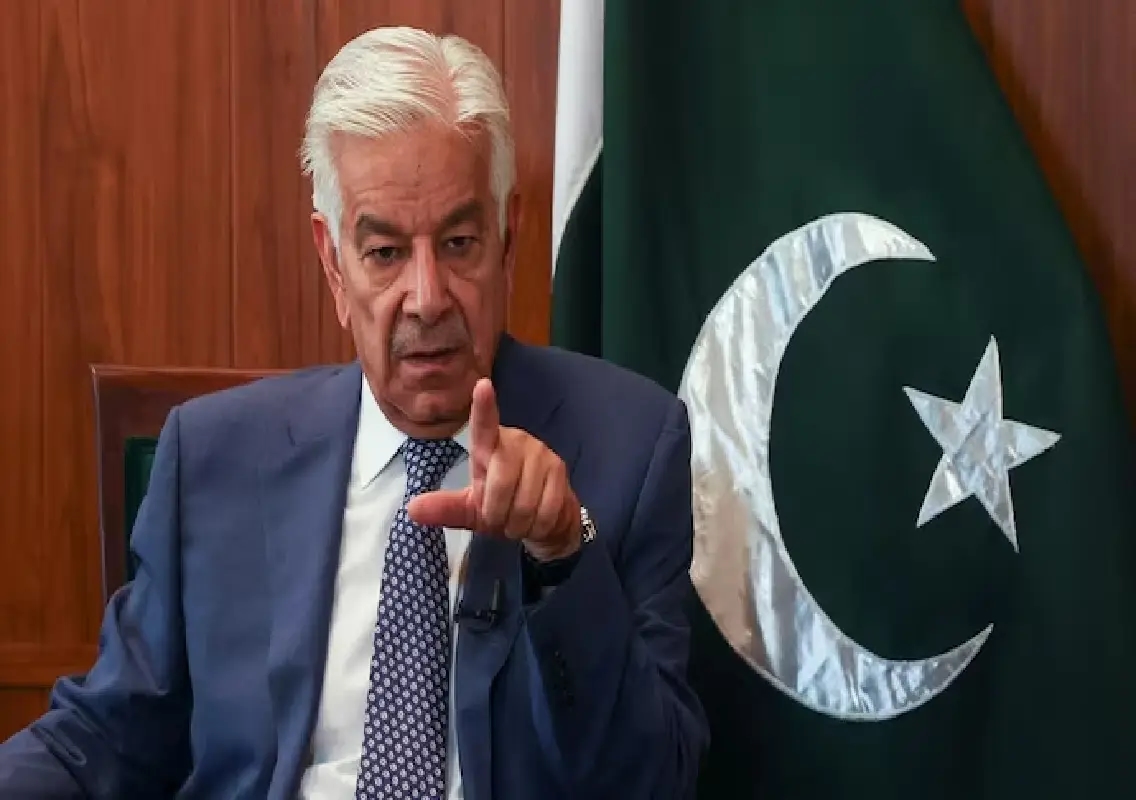


Fresh tensions have surfaced in India-Pakistan relations after Pakistan’s Defence Minister Khawaja Asif issued a warning that any future conflict could extend deep into Indian territory, explicitly naming Kolkata as a potential target.
The remarks, made during an interaction with reporters in Sialkot, have triggered concern and debate, particularly as they were not accompanied by any evidence to support the claims.
Threats without evidence
Asif alleged that India might attempt a “false flag” operation and warned of retaliation that would go beyond border areas.
“If India tries to stage any false flag operation this time, then we will take it to Kolkata,” he said, suggesting that such a scenario could involve planting evidence to blame Pakistan.
However, he did not provide any proof to substantiate these allegations.
Escalation in rhetoric
The Pakistani minister further escalated his rhetoric by stating that any future conflict would not remain confined to areas close to the border.
He claimed that Pakistan would “enter their territory and strike inside their homes,” indicating a potential widening of the conflict zone in the event of renewed hostilities.
The statements echo previous warnings from sections of Pakistan’s establishment about expanding the geographical scope of any confrontation with India.
India’s firm response
India has not officially responded to Asif’s latest remarks. However, earlier statements by Defence Minister Rajnath Singh indicate a strong stance.
Speaking recently, Singh had warned that any “misadventure” by Pakistan would invite an “unprecedented and decisive” response from India’s armed forces.
He also emphasised that India’s counter-terror operations remain ongoing and that any repeat of past attacks would be met with firm retaliation.
Background of tensions
The current strain in relations can be traced back to the Pahalgam terror attack on April 22, 2025, in which 26 people were killed. The attack led to a four-day military escalation between the two nuclear-armed neighbours.
India responded with Operation Sindoor, targeting alleged terror infrastructure across Pakistan and Pakistan-occupied Kashmir using missile and drone strikes.
Pakistan, in turn, retaliated with artillery fire, drones and missile activity, escalating the conflict before a ceasefire was reached on May 10, 2025, following direct talks.
Controversial remarks by former envoy
Adding to the controversy, former Pakistan High Commissioner to India Abdul Basit recently made remarks suggesting that in a hypothetical scenario, Pakistan could target major Indian cities such as Mumbai and New Delhi.
While he described such a situation as unlikely, his comments have contributed to the ongoing debate around rising tensions and aggressive rhetoric.
Regional instability adds to concerns
The statements come amid broader regional instability, with Pakistan also facing tensions on its western front. Reports have emerged of alleged airstrikes in parts of Afghanistan, including Kabul and Kandahar, though independent verification remains limited.
This evolving security environment has added another layer of complexity to an already fragile regional situation.
Conclusion
While no immediate escalation has been reported, the exchange of strong statements reflects a hardening of positions on both sides. With past conflicts still fresh and regional tensions simmering, such rhetoric risks further straining diplomatic relations between India and Pakistan.