







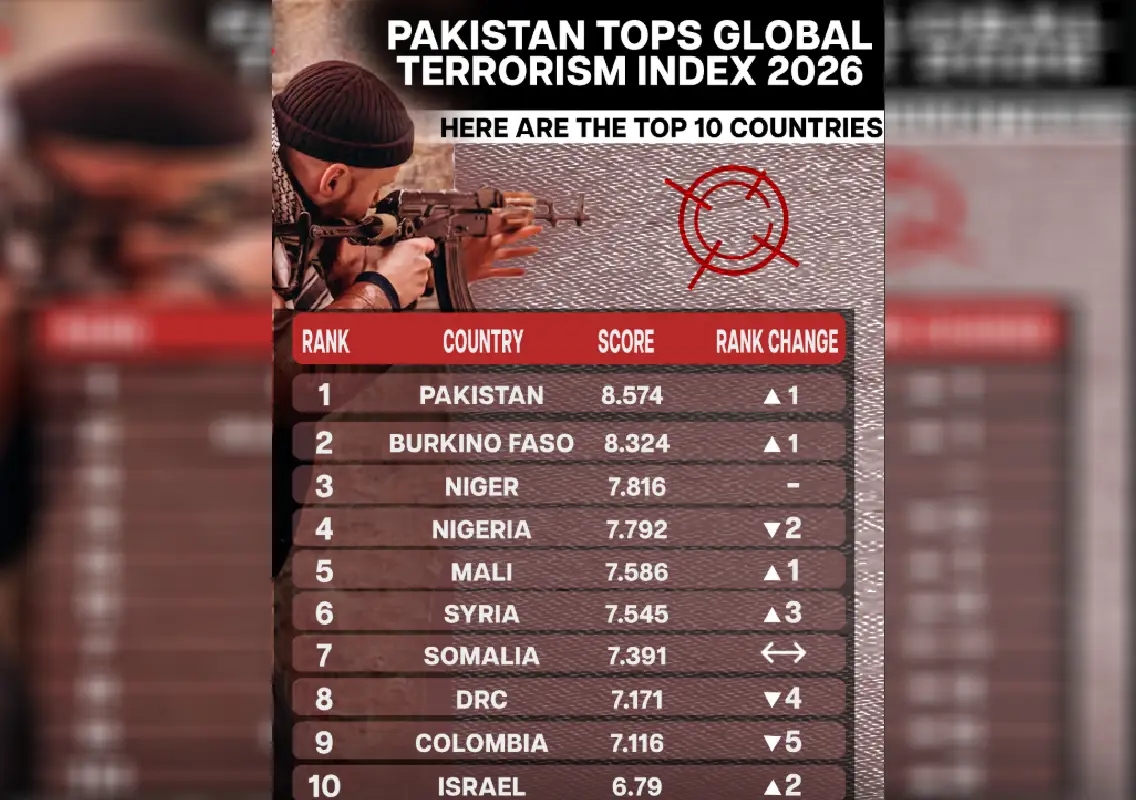


Pakistan has emerged as the most affected nation in the latest Global Terrorism Index, recording a 6 per cent rise in terrorism-related deaths even as global levels of terrorism declined overall.
The report highlights a worrying surge in violence across the country, with fatalities reaching their highest level in a decade in 2025.
Sharp rise in fatalities
According to the Global Terrorism Index published by the Institute for Economics and Peace, the increase in deaths has been driven largely by intensified attacks from militant groups operating within Pakistan.
Among the most prominent groups responsible are the Tehrik-i-Taliban Pakistan (TTP) and the Baloch Liberation Army, both of which have escalated their activities in recent years.
Conflict hotspots identified
The report identifies Balochistan and Khyber Pakhtunkhwa as the worst-affected regions in the country.
These two provinces together accounted for more than 74 per cent of all terrorist attacks and 67 per cent of total deaths recorded in Pakistan in 2025.
The continued instability in these regions has posed significant challenges for security forces and governance.
TTP among world’s deadliest groups
The index also ranks the Tehrik-i-Taliban Pakistan as the third deadliest terrorist organisation globally, underscoring its growing operational capacity and impact.
It is placed behind the Islamic State and Jamaat Nusrat al-Islam wal Muslimeen, both of which are primarily active in West Asia and parts of Africa.
Pakistan returns to top spot after over a decade
This marks the first time since 2011 that Pakistan has topped the Global Terrorism Index rankings, overtaking Burkina Faso, which had held the position for the previous two years.
The shift reflects a broader change in global terrorism patterns, with violence declining in some regions while intensifying in others.
Global trend shows decline
Despite the rise in Pakistan, the report notes an overall decline in terrorism worldwide, indicating progress in counter-terrorism efforts in several parts of the world.
However, the concentration of violence in specific regions highlights the uneven nature of these gains.
Conclusion
The latest findings underline the growing security challenges faced by Pakistan, particularly in its conflict-prone provinces. While global terrorism trends show improvement, the surge in attacks within the country signals the need for sustained counter-terrorism measures and regional stability efforts.