







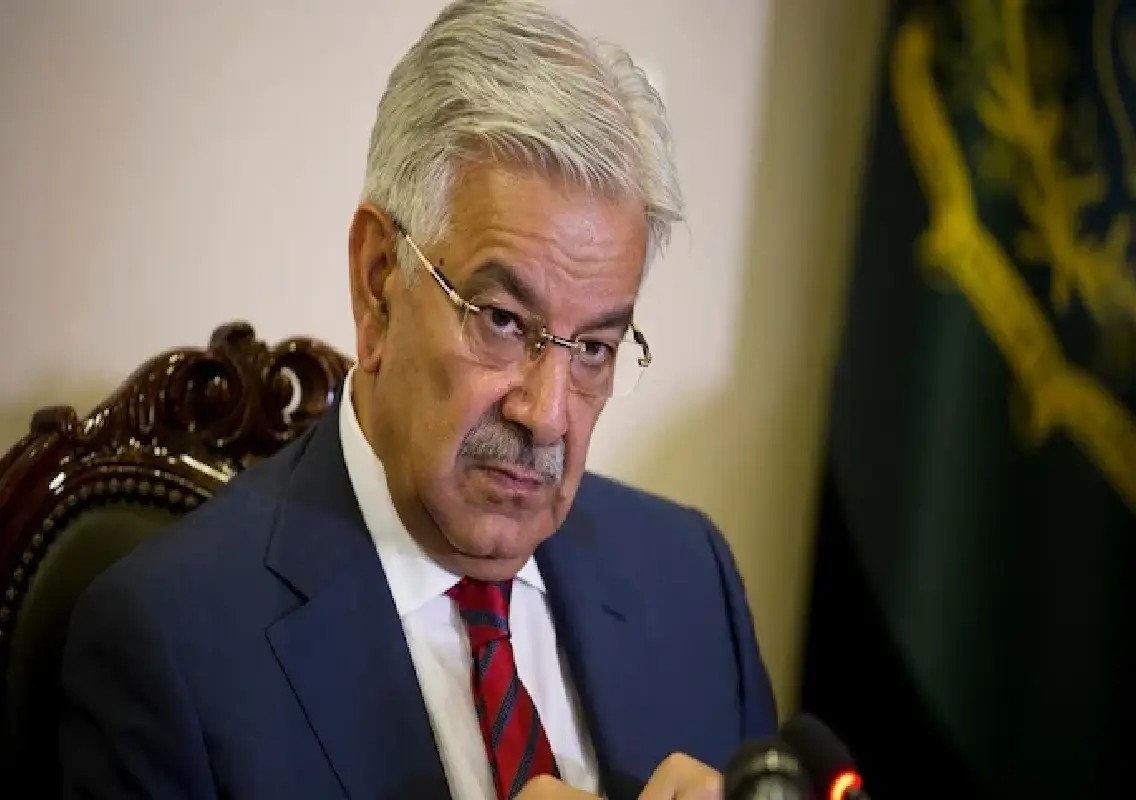


Islamabad: Pakistan Defence Minister Khawaja Asif has warned that Islamabad could resort to military action if it believes India’s actions concerning the Indus river system threaten Pakistan’s water security, further escalating tensions between the two neighbouring countries over the suspended Indus Waters Treaty.
Speaking to Pakistani news channel ARY News, Asif described water as a matter of national security and said Pakistan would not hesitate to respond if its access to the Indus basin waters came under serious threat.
“The moment we feel that our national security — and water is part of our national security — is being threatened, we will go to war against India. Definitely,” Asif said.
Water security emerges as major flashpoint
The Pakistani minister’s remarks come amid increasing concerns in Islamabad over the future of the Indus Waters Treaty, which has governed water sharing between India and Pakistan since 1960.
Asif also indicated that Pakistan, which is already facing a severe water crisis, could act if there were signs that India was moving rapidly to restrict or alter water flows under the river-sharing arrangement.
The latest comments have added to the growing rhetoric surrounding the issue, with water security increasingly emerging as a major point of contention between the two nuclear-armed neighbours.
Remarks follow statements on Indus water flow
The warning comes after a video clip surfaced in which India’s Union Jal Shakti Minister C.R. Patil reportedly indicated that the flow of Indus waters to Pakistan could be completely stopped by June 2028.
The comments generated significant concern in Pakistan, where the Indus river system plays a crucial role in agriculture, irrigation and the country’s overall economy.
Pakistan depends heavily on the waters of the Indus basin, with a large section of its population relying on the river system for farming and drinking water needs.
Treaty suspended after Pahalgam terror attack
Tensions over the Indus Waters Treaty have remained high since India suspended the 1960 agreement following the April 2025 terror attack in Pahalgam, Jammu and Kashmir, in which 26 people were killed.
New Delhi blamed Pakistan-backed terrorists for the attack and subsequently placed the World Bank-brokered treaty in abeyance.
The Indian government stated that the agreement would remain suspended until Pakistan takes credible and irreversible action against cross-border terrorism.
The Indus Waters Treaty allocates roughly 80 per cent of the waters of the Indus basin to Pakistan and has long been regarded as one of the most enduring agreements between the two countries despite several periods of political and military tensions.
Pakistan seeks international intervention
Pakistan has repeatedly objected to India’s decision to suspend the treaty and has argued that any disruption to water flows would have serious humanitarian and economic consequences.
Last week, Pakistan’s Deputy Prime Minister Ishaq Dar sought the intervention of the United Nations Security Council, alleging that India had violated the provisions of the treaty.
Earlier this month, Pakistan also claimed that India intends to undertake a river-linking project to divert water from the Chenab River, describing the move as a serious breach of the treaty and other international obligations.
India has not officially responded to the latest allegations made by Pakistan.
Water dispute adds to strained ties
As Pakistan grapples with growing water shortages and increasing climate-related challenges, the Indus water dispute has emerged as another significant flashpoint in the already strained relationship between the two countries.
Analysts believe that while the sharp rhetoric reflects the seriousness with which Pakistan views the issue, diplomatic engagement and international mechanisms will continue to play an important role in addressing disputes related to the treaty.
With tensions over terrorism, border issues and water sharing continuing to affect bilateral relations, the future of the Indus Waters Treaty remains uncertain, making the river dispute a critical issue for both nations.