







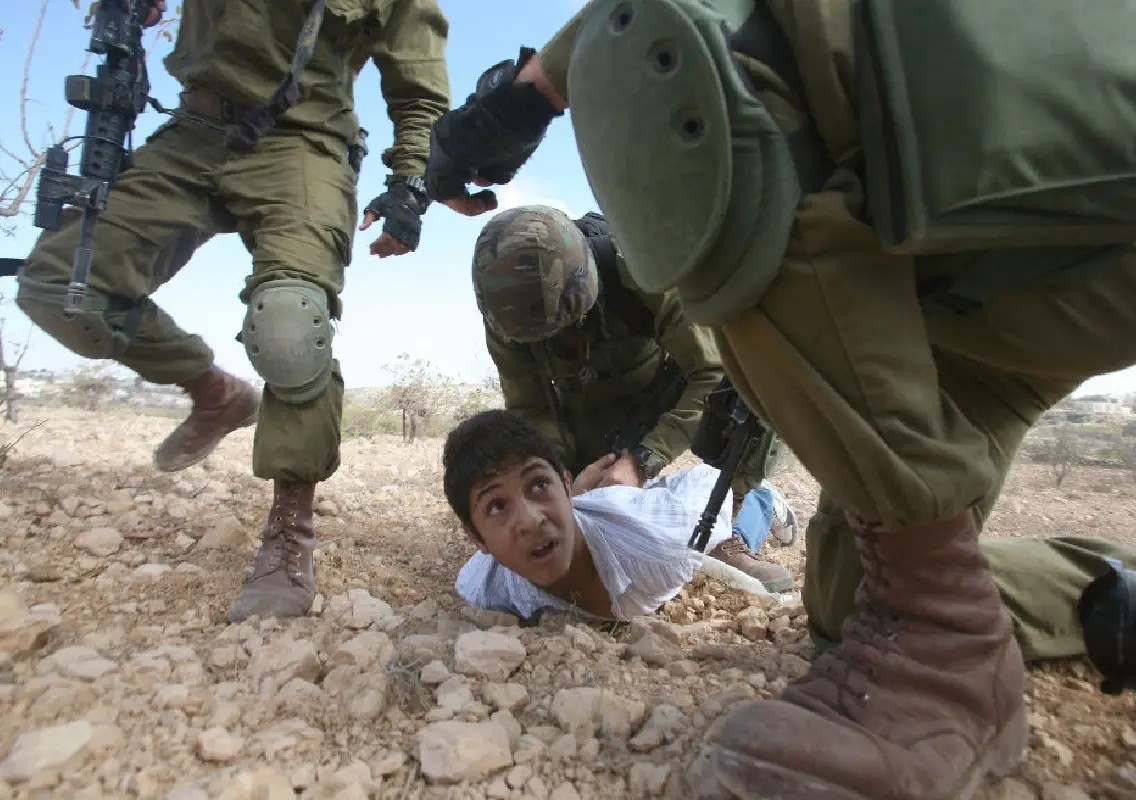


Accounts from Palestinian families and former detainees have drawn attention to the conditions faced by children held in Israeli prisons, with reports describing restricted family contact, poor sanitation, limited food and alleged physical mistreatment.
Families left waiting for their children
For families, detention can mean years of uncertainty. Al Jazeera reported the case of Mohammed Zalbani, who was arrested in 2023 when he was 13 and later sentenced to 18 years in prison. His mother, Fidaa Zalbani, said she had been unable to visit him for about two years.
Another case involves 16-year-old Ola Qatishat, who was arrested during a raid on her family home and is awaiting a court hearing. Her family told Al Jazeera that they remain deeply worried about her condition.
Palestinian prisoner organisations cited by Al Jazeera said about 360 Palestinian children remain detained by Israel. The same report said rights groups and United Nations bodies have documented allegations involving beatings, restrictions on food, medical neglect, solitary confinement and other forms of ill-treatment.
Detention leaves lasting scars
Former detainees have also described difficulties after release. Sixteen-year-old Muin Salahat, who spent 16 months in administrative detention, reportedly developed severe skin problems after contracting scabies while detained. His father said the experience continued to affect his behaviour and education after his release.
According to figures cited by Al Jazeera from Defense for Children International-Palestine, 74 per cent of 325 child detainees whose testimonies were collected reported experiencing violence. The organisation also reported accounts of interrogation under duress and solitary confinement.
The accounts have renewed attention to the special protections international law provides to children in detention and to the long-term impact detention can have on their education, family life and wellbeing.