







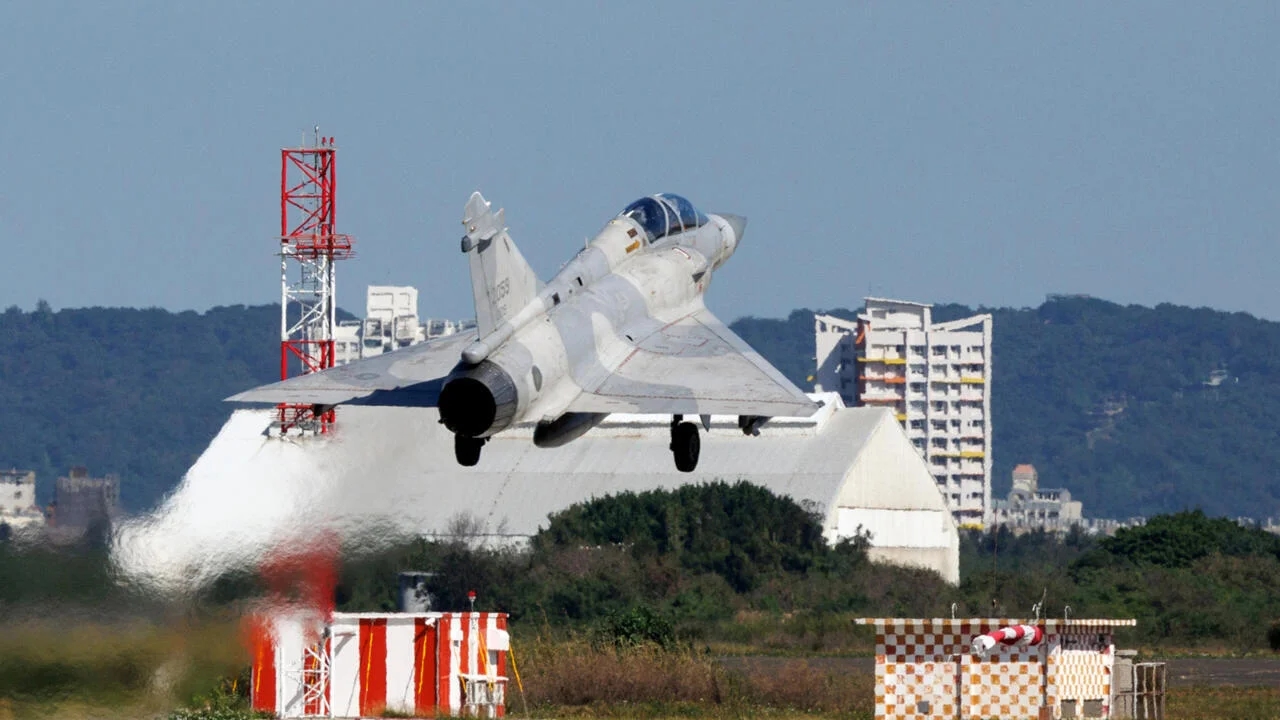


The Eastern Theater Command of the Chinese People’s Liberation Army (PLA) conducted large-scale joint military drills on December 30 in waters to the east and south of Taiwan Island, intensifying regional security concerns in the Taiwan Strait.
According to official Chinese statements, the exercises involved amphibious assault ships, frigates and unmanned aerial vehicles, and were aimed at testing the PLA’s ability to carry out complex, multi-domain combat operations.
Multi-domain operations tested
The drills reportedly focused on integrated force projection across sea, air and information domains, reflecting the PLA’s growing emphasis on joint operations. Military units rehearsed coordinated manoeuvres involving naval vessels and drones, underscoring China’s push to modernise its combat capabilities and improve battlefield coordination.
Chinese military officials said the exercises were designed to enhance readiness under “realistic combat conditions”.
Precision strikes and port seizure drills
A key element of the drills was the simulation of precision strike missions and port seizure operations, scenarios widely seen by analysts as relevant to potential conflict contingencies around Taiwan.
The PLA also tested long-range joint firepower strikes in waters south of Taiwan Island, integrating naval platforms with aerial assets to assess command, control and targeting efficiency over extended distances.
Strategic signalling in the Taiwan Strait
While Beijing routinely conducts military exercises around Taiwan, the scale and scope of the December 30 drills have drawn attention due to their explicit focus on amphibious and seizure capabilities.
China considers Taiwan a part of its territory and has repeatedly stated it will not rule out the use of force to achieve reunification. Taiwan, meanwhile, maintains that it is a self-governed democracy and has criticised PLA drills as destabilising.
Regional observers note that such exercises serve both military and political purposes, acting as a signal to Taiwan and its international partners, particularly amid heightened geopolitical competition in the Indo-Pacific.
Regional and global implications
The Taiwan Strait remains one of Asia’s most sensitive flashpoints, with any escalation carrying significant implications for global trade and security. Several countries, including India, have consistently called for restraint and peaceful resolution of disputes through dialogue.
Defence analysts say the increasing frequency and sophistication of PLA drills underline the need for continued diplomatic engagement to prevent miscalculation.