







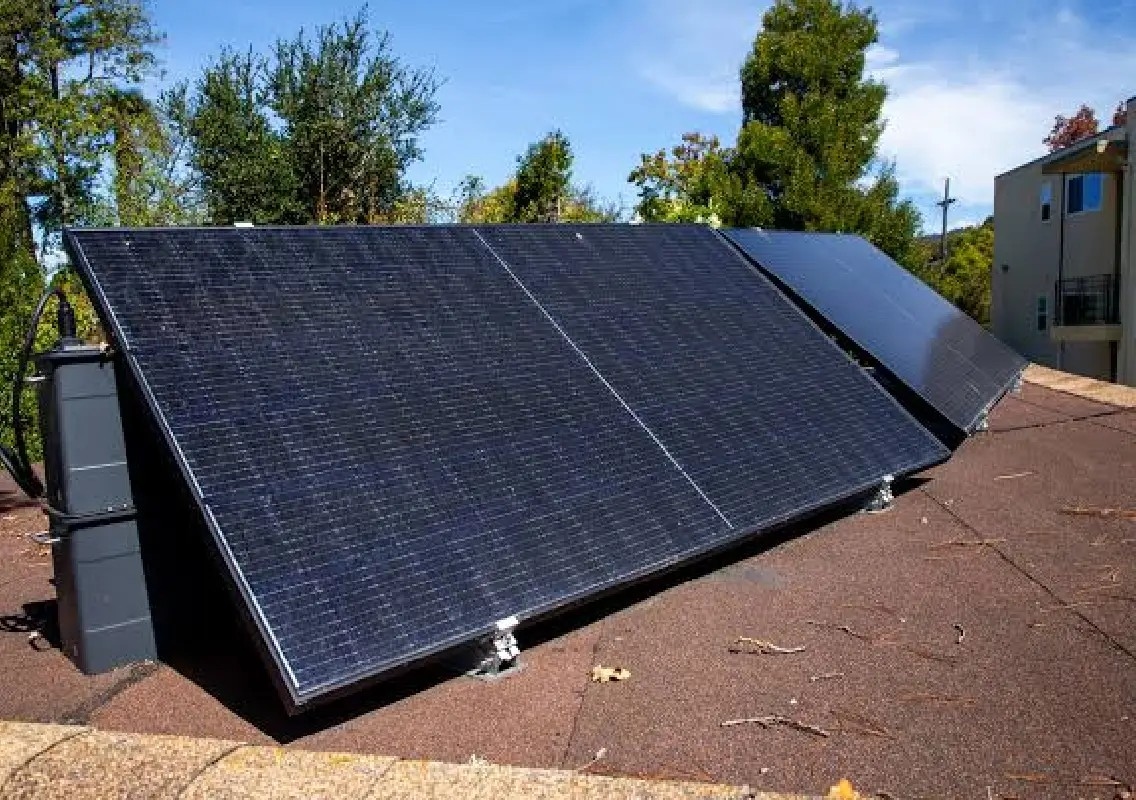


London: Households across the United Kingdom will soon have a new way to generate their own electricity as plug-in balcony solar panels go on sale commercially for the first time, potentially helping people living in flats and rented homes reduce their power bills.
The compact solar systems, which can be installed on balconies, terraces, sheds and other suitable outdoor spaces, are already popular in parts of Europe. Their arrival in the UK is expected to make solar power more accessible to households that cannot install conventional rooftop solar panels.
Affordable solar power for homes without rooftops
The first systems are expected to be available through Argos, with other major retailers including Amazon, Currys, B&Q and Screwfix expected to begin selling them in the coming weeks.
Prices are expected to start at around £400 to £500, depending on the capacity of the system. The plug-in units due to be sold in the UK will generally have an output of around 800 watts, approximately one-fifth the size of a typical residential rooftop solar installation.
While the smaller systems cannot generate enough electricity to power an entire home, they can reduce the amount of electricity a household needs to purchase from the grid. The average household could potentially save up to £110 a year, although actual savings will vary depending on several factors.
Energy Secretary Miatta Fahnbulleh described plug-in solar as a relatively simple and affordable way for households to take greater control over their energy bills.
How balcony solar panels work
Unlike conventional rooftop installations, plug-in solar systems can feed electricity directly into a property’s electrical circuit through a standard wall socket.
Solar panels generate electricity when exposed to sunlight, allowing appliances operating in the home to use the power being produced rather than drawing as much electricity from the grid.
The effectiveness of the system, however, depends heavily on the conditions in which it is installed. The direction in which the panels face, the amount of sunlight received and the weather can all influence how much electricity they generate.
Households can also maximise their savings by using electricity while the panels are producing it. Running appliances such as washing machines or dishwashers during sunny periods could help households make better use of the electricity generated.
Popular technology across Europe
Plug-in solar systems have already gained popularity in countries such as Germany and Spain, where they are sometimes known as Balkonkraftwerk, or “balcony power plant”.
The technology has particularly appealed to people who live in apartments or properties where installing a conventional rooftop system is difficult or impossible.
The UK’s new rules are therefore expected to open up access to small-scale renewable energy generation for a wider section of the population.
Every system will also need to be registered so that the country’s National Energy System Operator can assess the combined effect of large numbers of small solar installations on the electricity network.
Consumers urged to check safety requirements
Despite the potential savings, consumer organisations have warned that plug-in solar panels will not be suitable for every property.
Emily Seymour, energy editor at consumer group Which?, said households may need planning permission or approval from a building owner before installing the systems.
There are also safety considerations, particularly in properties with older electrical systems. Panels need to be securely mounted, while consumers must ensure that the products and associated equipment are used correctly.
The Energy Saving Trust has similarly highlighted the importance of providing consumers with clear and reliable information as plug-in solar becomes more widely available.
Batteries not included under current rules
Another limitation is the absence of plug-in batteries from the legislation that has enabled the sale of these systems.
This means households generally benefit most when they are able to consume the electricity at the time it is generated. Without battery storage, excess electricity generated when household demand is low may not provide the same financial benefit.
The technology is therefore not a direct replacement for a conventional rooftop solar installation. Instead, it offers a smaller and potentially more affordable option for households seeking to reduce their reliance on grid electricity.
A small step towards wider renewable energy use
The introduction of plug-in solar panels represents another step towards making renewable energy accessible beyond homeowners with suitable rooftops.
For people living in flats, rented accommodation or buildings where conventional solar installation is impractical, the systems could provide an opportunity to generate at least some of their own electricity.
However, experts stress that consumers should assess their property’s suitability, electrical safety, installation requirements and likely sunlight exposure before purchasing a system.
As the technology becomes available through major retailers, clearer information and responsible installation will be crucial to ensuring that households can benefit safely from this new form of small-scale solar power.