







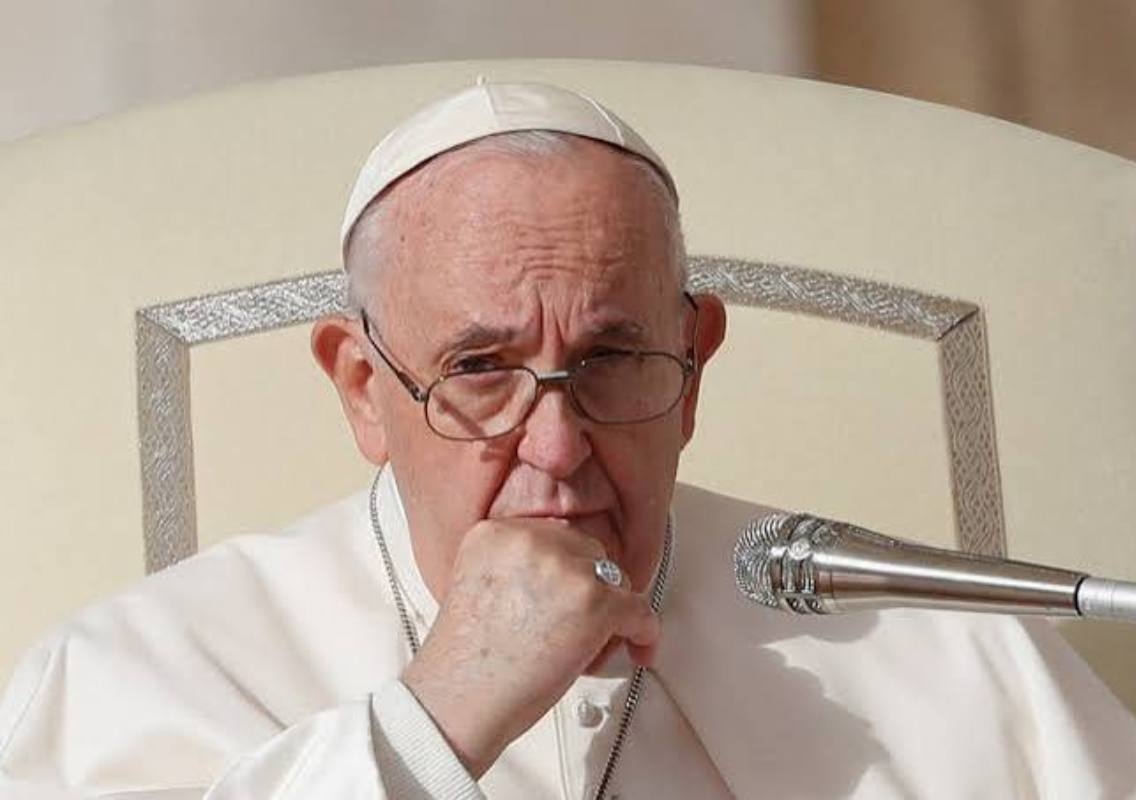


Vatican City: Pope Francis experienced a two-year spiritual crisis beginning in 2021, during which he felt tempted by the Devil and struggled with the responsibilities of leading the Catholic Church, according to a newly published collection of his private diaries.
The late pontiff, who led the Church for 12 years before his death in April 2025, also wrote about visions of the Devil and the entrance to Hell. His reflections revealed a personal struggle to avoid becoming someone who manipulated others through the power of his office.
The revelations appear in The Private Diary of Pope Francis, a 160-page volume published on Tuesday. The book contains selected diary entries and accompanying commentary by Cardinal Victor Fernandez, a close collaborator of Francis who organised the material.
A December 2022 entry described the difficulties Francis experienced during the period.
“It was all mixed with governance issues, pressure regarding decisions to make, and aridity and desolation,” he wrote.
Fernandez said Francis eventually recognised the episode as the worst spiritual trial he had experienced. According to the cardinal, the former pope felt that he was engaged in a continuous struggle against what he considered demonic temptation.
Pope Francis wrote about seeing the Devil
The diaries offer an unusual glimpse into the spiritual life of Francis, who was born Jorge Mario Bergoglio in Argentina and became the first pope from the Americas.
The entries were originally recorded in a small planning notebook beginning in December 1992, when Bergoglio was serving as an auxiliary bishop of Buenos Aires. They continue until August 2024, around eight months before his death at the age of 88.
An entry from January 2021, which marked the beginning of his self-described spiritual crisis, lists three occasions during his life when Francis believed he had seen the Devil.
One of those experiences reportedly occurred while he was already pope, during a meeting with Vatican officials.
“I can’t forget the powerful raspiness of his voice,” Francis wrote while describing the experience.
He added that he believed the Lord had given him an opportunity to leave the meeting and freed him from the situation.
The diary also records an earlier experience in which Francis believed he had seen the entrance to Hell. In a June 2018 entry, he described being frightened by the vision.
“Last night I saw the entrance to Hell,” he wrote. “I peeked in to look a little, and it terrified me.”
Francis said he reached for his Rosary, the prayer beads used by Catholics.
“I grabbed the Rosary as a weapon,” he wrote, adding that he was grateful to God for the help.
The accounts offer insight into how the late pope understood and interpreted his spiritual experiences, particularly during periods of personal difficulty.
Francis did not want to become a ‘puppeteer’
Another important theme in the diaries is Francis’ concern about the use of power and influence within the Church.
According to Fernandez, the former pope did not want to become a leader who manipulated people to achieve his own objectives.
The cardinal recalled a meeting with Francis in 2023, during which another bishop asked why the pope had not publicly reprimanded an unnamed Vatican official who had been speaking critically about him.
Francis reportedly explained that he felt strongly that God did not want him to exercise authority by controlling or manipulating others.
“(Francis) responded by explaining that he felt a strong sensation in his heart that God did not want him to become a puppeteer who uses and manipulates people according to his own convenience,” Fernandez wrote.
The diary collection does not identify the Vatican official involved or specify whom Francis might have feared treating like a puppet.
The reflections also came during a period when his papacy faced considerable resistance from conservative sections of the Catholic hierarchy. Francis was widely regarded as a reform-minded pontiff who sought to make the Church more open to the wider world.
However, some conservative cardinals were concerned that his approach could weaken or dilute established Church teachings.
Private diaries offer rare insight into a pope’s life
Fernandez compiled the diary excerpts and arranged them by theme, adding his own commentary. The volume does not reproduce the complete notebook or provide a detailed account of every event during Francis’ papacy.
Instead, much of its content focuses on the late pope’s religious convictions, personal reflections and spiritual struggles.
The publication is particularly significant because private papers belonging to popes have rarely been made public in this manner. Many recent pontiffs have reportedly directed that their personal documents be destroyed after their deaths.
Some papers belonging to Pope John Paul II, who led the Church from 1978 to 2005, were later made public. The previous pope whose diaries were published posthumously was John XXIII, who died in 1963.
The new collection therefore provides a rare opportunity to understand the personal reflections of a pontiff beyond his public speeches and official statements.
Fernandez, an Argentine cardinal appointed by Francis in 2023 to head the Vatican’s doctrinal office, was closely associated with the late pope’s work.
Francis reflected on Chile abuse controversy
Although the diaries largely concentrate on spiritual matters, they also refer to some significant events during Francis’ papacy.
One of them concerns his controversial 2018 visit to Chile, which attracted criticism over his handling of allegations of sexual abuse and an alleged cover-up involving a bishop.
Francis had initially dismissed allegations against the bishop, prompting widespread criticism. He later apologised and summoned Chile’s bishops to Rome. The bishops subsequently offered their resignations in an unprecedented move.
Reflecting on the episode in a 2021 entry, Francis wrote: “Devastated because of the situation in Chile.”
He added: “It was hard for me to admit what happened in Chile; I didn’t think it was so serious.”
The entry indicates how the controversy continued to weigh on him even after he acknowledged the seriousness of the situation.
Francis praised his successor Pope Leo
The diary collection also contains Francis’ positive assessment of several senior Church figures, including Cardinal Robert Prevost, who was elected pope in May 2025 following Francis’ death and took the name Pope Leo.
According to Fernandez, Francis described Prevost as “a great pastor, a generous missionary, and an irreproachable man”.
The late pope also expressed favourable views about two cardinals who had been among his vocal critics: Guinean Cardinal Robert Sarah and German Cardinal Gerhard Muller.
Francis reportedly praised Sarah for having “a refined spiritual sensitivity”. He also described Muller as someone who “seems aggressive, but he’s a good man”.
The collection includes a brief entry about Francis’ own election as pope. Although he was elected on March 13, 2013, he made a note of the event several months later.
“They elected me pope on March 13,” he wrote in July 2013.
Taken together, the diary excerpts provide a personal account of Francis’ faith, doubts and approach to leadership. They also reveal how he understood the pressures of governing the Church while attempting to remain guided by his religious convictions.