







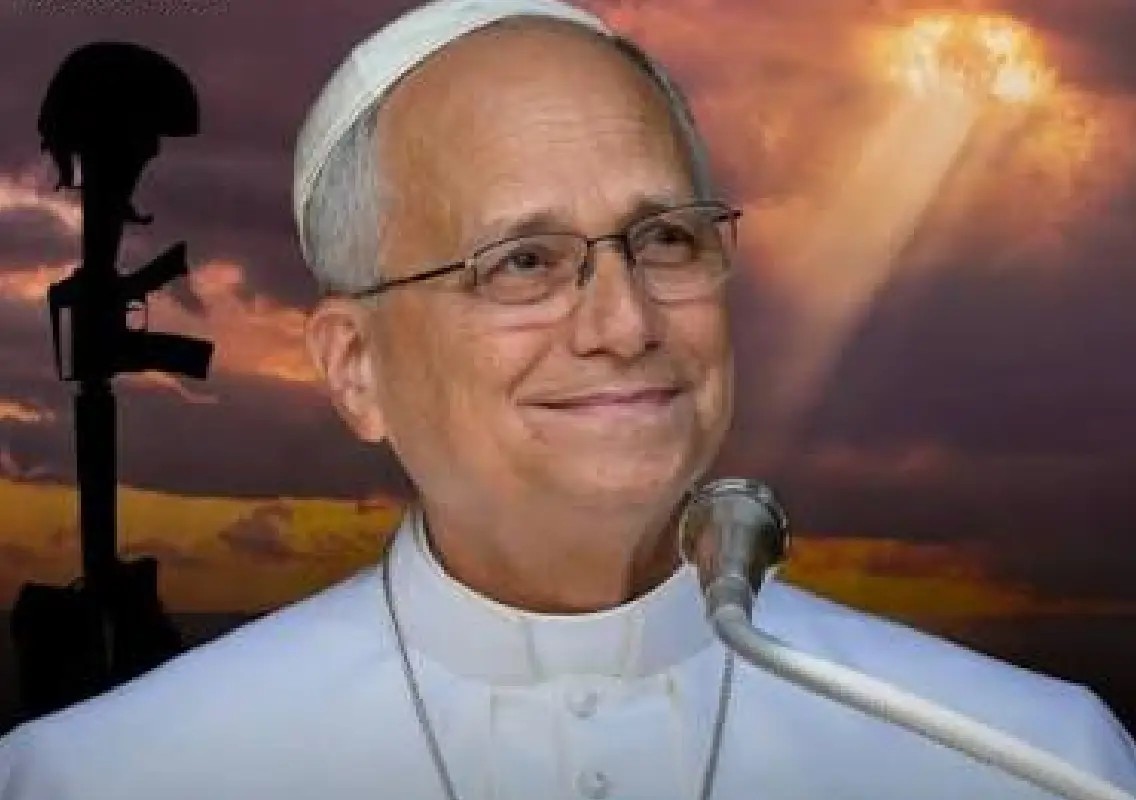


Vatican City : Pope Leo XIV has warned that war and environmental destruction are closely connected, describing them as two expressions of a deeper wound affecting humanity and creation.
In his message for the 11th World Day of Prayer for the Care of Creation, observed on September 1, the Pope called attention to the suffering caused by armed conflicts and the continuing destruction of the natural environment. He said the two crises cannot be treated as separate problems because each can deepen the other.
The Pope’s message reflects on the biblical vision of nations transforming weapons of war into tools for cultivation and peace. Instead of turning swords into ploughshares, however, vast resources continue to be directed towards weapons and military activity while communities around the world face poverty, displacement and environmental degradation.
War leaves scars far beyond the battlefield
Pope Leo XIV stressed that the consequences of war do not end when fighting stops.
Armed conflicts kill people, separate families and force communities from their homes. They can also leave behind polluted water, damaged land and disrupted food systems.
Such environmental consequences may remain for decades or even generations.
When agricultural land is destroyed or water sources become contaminated, communities can lose the ability to support themselves. The resulting poverty and insecurity can then create further social tensions, potentially contributing to new conflicts.
The Pope therefore presents war and ecological destruction as part of a cycle that can reinforce itself.
The damage can last for generations
The destruction caused by conflict is often measured in immediate human casualties and damaged buildings.
But environmental damage can be much slower to disappear.
Polluted rivers, degraded farmland and damaged ecosystems can affect children and grandchildren who were not even alive when a conflict began.
The loss of productive land can also contribute to food insecurity and displacement, placing additional pressure on already vulnerable communities.
Pope Leo XIV’s message calls attention to this less visible dimension of warfare and encourages societies to consider the long-term consequences of decisions taken during conflict.
The real crisis begins within the human heart
The Pope’s message goes beyond political decisions and environmental policy.
He identifies what he describes as a deeper disorder within the human heart, where conscience, desire and will shape the choices people and societies make.
Love and indifference, truth and self-deception can exist in tension within individuals.
From this perspective, destructive systems are not created in isolation. They emerge from human decisions and relationships.
The Pope’s argument is that lasting peace and meaningful care for creation therefore require more than agreements, laws and political programmes.
They also require a transformation in the way people understand their responsibilities towards one another and the natural world.
A lesson from the Second Vatican Council
Pope Leo XIV draws on the teaching of the Second Vatican Council, particularly Gaudium et Spes, the Pastoral Constitution on the Church in the Modern World.
The document reflected on humanity’s responsibility in a rapidly changing world and addressed questions of peace, justice, human dignity and social development.
The Pope uses this perspective to emphasise that problems visible in society can have deeper roots.
When relationships between people and communities become damaged, those divisions can eventually appear in political and social structures.
Similarly, when humanity treats nature purely as something to exploit, environmental destruction can follow.
From an inner desert to a living garden
The Pope also recalls an observation associated with Pope Benedict XVI: the world’s external deserts grow because internal deserts have become so extensive.
The image offers a powerful way of understanding the relationship between environmental and human crises.
A damaged landscape can reflect damaged relationships, but the reverse can also occur. When people lose a sense of responsibility towards others and creation, exploitation and conflict can become easier to justify.
Pope Leo XIV therefore calls for a conversion of heart — a change in attitudes, priorities and relationships.
He argues that peace and care for creation cannot simply be imposed from outside. They must grow from people who are willing to change how they live and relate to God, their neighbours and the natural world.
Resources for war could serve people instead
Another central point in the Pope’s message is the use of resources.
He calls for resources currently devoted to warfare to be redirected towards integral human development, poverty reduction and reconciliation between divided communities.
The argument places peace and environmental protection within a broader understanding of human development.
Money, knowledge and resources invested in destruction could instead be used to strengthen communities, reduce poverty, improve living conditions and protect the environment.
For the Pope, these are not competing priorities.
They are interconnected parts of building a more peaceful world.
Six values that can build peace
Pope Leo XIV identifies several qualities that he believes are essential to peace-building.
They include truth, dialogue, patience, justice, mercy and love.
Each addresses a different part of the challenge.
Truth can help communities confront difficult realities. Dialogue can prevent disagreements from becoming violence. Justice can address grievances, while mercy can help people move beyond cycles of retaliation.
Patience is particularly important when reconciliation takes time.
Love, meanwhile, provides the broader foundation for seeing other people and creation not simply as resources or obstacles but as part of a shared human home.
Three ecosystems need our care
One of the most striking elements of the Pope’s message is his description of three interconnected ecosystems entrusted to humanity.
They are:
- The natural world
- The web of human relationships
- The human heart
The three cannot be separated, according to Pope Leo XIV.
Environmental protection without concern for human dignity can remain incomplete. Likewise, peace between communities can be difficult to sustain if people continue to damage the natural world or carry hatred and indifference within themselves.
The Pope’s message therefore presents ecological responsibility as both an environmental and moral responsibility.
A call to move from violence to peace
The World Day of Prayer for the Care of Creation offers an opportunity to reflect on these connections.
The day brings together prayer and concern for the environment, encouraging Christians and people of goodwill to recognise their responsibility towards creation.
Pope Leo XIV’s message broadens that reflection by placing environmental care alongside the search for peace.
His vision is expressed through a series of transformations: from desert to garden, from division to communion and from violence to peace.
These are not changes that can happen overnight.
They require individual choices, responsible leadership, international cooperation and a willingness to repair damaged relationships.
Creation’s wounds are also humanity’s wounds
The Pope’s message ultimately offers a reminder that the natural world and human society are deeply connected.
A poisoned river can harm a community. A destroyed food system can deepen poverty. Poverty can increase tensions. Conflict can then cause further environmental destruction.
Breaking that cycle requires more than responding to each crisis separately.
It requires addressing the human attitudes that allow violence, exploitation and indifference to flourish.
As the world marks the 11th World Day of Prayer for the Care of Creation, Pope Leo XIV’s message places a simple but challenging question before humanity: Can we build peace with the earth while remaining at war with one another?
His answer points towards a different future — one in which caring for creation, protecting human dignity and building peace become parts of the same mission.