







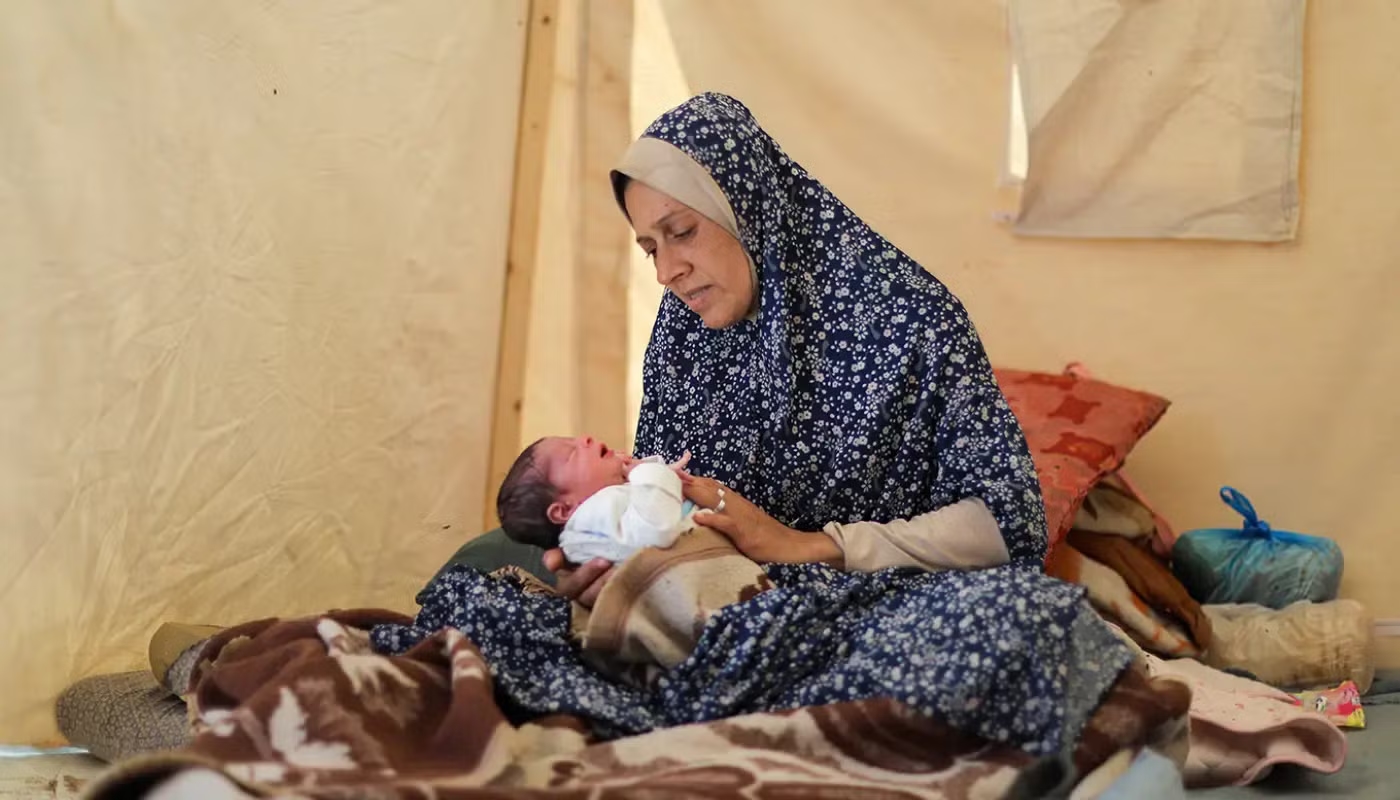


When war broke out in October 2023, Hadeel Al Gherbawi was seven months pregnant. The 26-year-old had prepared carefully for motherhood, attending frequent medical check-ups due to a high-risk pregnancy. Within days, however, her plans — and her home — were swept away by relentless conflict.
Thirteen displacements and a destroyed home
Living in eastern Gaza City near the border, Hadeel moved to her parents’ home in the west, believing it would be temporary. Instead, her family was displaced 13 times. The house she shared with her husband was later destroyed, forcing them to seek shelter in hospitals, rented rooms, and eventually tents.
In late October, Hadeel narrowly escaped a massive Israeli airstrike on a residential building. She fled to al-Shifa Hospital, where displaced families filled every corridor. She recalls the overwhelming smell, chaos, and fear as bodies arrived following the strike, which reportedly killed over 100 people.
Giving birth under bombardment
Fearing she would go into labour without transport, Hadeel travelled south to Khan Younis, where doctors at Nasser Hospital induced her labour. Even there, nearby strikes shook the building as she gave birth to her son, Jawad, amid panic and uncertainty.
After delivery, she lived in overcrowded rooms, unable to find painkillers and silently enduring postnatal pain and depression. Months later, the family moved into a tent — her first experience of such living — where hunger, insects, and fear for her infant’s safety became constant companions.
Hunger and a second pregnancy
When Jawad was nine months old, Hadeel discovered she was pregnant again. “How do I bring another child into this world while living in a tent?” she asked. During her second pregnancy, starvation proved the hardest burden. Some days, she survived on a single cucumber, often giving her share to her crying toddler.
The brief ceasefire in January 2025 offered hope. Despite being in her first trimester, she walked back north to her damaged home. Six weeks later, fighting resumed, and they were displaced once again.
A birth without anaesthesia
Near her due date, Hadeel returned to her parents’ home near a hospital. One night, labour pains began. With no electricity and her husband away, she walked down five floors and delivered her second son, Fares, in an ambulance. He weighed just 2 kg, which she attributes to prolonged starvation.
At the hospital, there was no anaesthesia for stitching. Exhausted and bleeding, she later walked home hours after giving birth.
A wider humanitarian crisis
The United Nations has warned that conditions imposed on civilians in Gaza, including widespread hunger, are consistent with the use of starvation as a method of war. Hadeel’s story reflects the lived reality behind those findings — of motherhood marked not by celebration, but survival.