







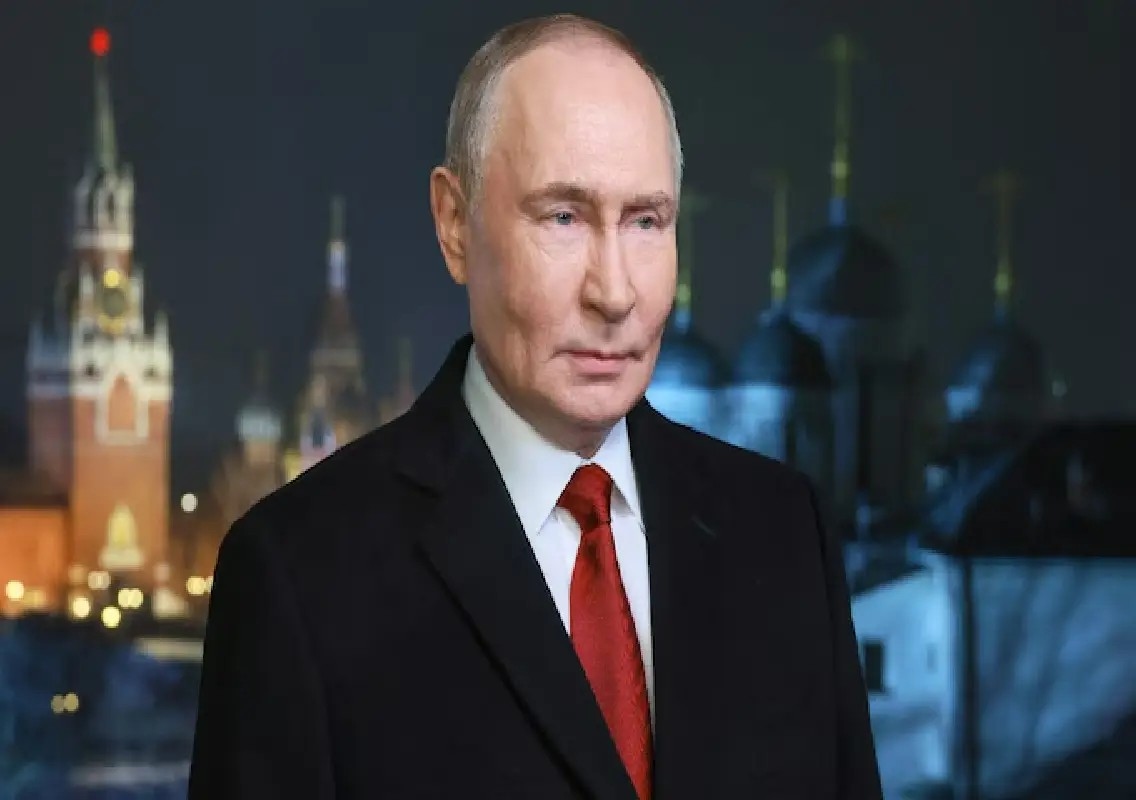


Moscow: Russian President Vladimir Putin has reportedly intensified security measures around his movements and residences amid growing concerns within the Kremlin over possible assassination threats linked to the ongoing conflict in Ukraine.
According to international media reports citing leaked European intelligence assessments, Russian authorities have introduced heightened precautions following allegations that Ukraine attempted to target Putin near his private residence in the Novgorod region.
The reported claims have not been independently verified, and both US intelligence officials and Ukrainian authorities have reportedly rejected suggestions that the Russian president was directly targeted.
However, the reports have reportedly triggered increased concern within Russia’s political and military establishment as the war in Ukraine continues and long-range drone and missile attacks become more frequent.
Kremlin reportedly increases security precautions
Reports suggest Putin has significantly reduced visits to his residences in Moscow Oblast and Valdai in Novgorod Oblast while security agencies reassess possible threats.
International media reports indicate that the Russian leader’s security apparatus has implemented stricter access controls, expanded surveillance systems and reinforced anti-drone protection around official residences and travel routes.
The measures reportedly include tighter screening procedures for personnel and enhanced communication monitoring involving individuals working close to the president.
Leaked intelligence documents cited by European media outlets claim that Russia’s Federal Protective Service has imposed additional restrictions on members of the presidential security team.
The reports also suggest that Putin has reduced public appearances and non-essential travel in recent months as a precautionary measure.
Security concerns intensified after military officer’s death
According to reports, concerns inside the Kremlin reportedly intensified after the killing of Lieutenant General Fanil Sarvarov in December.
Russian authorities stated that the senior military officer died after an explosive device planted beneath his vehicle detonated in what officials described as a targeted assassination.
Security analysts believe the alleged threat near Putin’s residence, combined with attacks on senior Russian figures, has heightened fears that high-ranking political and military officials could become increasingly vulnerable.
The developments come amid continued escalation in the Russia-Ukraine conflict, including long-range strikes, drone attacks and sabotage operations reported in several regions.
Analysts note that security concerns have become more pronounced as the war increasingly extends beyond front-line military operations.
Kremlin acknowledges heightened precautions
Kremlin spokesperson Dmitry Peskov reportedly acknowledged that additional precautions were being taken due to what he described as ongoing “terrorist threats” and the growing capabilities of Ukrainian long-range strike operations.
However, Russian authorities have not publicly released detailed information regarding the alleged threats or specific intelligence assessments.
At the same time, Ukrainian officials and Western intelligence agencies have reportedly dismissed or questioned claims that direct assassination attempts against Putin had taken place.
The lack of independent verification has left several aspects of the reports unclear.
Nevertheless, observers say the developments reflect growing anxiety within the Kremlin over internal security and the broader impact of the prolonged conflict.
War continues to reshape Russian security landscape
The ongoing war in Ukraine has significantly altered Russia’s domestic security environment, with increased emphasis on protecting strategic infrastructure, military facilities and senior officials.
Over the past two years, Russia has reported multiple drone incidents, attacks on infrastructure and alleged sabotage attempts linked to the conflict.
Political analysts believe the tightening of security around Putin reflects both the symbolic importance of the Russian president and broader concerns regarding political stability and national security during wartime.
The reported measures also highlight the increasingly complex security challenges faced by Russia as the conflict continues without a clear resolution.
While many of the intelligence claims remain unverified, the reports have drawn global attention and further underscored the tense geopolitical atmosphere surrounding the ongoing Russia-Ukraine war.