







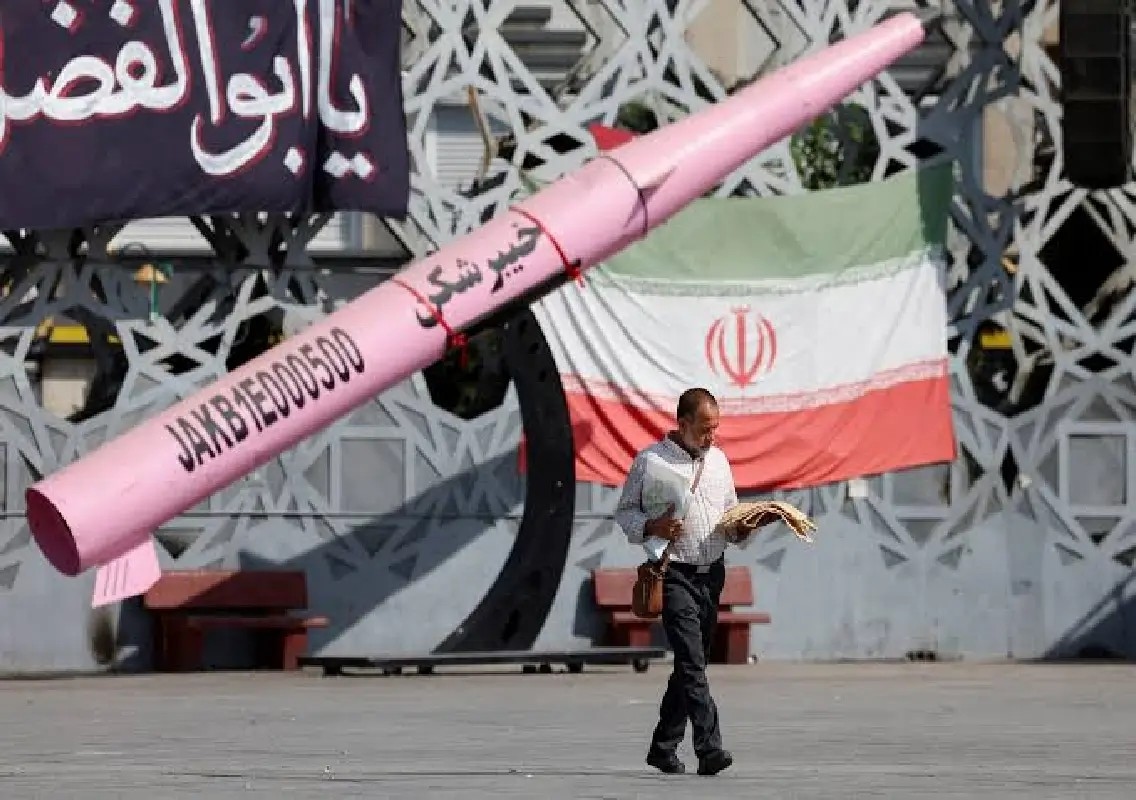


New York: A fresh wave of United States military strikes on Iran has reignited fear, uncertainty and economic hardship among ordinary Iranians, according to accounts shared with Reuters by residents across the country. After a brief period of relative calm under a fragile ceasefire, renewed hostilities have disrupted daily life, leaving many worried about their financial future and personal safety.
Residents interviewed by Reuters described rising prices, unstable internet access, shrinking employment opportunities and growing anxiety over the conflict’s uncertain trajectory. Many also spoke of the emotional strain of living under the constant threat of further escalation.
Rising prices add to public distress
For many Iranians, the economic consequences of the conflict have become an immediate concern.
Somayeh, a 40-year-old photographer in Tehran, told Reuters that the cost of essential groceries had almost doubled compared to prices before the latest phase of the conflict.
She said the uncertainty surrounding the situation has made everyday life increasingly difficult, with people unable to plan even a few days ahead because of the fluctuating security situation.
Residents said inflation, already a significant challenge before the latest escalation, has intensified financial pressure on households across the country.
Internet disruptions hit livelihoods
The renewed conflict has also affected employment, particularly for people whose work depends on internet connectivity.
Amir, a 30-year-old software engineer from Sanandaj in Iran’s Kurdistan province, said repeated internet restrictions had severely disrupted his career.
According to Reuters, Amir had recently married before the conflict intensified and struggled to support his family after internet shutdowns affected remote work opportunities.
Although he managed to secure employment only a few days before the latest escalation, he said the renewed hostilities have once again created uncertainty about his livelihood.
Many choose to remain despite conflict
Despite the risks posed by airstrikes, several residents interviewed by Reuters said they were unwilling or unable to leave Iran.
Nazanin, a 34-year-old psychotherapist from Sanandaj, said she had previously hoped to pursue higher education abroad but could no longer afford to emigrate because of the sharp decline in the value of the Iranian rial.
She also explained that concern for her family had changed her perspective on leaving the country during periods of conflict.
Similarly, Somayeh said that although she once planned to move abroad, she now intends to remain in Iran because her family, home and life are rooted there.
Fear of prolonged instability
Residents expressed concern that the conflict could continue for an extended period, bringing further economic deterioration and social uncertainty.
Hiwa, a resident of Mahabad, told Reuters that worsening inflation and economic hardship could increase public frustration if conditions continue to deteriorate.
The interviews reflected widespread concern about the long-term impact of continued military confrontation on daily life, employment and public stability.
Conflict takes psychological toll
Beyond economic challenges, many residents described the emotional impact of living through repeated military escalation.
Several interviewees spoke of persistent anxiety, difficulty sleeping and fear for the safety of family members during periods of airstrikes and communication disruptions.
Amir recalled the stress of being unable to contact his father for an extended period while he was away in Iraqi Kurdistan, describing the uncertainty as emotionally exhausting.
Despite these hardships, he said he had no intention of leaving Iran, citing emotional attachment to his home and uncertainty about becoming a refugee.
Ongoing uncertainty
The renewed attacks have ended the relative calm that followed the ceasefire reached in June, with both sides now engaged in continued exchanges.
Residents interviewed by Reuters said the uncertainty surrounding future developments remains one of the greatest challenges, affecting both personal decisions and economic planning.
As the conflict continues, ordinary civilians remain caught between security concerns, financial hardship and an unpredictable future.
Conclusion
The renewed military escalation has added another layer of uncertainty to the lives of many Iranians already grappling with inflation, employment challenges and economic instability. While concerns over safety continue to grow, many residents say their ties to family and homeland outweigh the difficult prospect of leaving the country amid an uncertain conflict.