







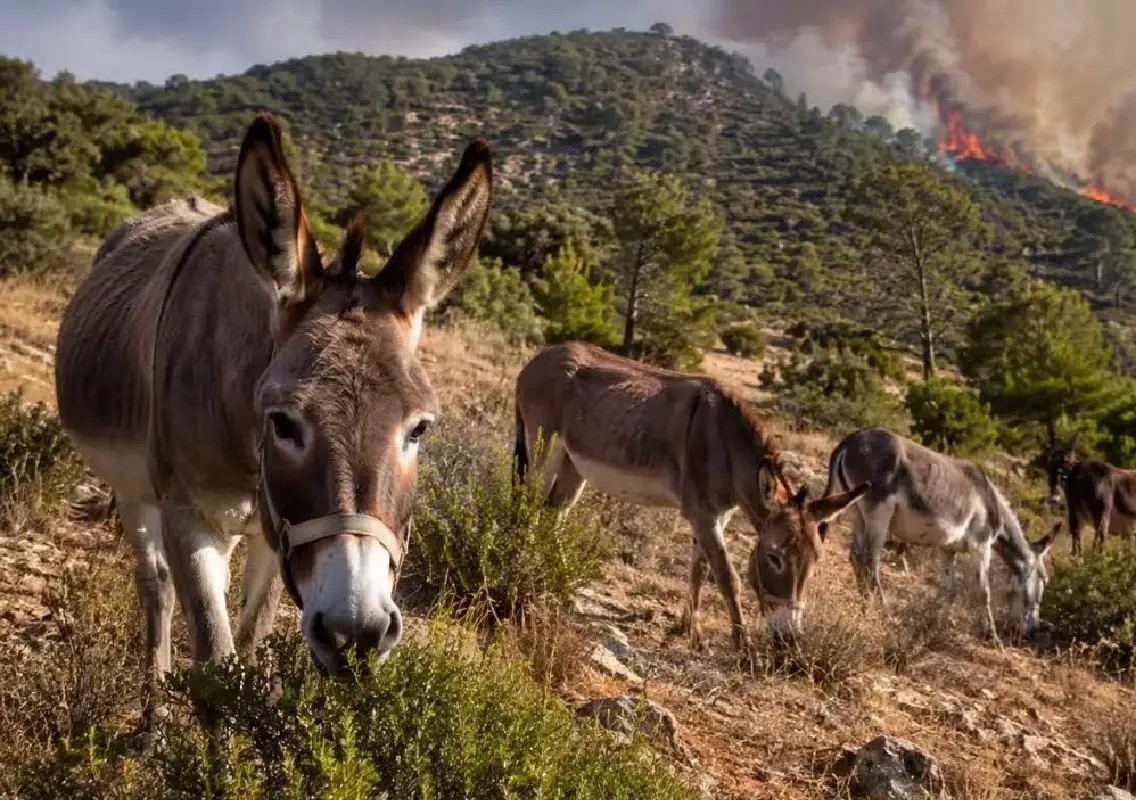


Andalusia: In the sun-drenched hills of Andalusia, Spain, 18 rescued donkeys are taking on an unusual role in wildfire prevention. Instead of carrying firefighting equipment, the animals spend hours grazing on dry grass, shrubs and other vegetation that could fuel fires.
The initiative operates around Doñana National Park, one of Europe’s important wetland reserves, where the donkeys have been used since 2014 to create natural firebreaks.
Donkeys turn grazing into wildfire prevention
Every year from March to November, the animals spend around seven hours a day grazing in carefully selected areas around the park.
Each donkey is assigned a plot measuring about 40 metres by 15 metres. As they feed, they clear vegetation and create corridors that can slow the spread of a wildfire.
The project is led by Luis Manuel Bejarano, president of the El Burrito Feliz association. What began as an effort to rescue abandoned and mistreated donkeys has developed into a conservation initiative.
A natural alternative to clearing vegetation
Wildfires are an increasing concern across southern Europe as hotter and drier conditions create more fire-prone landscapes.
Mechanical vegetation clearance and controlled burning can help reduce risks, but they can also require significant resources. The donkey project offers a natural alternative by allowing the animals to remove potential fuel while maintaining open habitats.
The grazing can also help control invasive vegetation and support biodiversity.
A second chance for rescued animals
The project combines animal welfare with environmental protection. The donkeys are rescued, receive veterinary care and are placed in controlled grazing areas.
After a day of grazing, the animals are provided with water and allowed to rest before returning to work the following morning.
The approach has also inspired similar initiatives elsewhere in Spain. In Catalonia, another group of rescued donkeys is reportedly being used to clear vegetation and reduce wildfire risks.
For the animals involved, the work offers more than an environmental purpose. Once neglected or mistreated, they now play a role in protecting vulnerable landscapes while receiving care and a safe environment.
The unusual initiative shows how a simple, nature-based approach can bring together wildfire prevention, conservation and animal welfare.