







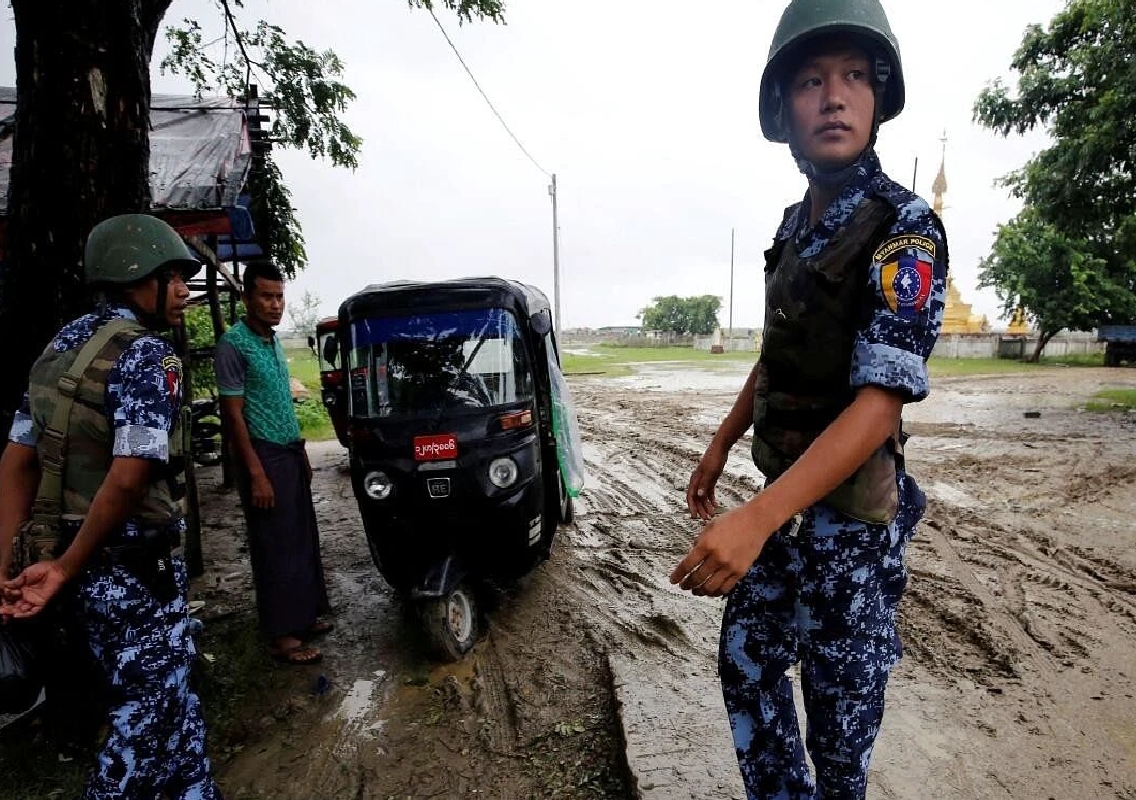


Bangkok: In an unexpected turn of events, the Rohingya Solidarity Organisation (RSO) and Myanmar’s military junta have reached an unspoken understanding, temporarily refraining from targeting each other as they face a shared adversary: the Arakan Army, a powerful rebel group gaining ground in Rakhine state. This new alignment underscores the complex dynamics of the ongoing conflict in Myanmar, where former foes find common cause in battling mutual enemies.
An Unspoken Agreement
Ko Ko Linn, head of the RSO’s political affairs, revealed that the Rohingya fighters and Myanmar’s military have an informal understanding not to engage in direct conflict. “The junta did not attack us, and we did not attack them,” Ko Ko Linn told Reuters. He added that there is no formal alliance between the two forces, but both sides have focused their efforts on battling the Arakan Army.
The RSO’s movement into Maungdaw, a town near the Bangladesh border, earlier this year marked a turning point. According to Ko Ko Linn, RSO fighters fought alongside the military against the Arakan Army, avoiding direct conflict with junta forces. Reuters has not independently verified the battlefield developments in Rakhine state, and the Myanmar junta did not respond to requests for comment.
Arakan Army: A New Enemy
The rise of the Arakan Army, a predominantly Buddhist rebel group with growing influence in Rakhine, has shifted the region’s power dynamics. The RSO, a Rohingya group long committed to fighting for an autonomous region for its people, initially sought an alliance with the Arakan Army against the military. However, these efforts were spurned.
Ko Ko Linn recounted multiple failed attempts to engage with the Arakan Army in negotiations, which led to increasing hostilities between the two. “We requested the Arakan Army not to hit the Rohingya. We warned them frequently, but they ignored us,” he said. The Arakan Army, which has previously denied targeting Rohingya civilians, did not respond to the RSO’s recent claims.
Tensions between Rakhine’s Buddhist community and the Rohingya have historically run deep. The Rohingya, a persecuted Muslim minority, have faced systemic discrimination, and the Arakan Army has accused sections of the Rohingya, including the RSO, of collaborating with the junta.
Rising Violence and Humanitarian Concerns
The conflict in Rakhine is part of a broader rebellion against Myanmar’s military, which seized power in a coup in February 2021. Since then, the country has plunged into widespread protests and armed resistance.
Earlier this year, reports surfaced of escalating violence between the Arakan Army and the military in Maungdaw. According to Ko Ko Linn, around 1,000 RSO fighters were deployed to defend Rohingya civilians against the Arakan Army. However, the situation took a deadly turn in August when artillery shelling and drone strikes killed 180 civilians, including women and children, near the Naf River. Both the Arakan Army and the military blamed each other for the tragedy.
The RSO was not involved in the incident but subsequently withdrew its fighters from Maungdaw to prevent further civilian casualties. “We are changing our strategy,” Ko Ko Linn said, though he did not provide details. He added that the RSO plans to return to the region to continue fighting.
The RSO’s Resurgence
Formed in 1982, the RSO was once a prominent armed group advocating for Rohingya autonomy. In recent years, it was considered largely inactive but has since reorganised and expanded. By 2022, the group had grown from 1,000 cadres to between 5,000 and 6,000 members, although not all are armed.
The group has faced accusations from rights organisations of forcibly recruiting Rohingya refugees from camps in Bangladesh. The RSO has denied these allegations. While many Rohingya refugees harbour resentment towards the Arakan Army for its reported human rights violations, the RSO’s recruitment efforts have generally been met with little enthusiasm, according to the International Crisis Group.
Shifting Alliances in a Complex Conflict
The RSO’s informal understanding with Myanmar’s military, though unthinkable in previous years, highlights the fluid nature of alliances in Myanmar’s complex civil war. Both sides find themselves temporarily aligned against the Arakan Army, even as the junta continues to face widespread resistance from various ethnic and political groups across the country.
The situation remains highly volatile, with civilians bearing the brunt of the violence. As the RSO shifts its strategy and the military continues its campaign against multiple rebel groups, the conflict in Rakhine shows no signs of abating.
Conclusion
The evolving dynamics between the Rohingya Solidarity Organisation and Myanmar’s military against a common foe in the Arakan Army reveal the complicated layers of Myanmar’s civil conflict. As both sides reconfigure their strategies, the humanitarian crisis in Rakhine continues to deepen, with civilians caught in the crossfire of a brutal and protracted war.
Read More : Hidden Treasure Discovered in Romanian Village