







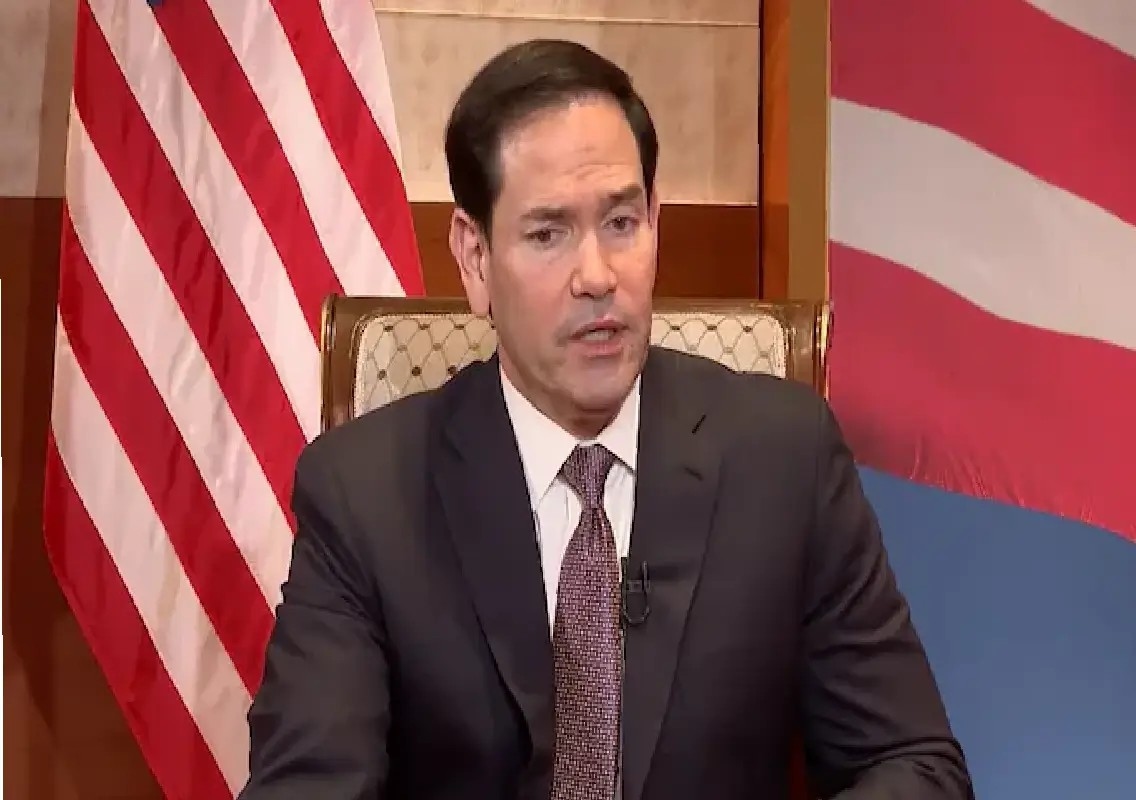


Washington: United States Secretary of State Marco Rubio has said the United States continues to prioritise diplomacy in its engagement with Iran, while also indicating that other options remain available if negotiations do not succeed. His remarks come amid growing expectations of progress in talks involving Washington and Tehran, and continued international focus on regional tensions and nuclear concerns.
Rubio made the remarks during an interview while outlining the administration’s position on negotiations with Iran, stressing that the central objective remains preventing Tehran from obtaining nuclear weapons. According to him, diplomatic engagement remains the preferred route, but the United States would continue evaluating other measures if discussions fail to produce results.
Diplomacy remains the preferred approach
Rubio stated that the administration intends to exhaust diplomatic avenues before considering alternative responses. He indicated that the United States leadership sees negotiated settlements as the most effective path to resolving major international disputes.
According to Rubio, the administration’s core position is centred on ensuring that Iran does not develop nuclear weapons capability. He said negotiations continue to remain the first preference and efforts are being directed towards reaching an agreement through dialogue.
The comments come amid wider international discussions regarding the future of Iran’s nuclear programme and broader regional security concerns.
Rubio also suggested that responsibility for any failure in negotiations would depend on the willingness of parties involved to engage constructively in discussions.
Military options remain on the table
While emphasising diplomacy, Rubio also made it clear that alternative measures, including military options, remain available if negotiations fail.
He did not refer to any specific military strategy or operational plans but stated that such options remain part of broader policy considerations.
The remarks have drawn attention because they indicate that while negotiations continue, pressure mechanisms remain part of the larger strategic framework.
Observers have noted that statements of this nature are often aimed at maintaining diplomatic leverage while reinforcing negotiating positions.
The United States has historically maintained that multiple options remain available when addressing issues linked to nuclear security and regional stability.
Strait of Hormuz issue remains a concern
Rubio also addressed concerns surrounding the Strait of Hormuz, one of the world’s most important maritime routes for global energy transportation.
He reportedly described disruptions involving the strategic waterway as unacceptable and stressed the importance of ensuring uninterrupted navigation for international shipping.
The Strait of Hormuz remains significant because a large proportion of global oil and energy trade passes through the route.
Any uncertainty surrounding access to the region can have wider implications for global energy markets and international trade.
Rubio indicated that reopening and maintaining normal shipping activity in the region remained a priority.
He further stated that no nation should be allowed to exercise unilateral control over international waterways or threaten commercial movement.
Conditions for future agreement outlined
Rubio also spoke about what he described as essential elements of any future agreement involving Iran.
According to him, one requirement would involve guarantees preventing the development of nuclear weapons capability.
He also referred to long-term restrictions concerning uranium enrichment and discussions regarding the handling of existing enriched uranium stockpiles.
The issue of uranium enrichment has remained a central area of disagreement in previous negotiations involving Iran and world powers.
Iran has consistently maintained that its nuclear activities are intended for peaceful civilian purposes and has repeatedly denied pursuing nuclear weapons programmes.
Rubio acknowledged that discussions surrounding technical issues related to nuclear activities would likely be complex and require detailed negotiations.
India-US partnership and trade also highlighted
Apart from Iran, Rubio also spoke about relations with India and described the partnership as one of Washington’s important strategic relationships.
He stated that the two countries cooperate across various sectors and indicated optimism regarding progress on trade discussions.
Rubio further spoke about cooperation under the Quad grouping, saying the platform should focus on practical outcomes beyond routine meetings.
He highlighted areas including supply chains, maritime security and critical minerals as possible areas of collaboration among member nations.
Focus remains on negotiations
Rubio’s remarks come at a time when international attention remains focused on geopolitical developments involving Iran and broader regional security concerns.
Diplomatic negotiations continue to be viewed as a significant mechanism for reducing tensions and preventing escalation.
Whether current discussions result in concrete outcomes remains uncertain, but the latest comments indicate that diplomatic engagement continues to remain central to the United States approach while broader strategic considerations remain under review.