







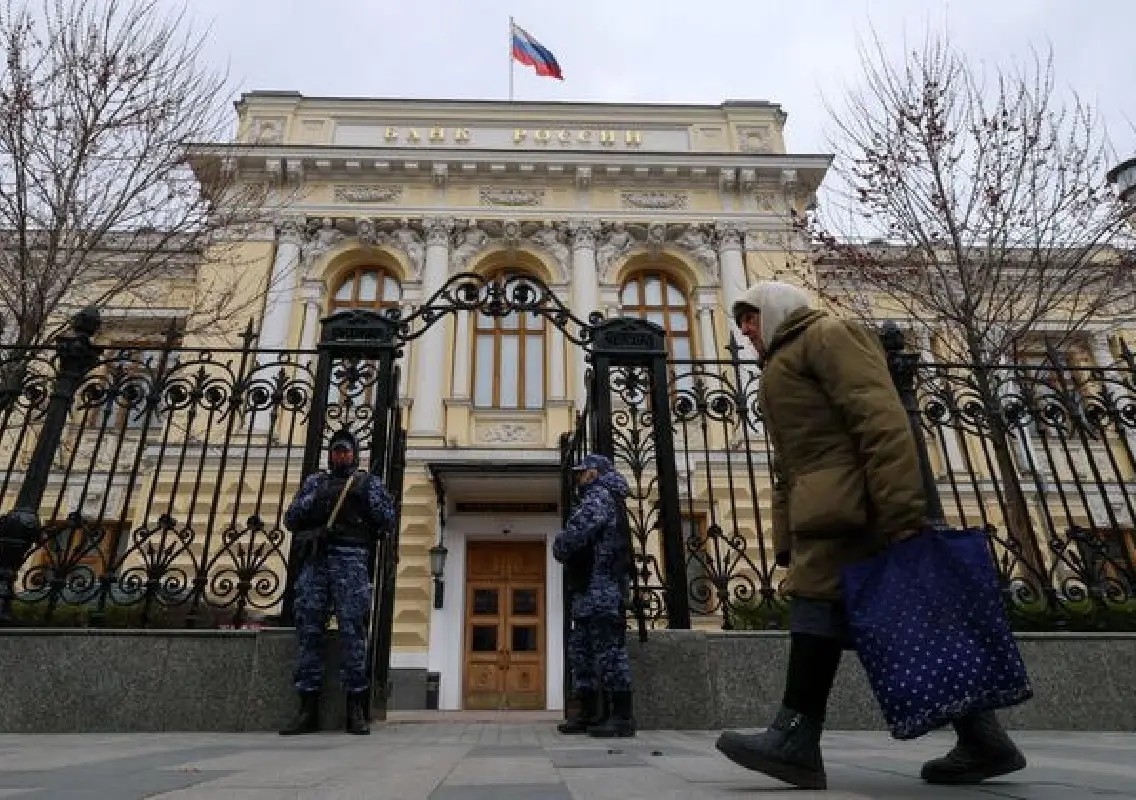


Russia: Russia‘s banking sector faces an increasing risk of financial instability as banks continue to bear much of the burden of financing the country’s war economy, according to a European state intelligence report cited by Reuters.
The report comes as the European Union prepares its 21st package of sanctions against Russia, expected to target banks, cryptocurrency networks and other sectors linked to the country’s economy and defence industry.
Intelligence report flags vulnerabilities
The two-page assessment, titled “Note on the Probability of a Banking Crisis in Russia in 2026”, warns that deteriorating loan quality and rising household debt could create an “explosive” situation if Russia faces further economic shocks.
According to the report, Russian banks have been encouraged to provide subsidised loans to defence companies, homebuyers and state-backed projects. While government support and loan restructuring have helped maintain stability, the report says these measures may be masking deeper financial weaknesses.
It estimates that around 10 per cent of corporate loans are now considered doubtful, while some major banks reported retail non-performing loan ratios of up to 15 per cent in 2025.
Economy under pressure
Russia’s Economy Ministry has lowered its GDP growth forecast for 2026 to 0.4 per cent, down from the earlier estimate of 1.3 per cent, reflecting slowing economic momentum.
The report also notes that more than 500,000 Russians declared bankruptcy in 2025, while millions of citizens have taken multiple loans under state-supported credit programmes.
However, Russia’s central bank has sought to reassure markets. Deputy Governor Filipp Gabunia recently said vulnerabilities in the financial sector remain manageable, highlighting that banks’ capital buffers are at their strongest level in three years and that corporate bad loans have remained broadly stable.
EU sanctions and Russian response
European diplomats are discussing fresh sanctions that could blacklist nearly 90 additional Russian banks, bringing the total number of sanctioned lenders to more than 100.
Despite mounting pressure, Russian officials maintain that the country’s economy has adapted to Western sanctions. Executives at major lenders, including Sberbank, have also said banks and customers have become accustomed to operating under sanctions.
Analysts say Russia continues to face economic challenges, but significant government spending on defence and support from trade with Asian partners have so far helped cushion the impact of Western restrictions