







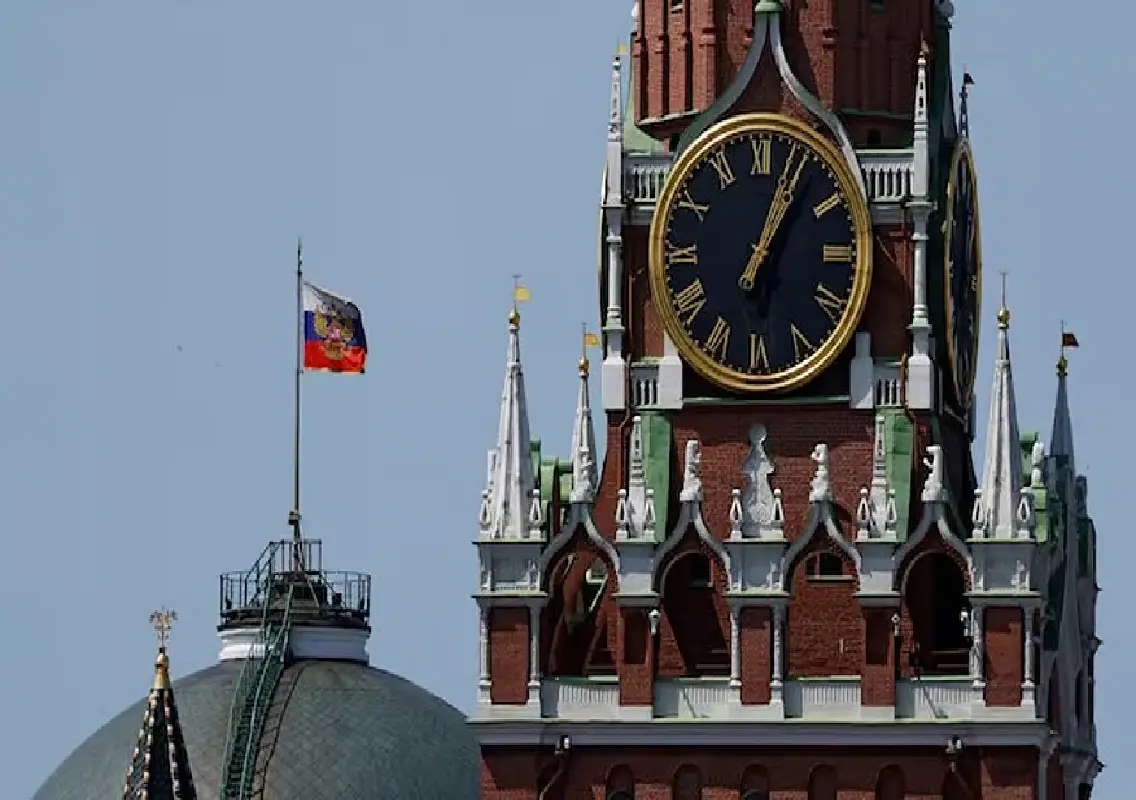


Moscow: The Kremlin on Friday said that relations with Japan have been reduced to “zero” due to what it described as Tokyo’s “unfriendly” stance towards Russia, effectively ruling out any immediate progress towards a long-pending World War II peace treaty between the two nations.
The sharp remark from the Kremlin comes amid continued tensions between the two countries over sanctions, geopolitical alignments and an unresolved territorial dispute dating back to the end of the Second World War. Russia and Japan have never formally signed a peace treaty to officially conclude wartime hostilities, largely due to disagreements over the Kuril Islands, referred to in Japan as the Northern Territories.
Kremlin rules out peace treaty talks
Kremlin spokesperson Dmitry Peskov said there was currently no dialogue between Moscow and Tokyo, making discussions on a peace treaty impossible.
“There is no dialogue, and it is impossible to discuss the issue of a peace treaty without dialogue,” Peskov told reporters at a daily briefing. He added that Russia has never been in favour of ending communication, but current circumstances have made meaningful engagement unlikely.
“Under these circumstances, it is unlikely that any agreements can be reached without changing the modalities of our relations,” he said.
The statement signals a deep freeze in diplomatic engagement between the two countries at a time when Russia’s ties with several Western-aligned nations remain strained over the Ukraine conflict and related sanctions.
Japan reiterates peace treaty goal
Earlier in the day, Japanese Prime Minister Sanae Takaichi, in her inaugural address to parliament, reiterated Tokyo’s longstanding position of resolving the territorial dispute and concluding a peace treaty with Russia.
According to Russia’s TASS state news agency, Takaichi said: “Although Japan-Russia relations are in a tough spot, the Japanese government’s position remains unchanged, aiming to resolve the territorial issue and conclude a peace treaty.”
Japan has consistently maintained its claim over four islands — Iturup, Kunashir, Shikotan and the Habomai islets — which were occupied by Soviet forces at the end of World War II. Russia administers the islands as part of its Sakhalin region.
Longstanding territorial dispute
The dispute over the Kuril Islands has prevented the signing of a formal peace treaty since 1945. While diplomatic efforts have been made intermittently over the decades, including summit meetings and economic cooperation proposals, a final resolution has remained elusive.
The issue has been further complicated in recent years by Japan’s participation in sanctions against Russia over the war in Ukraine. Moscow has criticised Tokyo for aligning with the United States and its allies, describing such actions as hostile.
In response to sanctions, Russia had earlier suspended peace treaty negotiations and halted certain bilateral projects. Friday’s comments from the Kremlin suggest that relations have deteriorated further, with little immediate prospect of revival.
Broader geopolitical context
Japan, a key US ally in the Indo-Pacific, has taken a firm stance against Russia’s actions in Ukraine, imposing financial and trade sanctions and providing support to Kyiv. Moscow, in turn, has labelled Japan’s measures as unfriendly and counterproductive.
The absence of dialogue raises concerns about regional stability in Northeast Asia, particularly given both countries’ strategic interests in the Pacific. Although there has been no direct military escalation between the two, diplomatic stagnation limits avenues for confidence-building measures and economic cooperation.
Despite the current impasse, both sides have historically left the door open for future engagement under improved conditions. However, with Moscow stating that ties have effectively been reduced to zero, prospects for a breakthrough appear distant.
For now, the decades-old territorial dispute continues to cast a long shadow over bilateral relations, underscoring how unresolved historical issues can shape contemporary geopolitics.