


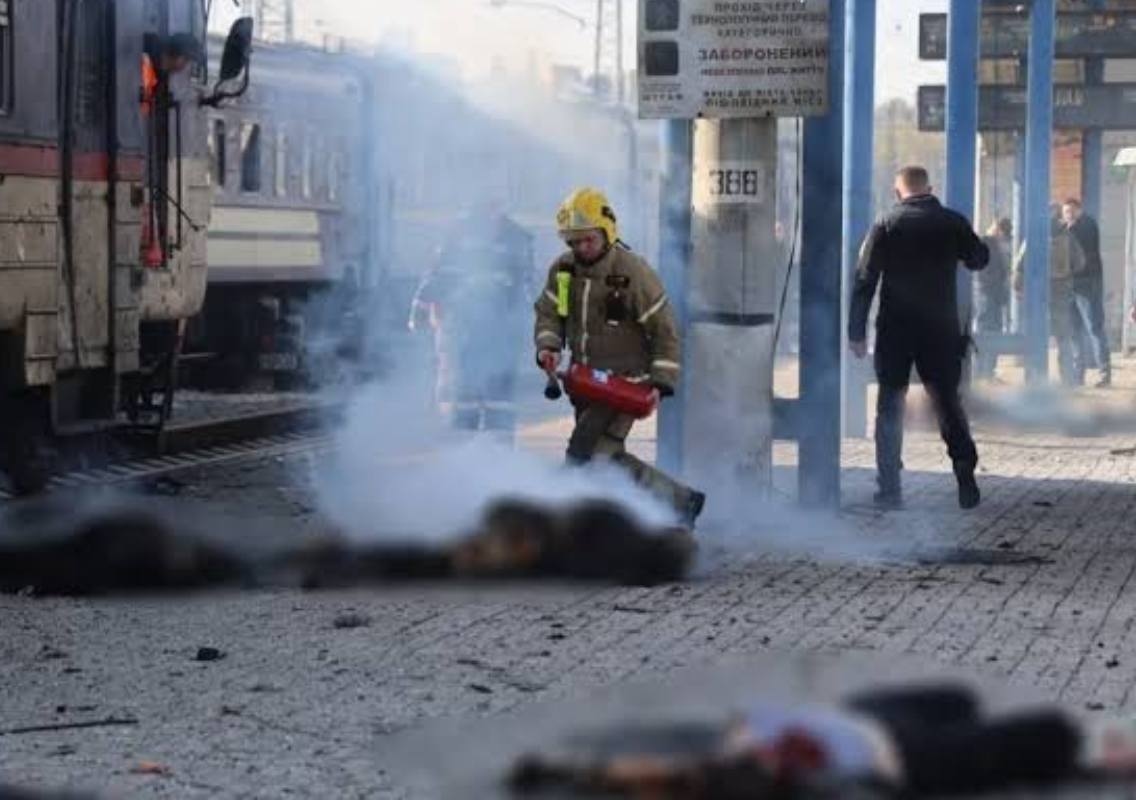


Dnipro, Ukraine: At least 13 people were killed and 10 injured after a Russian jet-powered drone struck a platform at Dnipro’s main railway station on Thursday, October 29, while passenger trains were present, Ukrainian officials said. President Volodymyr Zelenskyy shared visuals from the aftermath and called on the United States, the European Union and G7 countries to impose stronger sanctions on Moscow.
The attack struck a platform where a commuter train and a scheduled passenger service were standing. Ukraine’s state railway operator, Ukrzaliznytsia, said train No. 866, travelling from Dnipro to Zaporizhzhia, was at the platform when the drone hit.
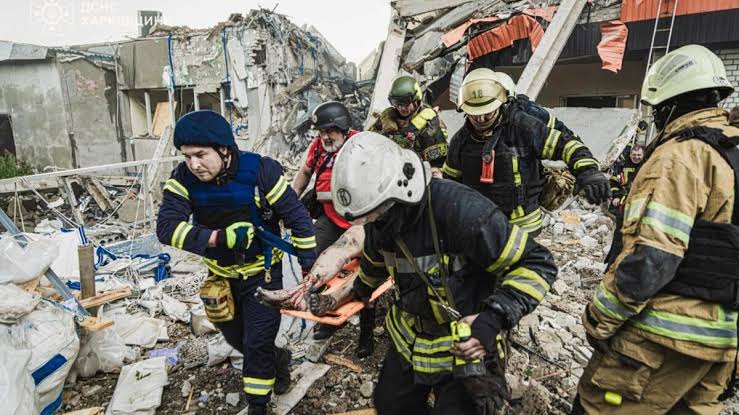
The strike caused civilian casualties and prompted an emergency response involving rescue workers, medical personnel and law enforcement officers. The death toll and number of injured were reported by Ukrainian authorities, while emergency teams continued working at the scene.
Zelenskyy condemned the attack, saying the continued strikes demonstrated the need for a tougher international response to Russia’s war against Ukraine. He argued that sanctions against Moscow and its war machine should not be eased while the conflict continued.
Drone hits platform where passenger trains were standing
According to Ukrzaliznytsia, the Russian drone struck a platform at Dnipro railway station where train No. 866 was standing before its journey to Zaporizhzhia.
The operator said people remained on the platform despite a warning that the threat level had increased. The attack hit an area being used by passengers, resulting in deaths and injuries.
Ukrainian officials said the strike involved a jet-powered unmanned aerial vehicle. Such drones have been used in Russia’s attacks on Ukrainian cities and infrastructure, including transport facilities.
Initial reports differed on the number of people injured. Regional officials initially reported at least five wounded, while Zelenskyy later said 10 people had been injured. The confirmed death toll stood at 13 in the latest statement cited by Ukrainian authorities.
Emergency services were deployed to the station following the attack. Authorities did not immediately provide a full breakdown of the victims or the extent of the damage to the trains and railway facilities.
Zelenskyy shares visuals and calls for tougher sanctions
Zelenskyy shared footage from the aftermath of the strike and expressed condolences to the families of those killed.
In his statement, the Ukrainian president said the drone had struck a platform where a suburban electric train and a scheduled passenger train were standing. He confirmed that 13 people had been killed and 10 injured.
The president also used the attack to renew his call for stronger economic measures against Russia.
“Sanctions against Moscow and its war machine must not be eased for as long as this Russian war continues,” Zelenskyy said in his statement, calling for new measures from the EU, the United States and the G7.
Zelenskyy questioned whether the easing of certain restrictions on Russian oligarchs and the energy sector had contributed to a lack of pressure for de-escalation. His remarks referred to recent changes in sanctions policy and argued that Western governments should respond to the latest attack with additional restrictions.
His statement places the railway station strike within Ukraine’s wider diplomatic campaign to maintain and increase international economic pressure on Moscow.
Ukraine raises concerns over repeated railway attacks
The strike adds to a series of attacks on Ukraine’s railway infrastructure during the war. Railways remain important for civilian travel, freight movement and the transport of essential supplies, making stations, trains and related facilities significant targets during periods of escalation.
Ukrzaliznytsia has reported repeated damage to railway assets across the country. According to the figures supplied in the report, Russian forces have targeted more than 1,700 railway assets in Ukraine during 2026, including stations, locomotives and passenger carriages.
The railway operator has also reported attacks on trains and facilities in areas away from the front lines. These incidents have raised concerns about the safety of passengers and railway workers, particularly when services continue operating during air-raid alerts.
Last month, a Russian drone reportedly struck a train near the Ukraine-Poland border. Ukraine’s railway operator said the incident occurred shortly after senior foreign dignitaries, including former prime ministers of the United Kingdom and Sweden, had passed through the area.
The latest strike in Dnipro has renewed concerns about the risks faced by civilians using public transport during the continuing conflict.
Jet-powered drones used against infrastructure
Russia has employed a range of drones and other weapons in attacks across Ukraine. Jet-powered drones are among the systems used in strikes against transport facilities and other infrastructure.
Ukrainian officials have reported attacks involving drones on railway stations, shopping centres, fuel facilities, power infrastructure and other sites. The use of such weapons has complicated efforts to protect civilian areas, particularly in cities that remain within range of aerial attacks.
Railway infrastructure has been especially vulnerable because it consists of extensive networks of stations, tracks, depots and rolling stock spread across the country.
The Dnipro attack demonstrates the potential consequences when a strike hits a location where passengers are gathered. However, the precise circumstances of the attack, including the full extent of the damage and the identities of those killed, were not immediately detailed in the initial reports.
Emergency services respond as casualties are confirmed
Following the strike, rescue workers, medical personnel and law enforcement officers were sent to the station. Zelenskyy said the necessary emergency services were working at the scene.
The reported death toll of 13 made the attack one of the latest deadly incidents affecting civilians during Russia’s full-scale war against Ukraine.
Authorities were continuing to assess the situation and provide assistance to the injured. The initial reports did not establish whether additional casualties or damage would be confirmed as the response progressed.
The discrepancy between the early figure of at least five injured and Zelenskyy’s later report of 10 reflects the evolving information available during the immediate aftermath. The latest figure in the president’s statement was 10 injured.
Strike intensifies calls for international action
The attack has renewed the debate over how the United States and European countries should respond to Russia’s continued military campaign.
Zelenskyy argued that stronger sanctions were necessary and said restrictions on Russia’s energy sector and individuals associated with the country should not be eased while the war continued.
His appeal comes amid continuing diplomatic efforts over the conflict and disagreements among international actors about sanctions, energy supplies and the path towards de-escalation.
The Ukrainian president’s statement framed the Dnipro attack as a reason to increase pressure on Moscow. The call for further measures, however, remains a political appeal to international partners; any new sanctions would depend on decisions by the governments concerned.
A deadly strike on a civilian transport hub
The drone strike at Dnipro railway station has left at least 13 people dead and 10 injured, according to Ukrainian officials. The attack hit a platform where passenger trains were standing, prompting an emergency response and a fresh appeal from Zelenskyy for tougher sanctions against Russia.
The incident also highlights the continuing vulnerability of Ukraine’s railway network, which remains essential to civilian movement and the country’s wider transport system.
As emergency teams respond and officials assess the damage, the strike is likely to intensify concerns about civilian safety and the protection of critical infrastructure. Zelenskyy’s demand for stronger action from the United States, the EU and the G7 has placed renewed focus on the international response to Russia’s ongoing war against Ukraine.