







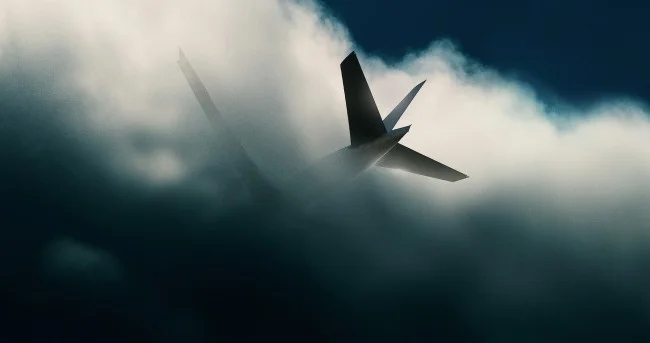


More than eleven years after Malaysia Airlines Flight MH370 disappeared without a trace, the Malaysian government has announced that the search for the missing aircraft will officially resume. The decision has revived global interest in what remains the most enduring mystery in modern aviation.
A routine flight that vanished without a trace
On the night of 8 March 2014, Malaysia Airlines Flight MH370 departed Kuala Lumpur at 12.41 a.m., bound for Beijing with 239 people on board.
At 1.19 a.m., the captain delivered a routine sign-off — “Good night Malaysian Three Seven Zero”.
Two minutes later, the aircraft disappeared from civilian radar, leaving no distress signal, no warning and no clues.
Hours passed before authorities realised that something was catastrophically wrong. MH370 never checked in with Vietnamese controllers, and attempts to reach the cockpit went unanswered.
Early search efforts yield nothing
Initial search operations focused on the South China Sea, where the aircraft last communicated. But rescuers found no debris, no oil slick and no emergency beacon. With each hour of silence, confusion deepened and speculation surged.
The first major breakthrough came when Malaysia’s military radar showed that MH370 had turned back, crossing the peninsula and flying west over the Strait of Malacca — a route no one anticipated.
The satellite trail that changed everything
Investigators at Inmarsat analysed automated hourly satellite “handshakes” from the aircraft. These faint digital signals revealed that MH370 had flown for several more hours, heading deep into the southern Indian Ocean until its fuel ran out.
This discovery shifted the search to one of the most remote and hostile regions in the world.
The theories that tried to explain the inexplicable
With no wreckage and no black boxes, theories multiplied:
- Pilot involvement: Some experts suggested a deliberate depressurisation scenario. Supporters cited flight-simulator paths; critics said no motive was ever proven.
- Hijacking: Journalist Jeff Wise theorised a diversion to Central Asia, but no radar or satellite data supported a northern route.
- Cargo-related intervention: Speculation arose about sensitive cargo, though authorities found no evidence of interception or military involvement.
- Mechanical failure or incapacitation: Alternative theories proposed catastrophic technical issues, though none explained the deliberate flight path.
Authorities maintained that no single explanation has sufficient evidence.
Debris discoveries raise hope — and more questions
In July 2015, a flaperon washed ashore on Réunion Island, confirmed to be from MH370 — the first physical evidence of the aircraft. More fragments later appeared in Mozambique, Madagascar and Tanzania.
Yet the ocean yielded only small pieces.
There was no sign of the fuselage, engines or cockpit.
More haunting still — no remains of the 239 people on board were ever found.
The 2018 report that left families without closure
Malaysia’s final investigation report, released in 2018, reached no definitive conclusion. It said:
- They could not determine why the aircraft changed course.
- They could not confirm who was controlling it.
- There was no proven evidence of pilot action, mechanical failure or external interference.
The lack of wreckage or flight recorders made certainty impossible.
Families who refused to be forgotten
Over the years, families of the missing held vigils, marched to embassies and demanded transparency. Many accused authorities of inconsistency and poor communication. Their pressure helped keep the search alive when global attention faded.
For them, the resumption of the search represents the strongest hope since 2014.
Why the search is restarting now
In December 2025, Malaysia confirmed that deep-sea exploration company Ocean Infinity would lead a renewed search effort. The mission will be guided by:
- Updated drift analysis
- Improved deep-water imaging technology
- Advances in autonomous underwater vehicles
Investigators believe this new mission may finally identify the aircraft’s final resting place.
A mystery that still haunts the world
MH370 remains the greatest mystery in aviation history. One painful truth endures: the aircraft was turned — but by whom, and why, remains unknown.