




Belgrade: Serbia is voting in a high-stakes snap parliamentary election as a student-led anti-corruption movement attempts to end the political dominance of Aleksandar Vucic and his Serbian Progressive Party (SNS), which has been in power since 2012.
The election on Sunday, October 25, marks a major test for a movement that emerged after a railway station disaster killed 16 people in the northern city of Novi Sad in November 2024. Nearly two years of protests have since expanded into a broader challenge to allegations of corruption, political interference and weakening democratic institutions.
The students are now taking their campaign from the streets to the ballot box through the Student List, a group of 250 candidates selected through student-led assemblies at universities across Serbia. Many candidates are academics, professionals, artists and farmers with little or no previous experience in electoral politics.
The movement has sought to distinguish itself from established opposition parties by avoiding a conventional leadership structure and presenting its campaign as a collective effort to restore accountability and strengthen public institutions.
Vucic and the ruling party remain formidable opponents, with supporters pointing to economic growth and infrastructure development during their time in power. The outcome of the election remains uncertain, with opinion polls offering differing assessments of the contest.
Student List takes protest movement to the ballot box
The Student List emerged from protests following the collapse of a concrete canopy at the Novi Sad railway station on November 1, 2024. The disaster killed 16 people and became a rallying point for public anger over alleged corruption and irregularities associated with the station’s renovation.
The students initially demanded accountability for the deaths and the release of documents relating to the reconstruction project. Their demonstrations gradually developed into a wider movement criticising the functioning of state institutions and demanding changes in political accountability.
The movement has largely kept its distance from established opposition parties, seeking to avoid the internal disputes and leadership rivalries that have affected other political challengers in Serbia.
Its candidates were selected through student-led assemblies at universities across the country. The list includes university lecturers, doctors, professionals, actors, farmers and other people who have not previously held prominent political positions.
The list is headed by Ilija Srdanovic, a cardiologist and professor at Novi Sad University. However, Srdanovic has resisted being portrayed as the movement’s leader, reflecting its emphasis on collective decision-making.
If the list secures enough parliamentary support, its lead candidate would not automatically become prime minister. The formation of a government would depend on the parliamentary arithmetic and the process of securing a majority.
Novi Sad railway disaster sparked nationwide anger
The movement’s origins lie in the November 2024 collapse at the Novi Sad railway station, where a concrete canopy fell and killed 16 people.
The station had recently undergone renovation as part of a major infrastructure programme promoted by the government. The wider project included a high-speed railway connection between Belgrade and Budapest.
The tragedy prompted widespread demonstrations, with protesters demanding accountability and the publication of documents relating to the renovation. The disaster also intensified public scrutiny of how infrastructure projects were awarded, managed and supervised.
Student protests subsequently spread across Serbia, drawing support from people concerned about corruption, political influence and public safety.
The demonstrations gained further momentum after students holding a vigil in Belgrade were attacked by a group reportedly linked to the ruling party. The incident contributed to anger among demonstrators and reinforced their calls for accountability.
Despite investigations into the railway disaster, the movement has continued to argue that those responsible have not been adequately held accountable. The government has rejected accusations of systemic corruption and maintains that it is acting against organised crime.
Corruption, public services and everyday grievances
The student movement’s campaign has extended beyond the railway disaster to include concerns about public services, political accountability and the condition of democratic institutions.
During door-to-door campaigning in Krnjaca, a suburb of Belgrade, student volunteers encountered residents who raised issues ranging from neglected infrastructure to corruption.
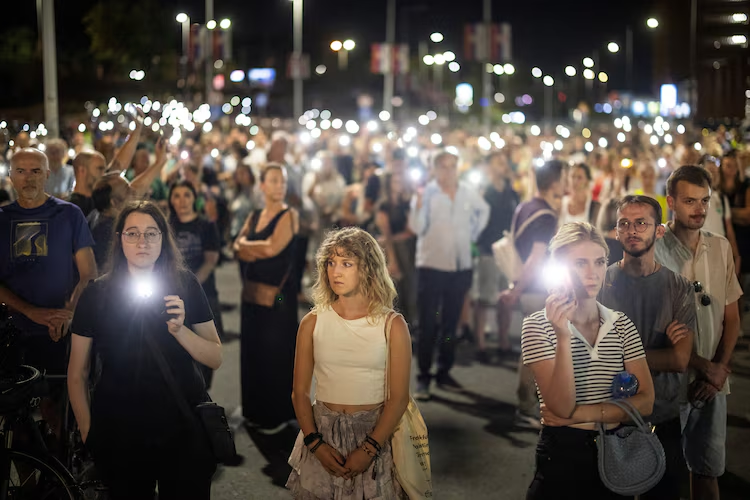
Poorly maintained roads, a bridge connecting the suburb with central Belgrade and recurring sewage problems during heavy rain were among the concerns discussed by residents.
Such grievances have helped the movement connect national demands for accountability with everyday problems experienced by communities.
The Student List has also used the slogan “Serbia or Mafia?” to challenge what it describes as links between political power and organised crime. The government has denied allegations of criminal connections and said it is tackling organised crime.
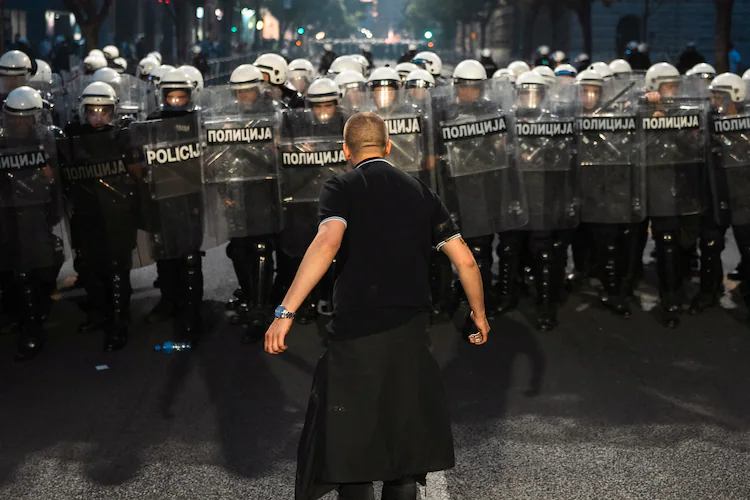
For the movement, the election represents an opportunity to turn public anger into institutional change. Its campaign has focused on tackling corruption, restoring accountability, protecting freedom of speech and improving public services.
Vucic faces his most serious electoral challenge
Vucic has dominated Serbian politics for more than a decade, serving in senior government positions before becoming president. The SNS has remained at the centre of power since 2012.
Supporters credit the government with economic development and investment in infrastructure, including highways, railway projects, schools and hospitals. Vucic has also presented himself as a leader who protects Serbia’s national interests while maintaining relations with competing international partners.
Critics, however, accuse his government of weakening democratic institutions, exerting influence over the media and failing to ensure accountability following the Novi Sad disaster. The government has rejected accusations that it is responsible for systematic democratic backsliding.
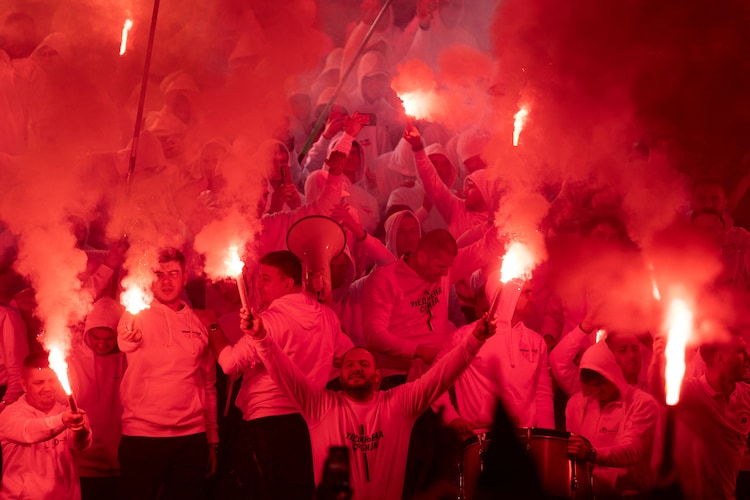
Vucic stepped down as president in September, before the end of his second and final term under the Constitution, to campaign for the position of prime minister if his political list wins.
The snap election offers the ruling party an opportunity to seek a fresh mandate, while the student movement hopes to capitalise on the momentum generated by its protests.
The contrasting approaches have become a central feature of the campaign: a governing party emphasising continuity, investment and stability, against a movement promising collective decision-making and a stronger focus on accountability.
Polls show a close contest, but estimates differ
The election has been difficult to predict because opinion polls have produced different assessments of support for the main contenders.
An Ipsos survey published on October 22 estimated support for the electoral list led by Vucic at 47.4%, compared with 40% for the Student List. The survey covered 3,624 respondents and was conducted between October 20 and 22. Importantly, the poll was commissioned by the ruling electoral list, a detail relevant when assessing its findings.
Other surveys have placed the student movement closer to, or ahead of, the ruling party. The differences underline the uncertainty surrounding the contest, particularly given variations in polling methods, sample composition and the timing of fieldwork.
The 2023 parliamentary election also remains relevant to the current debate. International observers reported an uneven playing field, citing issues including unequal media coverage and the misuse of public office and resources.
The student movement has raised concerns about electoral fairness, while the ruling party has rejected allegations of wrongdoing. A close result could intensify disputes over the conduct and legitimacy of the election.
Foreign policy adds another dimension
The contest also has implications for Serbia’s international relationships.
Vucic has pursued a balancing strategy involving the European Union, Russia and China. Serbia remains a candidate for EU membership while maintaining important economic and political ties with Moscow and Beijing.
The student movement has focused primarily on domestic issues, including corruption, education and the functioning of public institutions. It has provided less detail about its foreign policy priorities than about its domestic agenda.
Vucic has questioned whether a change in government would affect Serbia’s relationships with Russia and China, warning that the country’s international position could be altered.
The students, meanwhile, have rejected allegations that their movement is backed by foreign forces seeking to destabilise the state. The exchange reflects a wider dispute over the movement’s intentions and the role of external influence in Serbian politics.
Can the students turn protest support into power?
The election represents a crucial test of whether a mass protest movement can translate public mobilisation into parliamentary representation.
The Student List has drawn candidates from a broad range of professions and has attempted to offer an alternative to established political leadership. Its decentralised structure is intended to reflect the movement’s criticism of concentrated power.
However, winning seats and forming a government are different challenges. Even a strong electoral performance would require the movement to navigate parliamentary negotiations, institutional procedures and the practical demands of governing.
For Vucic and the SNS, the election is an opportunity to demonstrate that their political support remains intact despite sustained protests. For the students, it is a chance to turn demands for accountability into a formal political mandate.
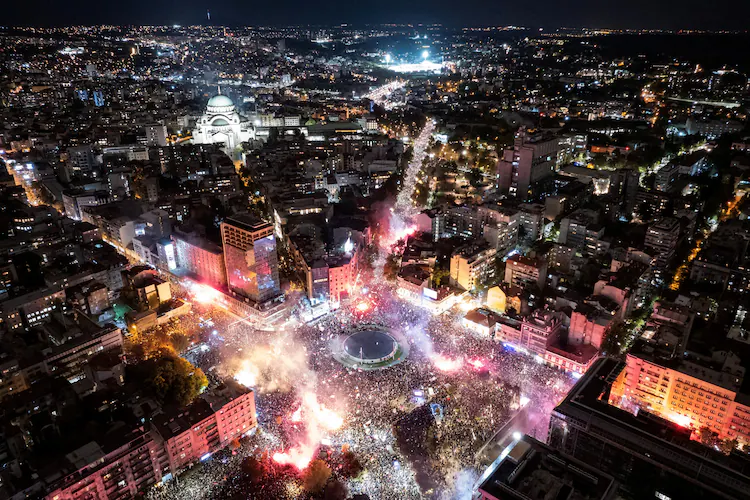
With voting underway and polling estimates pointing in different directions, the result remains uncertain. Whatever the outcome, the contest has placed corruption, public accountability and the future of Serbia’s political institutions at the centre of the national debate.