


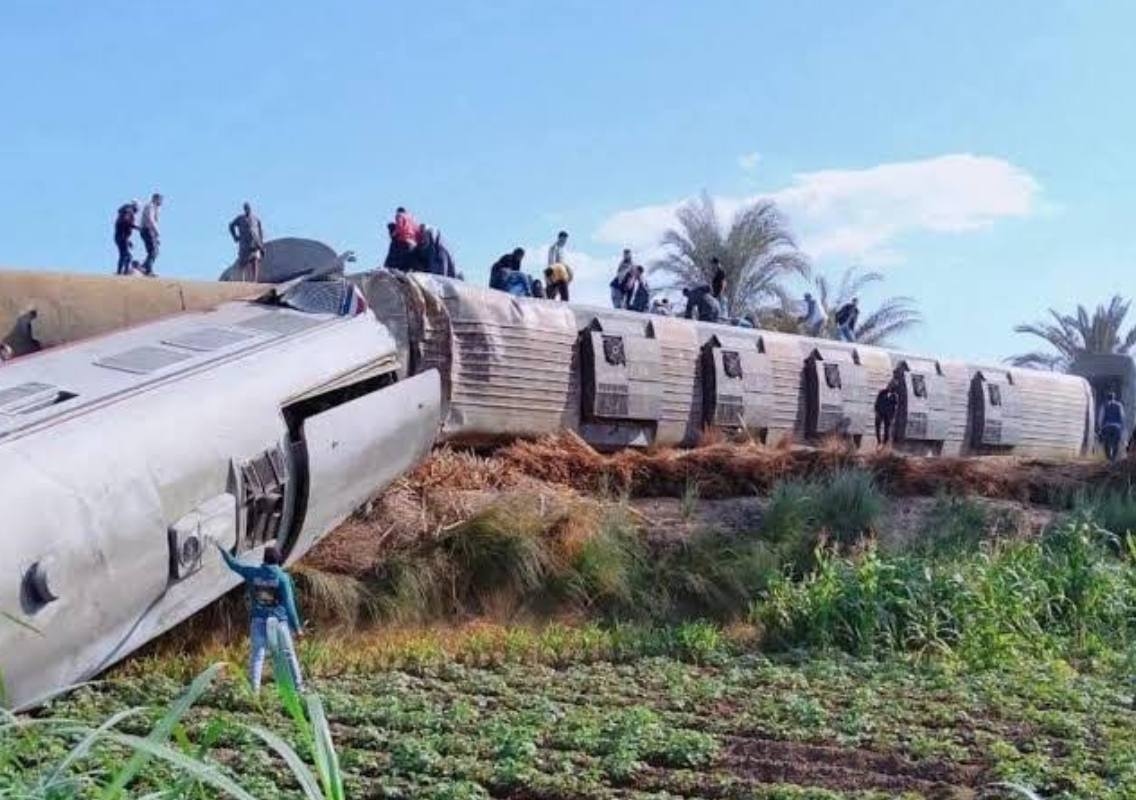


Giza: At least seven people were killed and 112 others injured after two passenger trains collided in Egypt’s Giza province on Sunday, causing several carriages to derail and disrupting rail services on a major railway route.
According to Egypt’s Health Ministry, emergency teams were deployed to the accident site to rescue passengers, assist the injured and clear the wreckage. The collision occurred around 76 km south of Cairo when a passenger train travelling from Giza to Fayoum struck the rear of another train heading from Cairo to Aswan.
The country’s state railway authority confirmed the collision and said the impact caused several coaches to derail. The accident prompted an emergency response, with rescue workers attending to passengers trapped or affected by the crash.
The incident also disrupted rail traffic along the Cairo-Upper Egypt railway line, an important route connecting the Egyptian capital with destinations in the country’s southern region.
Authorities launched an investigation into the circumstances surrounding the collision. However, the cause of the accident was not immediately known, and officials had not released further details about what led the Giza-Fayoum train to hit the rear of the Cairo-Aswan service.
Rescue teams rush to accident site
Emergency response teams were sent to the crash location after the collision was reported. Rescue workers focused on helping injured passengers, removing damaged coaches and securing the area.
The Health Ministry confirmed that seven people had died and 112 had sustained injuries. The injured were taken for medical attention, although authorities had not provided a detailed breakdown of their conditions.
The derailment of several carriages made rescue and clearance operations a priority. Teams had to work around the damaged coaches while assisting passengers and dealing with the consequences of the impact.
The full extent of the damage and the circumstances of every passenger’s injuries were not immediately available.
The accident has once again drawn attention to passenger safety on Egypt’s railway network. With the collision involving two trains travelling on a major route, the investigation is expected to examine the circumstances that allowed one service to strike another from behind.
Sisi orders investigation into train collision
Egyptian President Abdel Fattah al-Sisi ordered a swift investigation into the accident and directed that anyone found responsible for negligence should be held accountable.
According to a separate statement, the President called for the circumstances surrounding the collision to be examined and responsibility to be established.
The order places attention on determining how the two passenger trains came to collide and whether any operational or safety failures contributed to the incident.
Investigators will need to establish the sequence of events before the crash and identify the factors that led to the rear-end collision. However, authorities have not yet announced any findings or identified individuals responsible.
The President’s direction also signals that the government expects accountability if negligence is established during the investigation.
No conclusion about the cause of the accident can be drawn from the information released so far.
Railway services disrupted on Cairo-Upper Egypt route
The collision affected services along the Cairo-Upper Egypt railway line, which connects Cairo with destinations in southern Egypt.
The state railway authority said work was under way to remove the damaged coaches and restore normal train operations. It did not provide a specific timeline for completing the clearance work or ending the disruption.
The derailment of several carriages complicated efforts to reopen the affected section of the railway. Clearance teams were required to remove the wreckage before services could safely resume.
The route is an important passenger connection between the capital and Upper Egypt. Disruptions can affect travellers using trains to reach destinations south of Cairo.
For passengers planning journeys along the affected line, the restoration of services will depend on the progress of the clearance operation and the railway authority’s safety assessment.
Officials had not indicated how long the disruption would last.
Cause of collision remains unclear
The exact cause of Sunday’s collision remained unknown at the time of the initial reports. Authorities had not provided details about the operating conditions of either train or explained why the Giza-Fayoum service struck the rear of the Cairo-Aswan train.
The investigation is expected to establish the circumstances surrounding the crash and determine whether negligence or other operational factors were involved.
The death toll of seven and the 112 reported injuries make the collision a major railway accident in the country. The derailment and disruption to a key railway line have also created challenges for emergency responders and transport authorities.
For now, rescue and clearance operations remain central to the response, while investigators work to determine what caused the two passenger trains to collide.
The government has called for a swift inquiry and accountability if negligence is found. Further details about the investigation, the condition of the injured and the restoration of railway services are awaited.